Overview
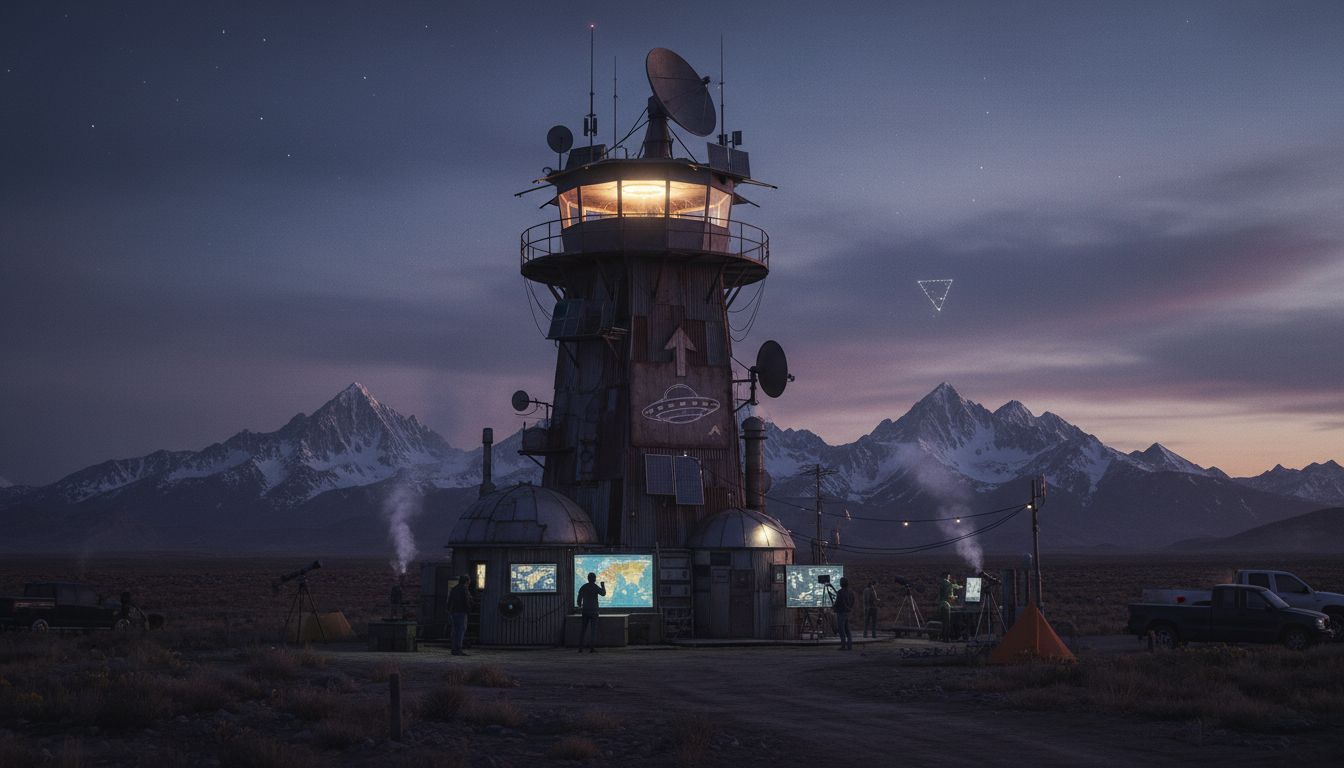
A 60‑foot steel tower perched on the high plains of eastern Colorado has spent the better part of three decades gathering civilian reports of unidentified aerial phenomena (UAP). Built in 2000 by a group of amateur sky‑watchers, the structure—known locally as the “UFO Watchtower”—now serves as a grassroots data‑collection hub that presses federal agencies to modernize their reporting protocols. Its existence reflects a growing public demand for transparency as the U.S. government expands official investigations into UAPs through the All‑Domain Anomaly Resolution Office (AARO) and related congressional oversight.
History and Purpose
The tower was conceived by former Air Force pilot Tom “Tex” McAllister and his wife Linda, who were frustrated by the lack of a systematic way for ordinary citizens to log sightings. After raising $45,000 through a series of community fundraisers, they erected the 60‑foot lattice structure on a privately owned parcel near the town of Limon, Colorado. “We wanted a place where anyone could look up, record what they saw, and have that information taken seriously,” McAllister said in a 2024 interview.
Since its inauguration, the watchtower has operated on a volunteer basis, maintaining a publicly accessible logbook and an online database that aggregates reports from visitors, local pilots, and hobbyist astronomers. The tower’s location—far from major airports yet within sight of the Front Range—offers an unobstructed view of a sky that, according to the operators, “gets stranger every year.”
Data Collection and Findings
Over 26 years, the watchtower’s log has accumulated more than 4,800 documented sightings, ranging from classic “lights‑in‑formation” events to high‑altitude objects that exhibit erratic acceleration. The most frequently reported phenomena include:
- Triangular formations of lights moving silently at low altitude.
- Orb‑shaped glows that linger for several minutes before vanishing.
- Rapid‑move “dart” objects that appear to accelerate faster than conventional aircraft.
In 2023, the watchtower partnered with the civilian research nonprofit UAP Insight, which applied machine‑learning algorithms to the dataset. The analysis identified 12 incidents that matched the “high‑confidence” criteria used by the Pentagon’s UAP Task Force—namely, multiple independent witnesses, corroborating radar data, and visual recordings. “These are not just anecdotal stories; they are data points that meet the same standards the government now uses,” said Dr. Maya Patel, lead analyst at UAP Insight.
Government Response
The tower’s long‑standing call for a modern, civilian‑friendly reporting system coincides with a series of policy shifts in Washington. In early 2025, the Office of the Director of National Intelligence (ODNI) released a revised UAP reporting directive that encourages “public‑sector and civilian contributions” and establishes a secure online portal for non‑classified submissions. AARO officials have publicly acknowledged the value of community‑sourced data, with Deputy Director James Whitaker stating, “Citizen observations, when properly vetted, can fill gaps in our sensor coverage, especially over remote regions like eastern Colorado.”
Nevertheless, critics argue that the new portal remains cumbersome and that many reports still disappear into classified archives. The watchtower’s operators have filed a formal request with the U.S. Senate Committee on Homeland Security and Governmental Affairs urging the agency to adopt an open‑access database similar to the one used by the European Space Agency for meteor sightings.
Looking Ahead
As the AARO prepares its first comprehensive annual report—due later this year—McAllister and his volunteers are expanding the tower’s capabilities. Plans include installing a high‑resolution, all‑weather camera system and integrating real‑time telemetry from nearby weather radars. Funding for these upgrades is being sought through a combination of crowd‑sourced donations and a newly announced grant from the National Science Foundation’s Emerging Phenomena Initiative.
The Colorado UFO watchtower stands as a tangible reminder that public curiosity and scientific rigor can coexist in the quest to understand unexplained aerial events. Whether the tower will finally see its data reflected in official UAP assessments remains to be seen, but its 26‑year vigil underscores a broader shift: a nation once skeptical of sky‑watchers is now compelled to listen.