Overview
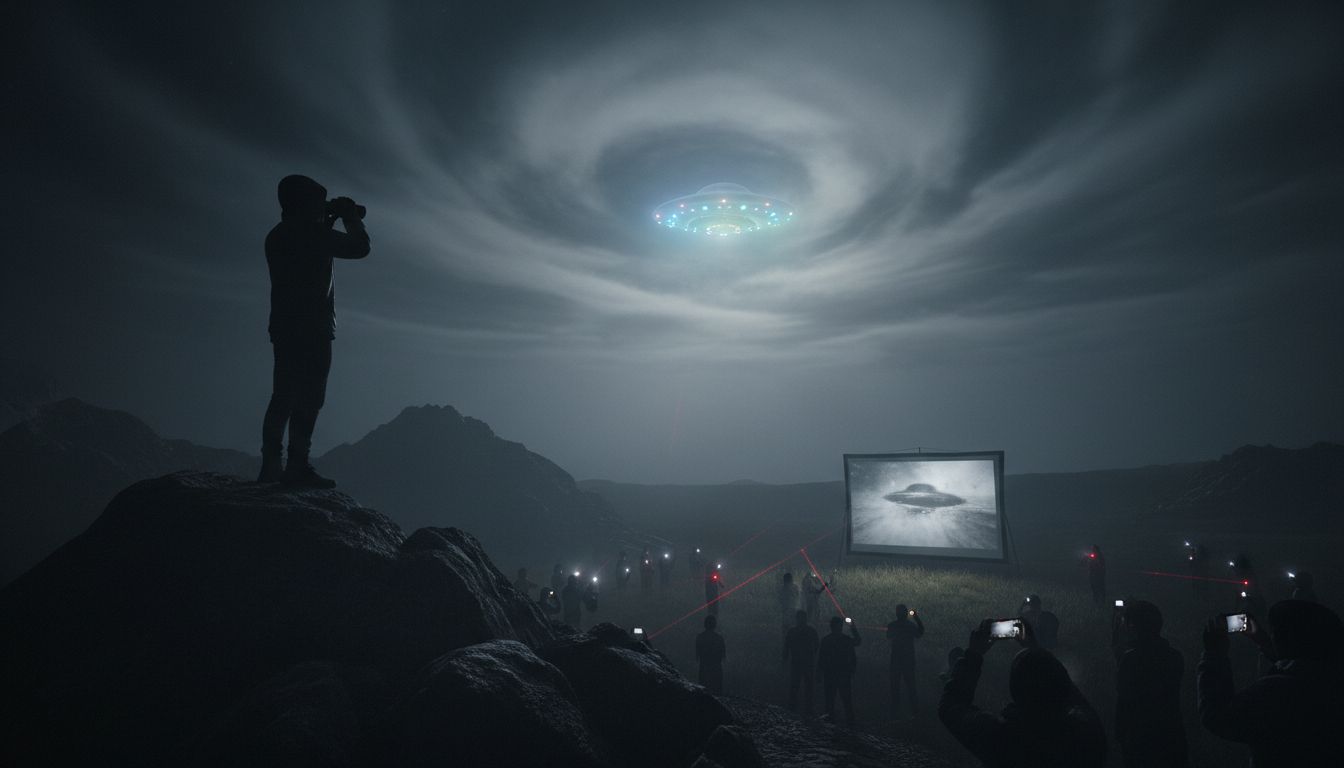
The new documentary “The Age of Disclosure”, released this week on a major streaming platform, has quickly become a talking point among both UFO enthusiasts and scientific skeptics. Billed as a deep‑dive into recent “unexplained aerial phenomena” (UAP) sightings, the film strings together dozens of eyewitness accounts, declassified military footage and speculative commentary. While the producers tout the work as “the most comprehensive look yet at humanity’s encounter with the unknown,” a coalition of skeptics and academic experts argue that the film leans heavily on anecdotal stories and offers “very few verifiable facts.” Their critique centers on the documentary’s reliance on personal testimony rather than rigorous data, a concern that could shape public perception of the UAP debate.
Documentary’s Core Claims
“The Age of Disclosure” interweaves dramatic reenactments with interviews from former pilots, radar operators and civilian witnesses who claim to have observed objects that defy conventional aeronautical explanations. The film highlights recently released Pentagon videos, notably the “Gimbal” and “GoFast” clips, and suggests that these recordings point to a “technologically advanced intelligence” operating beyond known human capabilities. Producers also cite a leaked memorandum from a senior defense official, implying that “the government is preparing to acknowledge contact.” However, the documentary stops short of providing independent verification of these documents, instead presenting them as “evidence” without disclosing the full context or chain of custody.
Skeptical Pushback
A group of skeptics, organized under the banner UFO Skeptics International, convened a press briefing shortly after the documentary’s debut. Their spokesperson, Dr. Miriam Patel, a professor of aerospace engineering at the University of Colorado, said:
“A lot of stories but very few facts. The film is an appealing narrative, but it substitutes personal recollection for peer‑reviewed analysis.”
Patel and colleagues point out that many of the eyewitnesses featured have no formal training in radar interpretation or aerospace systems, making their descriptions susceptible to misidentification. The skeptics also criticize the documentary’s handling of the Pentagon videos, noting that the released footage includes significant gaps and low resolution, which precludes definitive conclusions about speed, maneuverability or propulsion. “Without corroborating sensor data—such as infrared signatures or flight‑path telemetry—we are left with speculation, not science,” Patel added.
Expert Context and Analysis
Independent analysts echo these concerns. Dr. James Whitaker, a former U.S. Air Force intelligence officer now affiliated with the Center for Scientific Inquiry, remarked:
“The documentary’s strongest asset is its ability to spark public interest, but its weakest is the absence of methodological rigor. Proper UAP investigation requires cross‑referencing multiple data streams, something the film glosses over.”
Whitaker highlighted that the U.S. Office of the Director of National Intelligence’s 2023 UAP report emphasized “the need for standardized data collection and transparent analysis”—a standard the documentary does not meet. Moreover, the film’s claim that governments are on the brink of disclosure overlooks the political and security considerations that have historically kept such information classified. Experts caution that sensationalist portrayals can fuel misinformation, potentially diverting resources from genuine scientific inquiry into atmospheric or aerospace anomalies.
Broader Implications
The backlash arrives at a moment when public fascination with UFOs is resurging, fueled by recent congressional hearings and the Pentagon’s establishment of an Unidentified Aerial Phenomena Task Force. While heightened interest can encourage funding for systematic research, critics warn that media-driven hype may blur the line between credible investigation and entertainment. Dr. Patel concluded:
“We welcome curiosity, but we must demand evidence that meets the standards of scientific inquiry. Otherwise, we risk turning a legitimate security and scientific issue into a mythic spectacle.”
As “The Age of Disclosure” continues to attract viewers worldwide, the dialogue between filmmakers, skeptics, and the scientific community underscores a crucial tension: balancing public engagement with the rigorous pursuit of verifiable knowledge about phenomena that remain, for now, largely unexplained.


