Overview
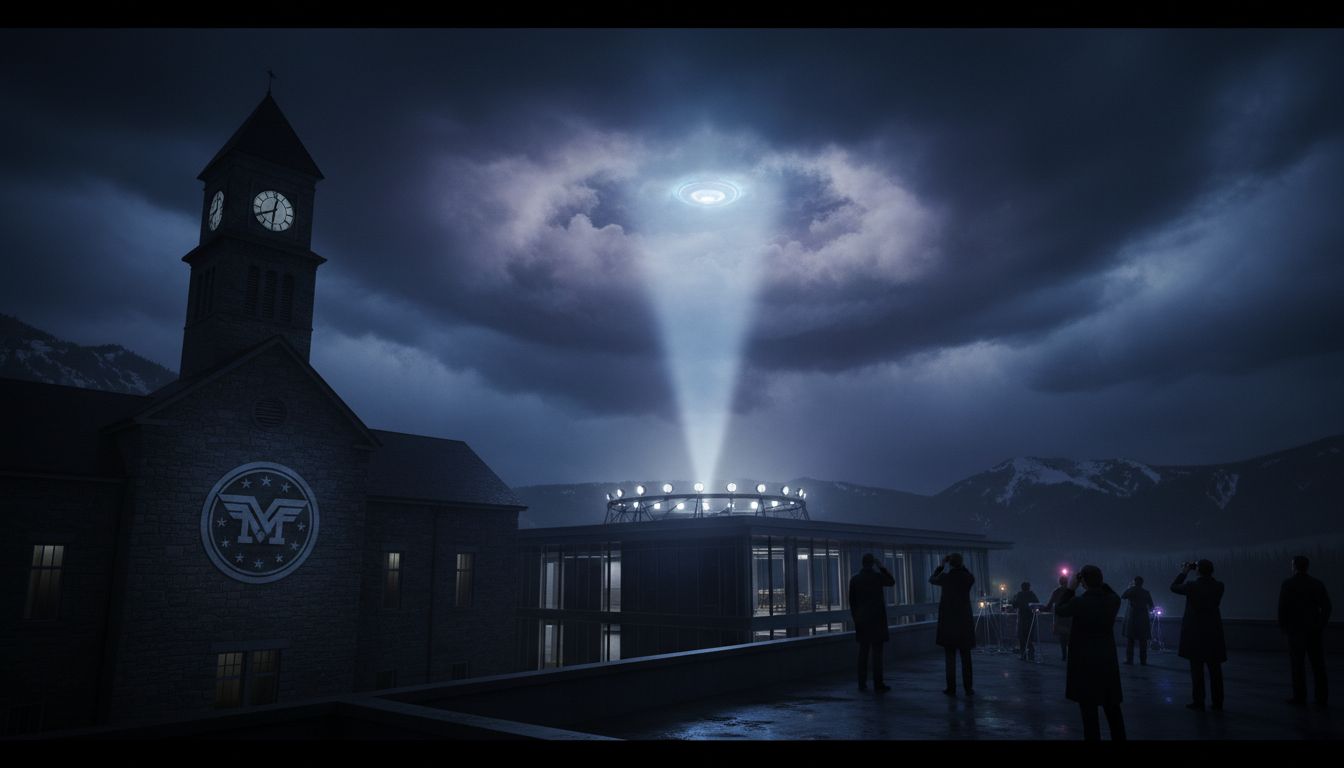
Montana Technological University in Butte has become one of the first U.S. colleges to offer a formal academic program focused on unidentified aerial phenomena (UAP). Announced in early 2024, the new curriculum is housed within the university’s Department of Aerospace and Mechanical Engineering and is open to undergraduate and graduate students across disciplines. The initiative reflects a broader shift among research institutions to treat UAP investigations as a legitimate scientific inquiry rather than a fringe hobby.
Program Structure
The inaugural offering includes three core courses:
- “Introduction to Unidentified Aerial Phenomena” – a survey of historical sightings, data‑collection methods, and classification frameworks.
- “UAP Data Analysis and Sensor Technologies” – hands‑on training with radar, optical, and infrared datasets, emphasizing statistical rigor and signal‑processing techniques.
- “Policy, Ethics, and Public Communication” – an interdisciplinary look at government disclosure, national‑security considerations, and media reporting standards.
Students may complete a minor in UAP Studies or pursue a graduate‑level certificate that requires a research project supervised by faculty from aerospace engineering, physics, and legal studies. “Our goal is to give students the tools to evaluate anomalous observations scientifically,” said Dr. James H. McAllister, associate professor of aerospace engineering and program director. “We’re not asking them to believe anything; we’re asking them to apply the same critical methods they use in any engineering problem.”
Academic and Research Context
The Montana Tech program joins a small but growing cohort of university‑based UAP initiatives. In 2022, the University of Texas at Dallas launched a UAP Research Center, and Arizona State University introduced a UAP Studies minor last year. Federal interest has also risen: the Pentagon’s All‑Domain Anomaly Resolution Office released a preliminary report in 2023, and NASA announced a dedicated UAP research task force in 2024. These developments have encouraged scholars to seek systematic, peer‑reviewed approaches rather than relying on anecdotal accounts.
Montana Tech’s curriculum aligns with these trends by emphasizing data integrity, reproducibility, and interdisciplinary collaboration. The university has partnered with the National UFO Reporting Center to provide anonymized sighting logs for student analysis, and a memorandum of understanding with the U.S. Air Force’s UAP Office allows graduate researchers to access de‑classified sensor data under strict security protocols.
Community and Industry Response
Local reactions have been mixed but largely supportive. Mayor Kyle H. O’Connor of Butte praised the program, noting that “the university’s leadership in a cutting‑edge field brings both academic prestige and potential economic opportunities to our community.” Conversely, some faculty members expressed caution. Professor Elaine Ramirez, a senior physicist at Montana Tech, warned that “the scientific credibility of the program hinges on rigorous methodology and transparent peer review; otherwise, it risks being dismissed as pseudoscience.”
Industry stakeholders have shown interest as well. Representatives from aerospace firms such as Boeing and Lockheed Martin attended the program’s launch, citing the need for engineers skilled in advanced sensor fusion and anomaly detection—capabilities that are directly applicable to both defense and civilian aviation.
Outlook
The university plans to expand the offering in the 2025‑26 academic year, adding a capstone research seminar where students present findings at the International Symposium on Unidentified Aerial Phenomena, an emerging conference hosted alternately by participating universities. Funding for the program is secured through a combination of state education grants, private donations, and a modest allocation from the Montana Higher Education Assistance Fund.
While the study of UAP remains a nascent field, Montana Technological University’s structured approach signals a growing institutional willingness to examine anomalous aerial events with scientific rigor. As more data become available and interdisciplinary collaborations deepen, the program could help shape the next generation of researchers tasked with answering one of the most persistent mysteries in modern aerospace science.


