Overview
Scientists from the National Autonomous University of Mexico (UNAM) have documented a previously unknown aquatic creature living in a Yucatán cenote, a flooded sinkhole that forms part of the region’s extensive anchialine ecosystem. The discovery, reported in Subterranean Biology, adds to a growing inventory of cave‑dwelling fauna that rely on a delicate balance of methane‑producing bacteria and specialized shrimps. While the new organism’s exact taxonomy remains under review, its presence underscores how much of the Yucatán’s subterranean biosphere remains unexplored.
The Dive and the Find
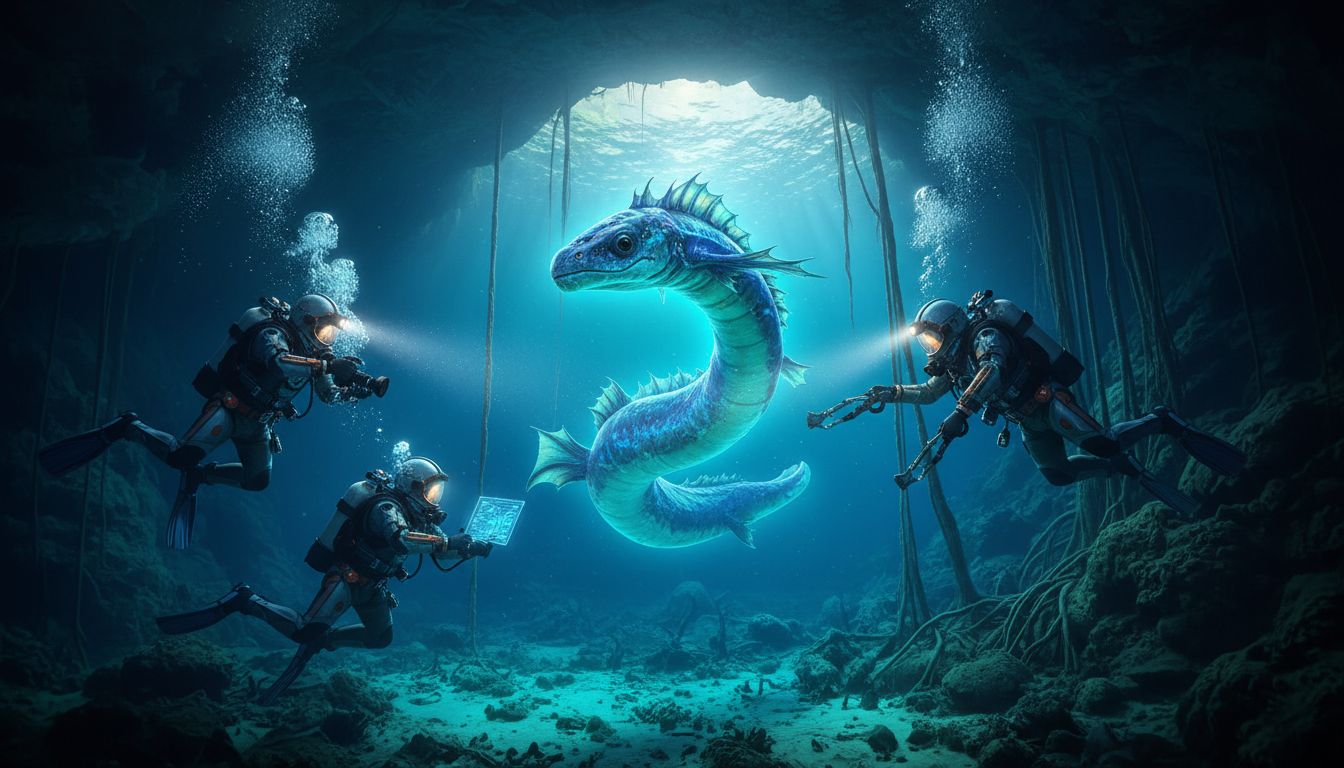
Marine biologist Fernando Álvarez and colleague Brenda Durán led a team of divers into a deep, crystal‑clear cenote that stretches more than 100 m below the surface. Using underwater cameras and careful sampling, the researchers observed a small, translucent crustacean navigating the dimly lit water column. “My first impression of these incredibly beautiful places,” Álvarez said, “was that I had to work there to find out how that rich crustacean fauna had evolved in these exceptionally large cave systems.” The creature’s morphology—elongated antennae, reduced eyes, and a streamlined carapace—matches the adaptations seen in other Typhlatya shrimps, which dominate the anchialine food web.
Ecological Role of Typhlatya
Álvarez and Durán applied stable‑isotope analysis to the shrimp tissue, measuring carbon and nitrogen ratios to infer dietary sources. Their results, now published, reveal that different Typhlatya species occupy distinct nutritional niches, feeding on methanotrophic bacterial mats that coat the limestone walls. These mats arise when organic material from the overlying forest decomposes, seeps underground, and generates methane. The shrimps convert this microbial biomass into animal tissue, supporting larger predators such as blind fish and amphipods. “Typhlatya shrimps are a keystone species in the anchialine trophic web,” Álvarez explained, “because they bridge the microbial base and the higher trophic levels.” Their removal would likely collapse the fragile underground ecosystem.
Cultural and Geological Context
The Yucatán Peninsula’s karst landscape, shaped by the dissolution of limestone over millions of years, houses more than 6,000 cenotes. These sinkholes sit atop the ancient Chicxulub impact crater, formed by the asteroid that ended the age of dinosaurs 66 million years ago. For the Maya, cenotes were both practical water sources and sacred portals to Xibalba, the underworld. Modern divers now explore them for sport, but the scientific community recognizes them as unique anchialine habitats where fresh and salt water mix, creating partially tidal conditions that support specialized life forms absent from surface ecosystems.
Looking Ahead
The identification of a new cave dweller highlights the need for continued, non‑intrusive research in these fragile environments. Álvarez’s team plans to expand sampling to adjacent cenotes, employing environmental DNA (eDNA) techniques to detect hidden biodiversity without disturbing the delicate microbial mats. Funding agencies have shown increased interest, noting that anchialine systems may offer clues about early evolutionary pathways for marine organisms and potential biotechnological applications of methanotrophic bacteria. As scientists peel back layers of the Yucatán’s subterranean world, each discovery reinforces the region’s status as a living laboratory—one where ancient geology, indigenous heritage, and modern biology converge.