Overview
In a recent Medium post titled “About UAP and Interstellar Objects,” astrophysicist Avi Loeb argued that both unidentified anomalous phenomena (UAP) and interstellar visitors deserve the same standard of scrutiny: high-quality scientific data. Responding to a reporter’s questions, Loeb framed the issue not as a matter of belief or speculation, but as a test of evidence. In his view, the public release of U.S. government files on UAP is significant both for national security and for science, because unexplained observations can point either to advanced human technology or to something even more consequential. “If one technological object is not human-made,” he wrote, “this will be the biggest discovery ever made by humanity.”
UAP, Data, and National Security
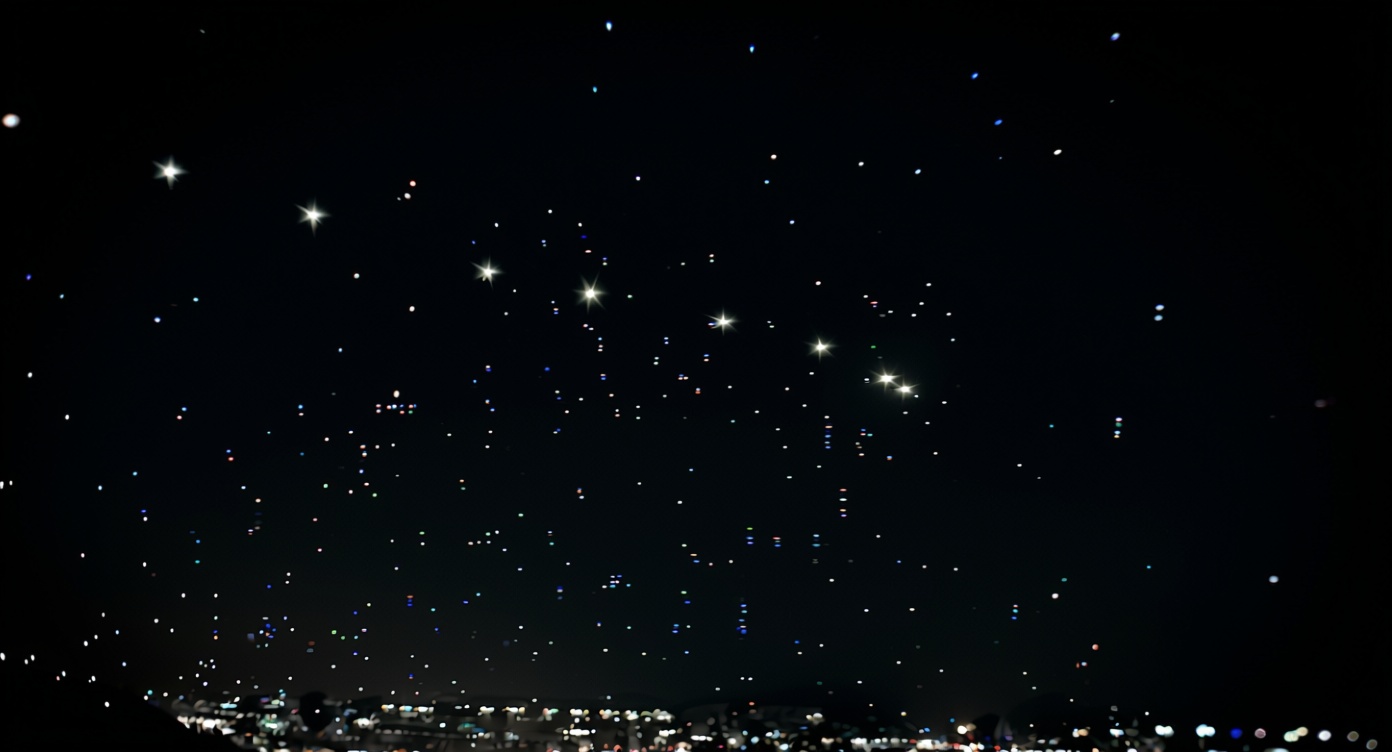
Loeb pointed to a June 12, 2026 release that included a June 5 report signed by Dr. Jon Kosloski, director of the Pentagon’s All-Domain Anomaly Resolution Office (AARO). According to the report, law enforcement officials observed UAP over two days in October 2023, including an orange “mother” orb that appeared to launch smaller red orbs. Loeb highlighted another detail from the report: roughly 40% of the phenomena in that case remained unresolved, lacking a reasonable explanation in terms of known human-made technology. For Loeb, that uncertainty is not a weakness of science but its starting point. He emphasized that UAP should not be reduced to a philosophical dispute over whether they are “real” or not; instead, he said, the question should be settled through better data, clearer analysis and open scientific inquiry.
Interstellar Objects and the Search for Life
The post also linked the UAP debate to the study of interstellar objects such as 1I/`Oumuamua and the more recent 3I/ATLAS, which has prompted renewed discussion about what kinds of unusual behavior scientists should watch for in future interstellar visitors. Loeb suggested that the next object discovered beyond our solar system — which he referred to hypothetically as 4I/Rubin, if identified by the Rubin Observatory in Chile — should be studied more closely than previous cases. He proposed that if such an object were to release methane near the Sun, researchers should consider whether that could indicate a biological signature of microbial life. And if it behaved in ways inconsistent with a comet or asteroid, Loeb said scientists should consider planning a rendezvous mission to intercept it and obtain a high-resolution image.
Scientific Uncertainty as a Method
A central theme in Loeb’s comments is that uncertainty is not a reason to avoid the topic, but a reason to investigate it more carefully. He argued that many people react to UAP and anomalous astronomical data either with rigid skepticism or firm belief, but that scientific progress depends on remaining open to both possibilities while demanding stronger evidence. “As in the case of UAP,” he wrote, “there is nothing better than high-quality data to settle all disputes.” Loeb’s broader message is that anomalous observations — whether in Earth’s skies or in deep space — should be treated as opportunities for careful measurement, not as invitations to speculation.