Overview
In the latest episode of the “Triangle Theory: Exploring Consciousness and Inner Truth” podcast, historian of religions Dr. Gregory Ortiz Shushan presented a synthesis of more than a thousand documented near‑death experiences (NDEs). Drawing on 25 years of cross‑cultural research, Shushan argued that the content of NDEs is consistently filtered through the survivor’s religious framework: “A Christian will see Jesus, a Buddhist will see Buddha.” The discussion, recorded on April 14, also examined how contemporary medical scoring systems—most notably the Grayson Scale developed at the University of Virginia School of Medicine—are applied to evaluate the intensity and phenomenology of these experiences.
Cultural Patterns Across History
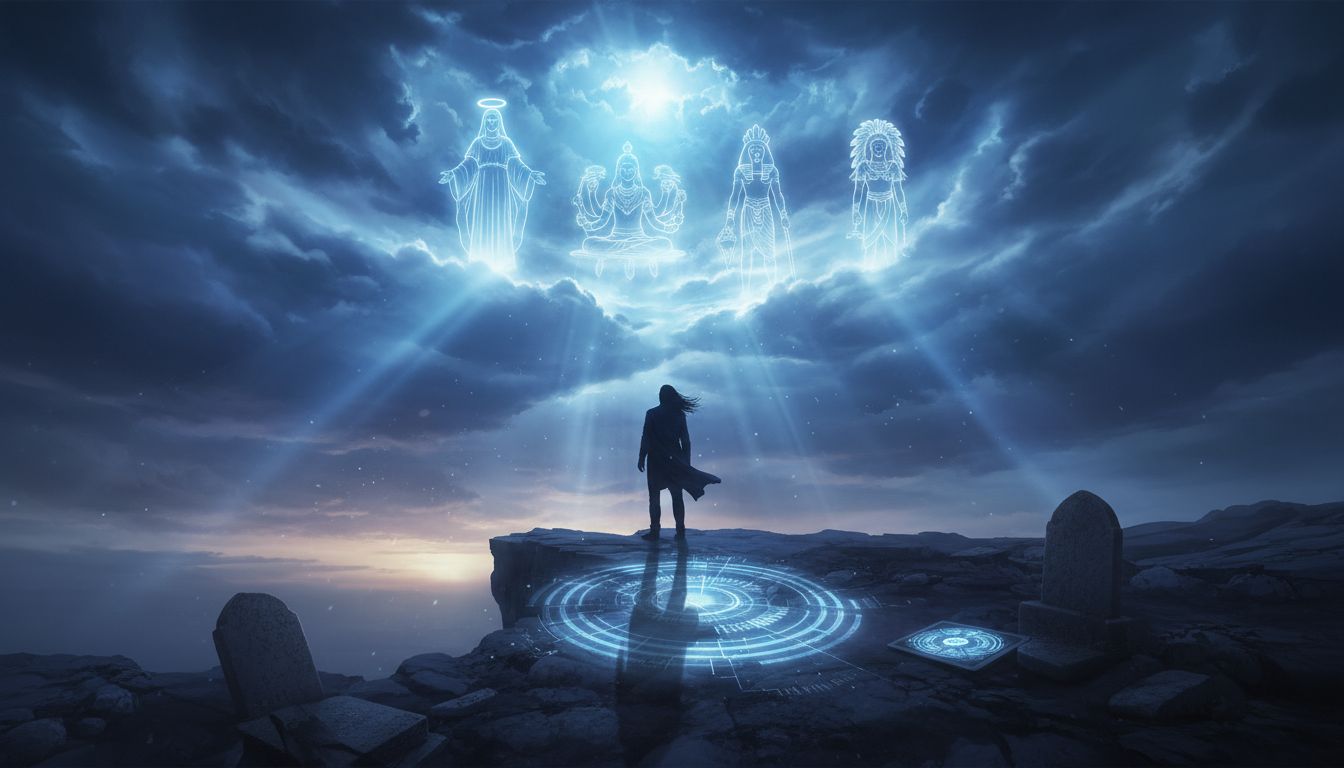
Shushan’s analysis spanned ancient Egypt, Indigenous American traditions, Sub‑Saharan Africa, India, Japan, and medieval Christianity. He noted that, despite vast temporal and geographic distances, reports share core elements such as a “being of light,” a life review, and a sense of unconditional love. However, the identity of the luminous figure tends to align with the individual’s belief system. In a 30‑minute segment, Shushan cited dozens of testimonies where Christian patients described encounters with a Christ‑like presence, while Buddhist respondents reported meeting a figure resembling the Buddha or a bodhisattva. He emphasized that this pattern does not diminish the authenticity of the experiences; rather, it suggests that the brain may interpret a universal consciousness through culturally specific symbols.
Scientific Evaluation and the Grayson Scale
The episode highlighted the UVA School of Medicine’s Grayson Scale, a quantitative tool that rates NDEs on dimensions such as perceived reality, emotional intensity, and post‑event transformation. Shushan critiqued the scale for its largely Western bias, arguing that it underrepresents non‑Christian motifs and may overlook culturally specific nuances. He also contrasted NDEs with pharmacologically induced experiences, such as those generated by DMT, pointing out a “conviction gap” in which DMT users often lack the enduring personal meaning that NDE survivors report. The conversation referenced the Pam Reynolds case, frequently cited as one of the most rigorously documented NDEs, wherein a patient reported detailed observations during a medically induced cardiac arrest that were later corroborated by surgical staff.
Vivid Dreaming After Near‑Death Encounters
A striking finding discussed in the podcast is the marked increase in vivid, lucid dreaming among NDE survivors. Researchers surveyed participants from the “Cardiac Ward Study,” a longitudinal project tracking patients who experienced cardiac arrest. The data revealed that, compared with a control group, NDE survivors reported a three‑fold rise in dream recall frequency and a higher incidence of dreams described as “hyper‑real” or “lucid.” While the mechanism remains unknown, Shushan suggested that the brain’s heightened neuroplasticity during the peri‑mortem period might trigger lasting alterations in sleep architecture. He cautioned that, despite the robust correlation, causality has not been established and further neurophysiological studies are required.
Ongoing Research and Future Directions
Shushan concluded by outlining current research avenues, including neuroimaging studies aimed at detecting electromagnetic bursts that some investigators associate with the “life review” phase of NDEs. He also announced a forthcoming comparative analysis of ancient textual accounts versus modern clinical reports, seeking to determine whether the “geometry of dying” described in medieval Christian mysticism parallels contemporary phenomenology. Listeners were directed to Shushan’s website and the podcast’s newsletter for updates on these projects. While the scientific community remains divided over whether NDEs can ever constitute proof of an afterlife, the episode underscored a growing consensus that these experiences merit rigorous, culturally sensitive investigation—particularly given their profound impact on survivors’ worldviews, mental health, and, as the new data suggest, their dream lives.


