Overview
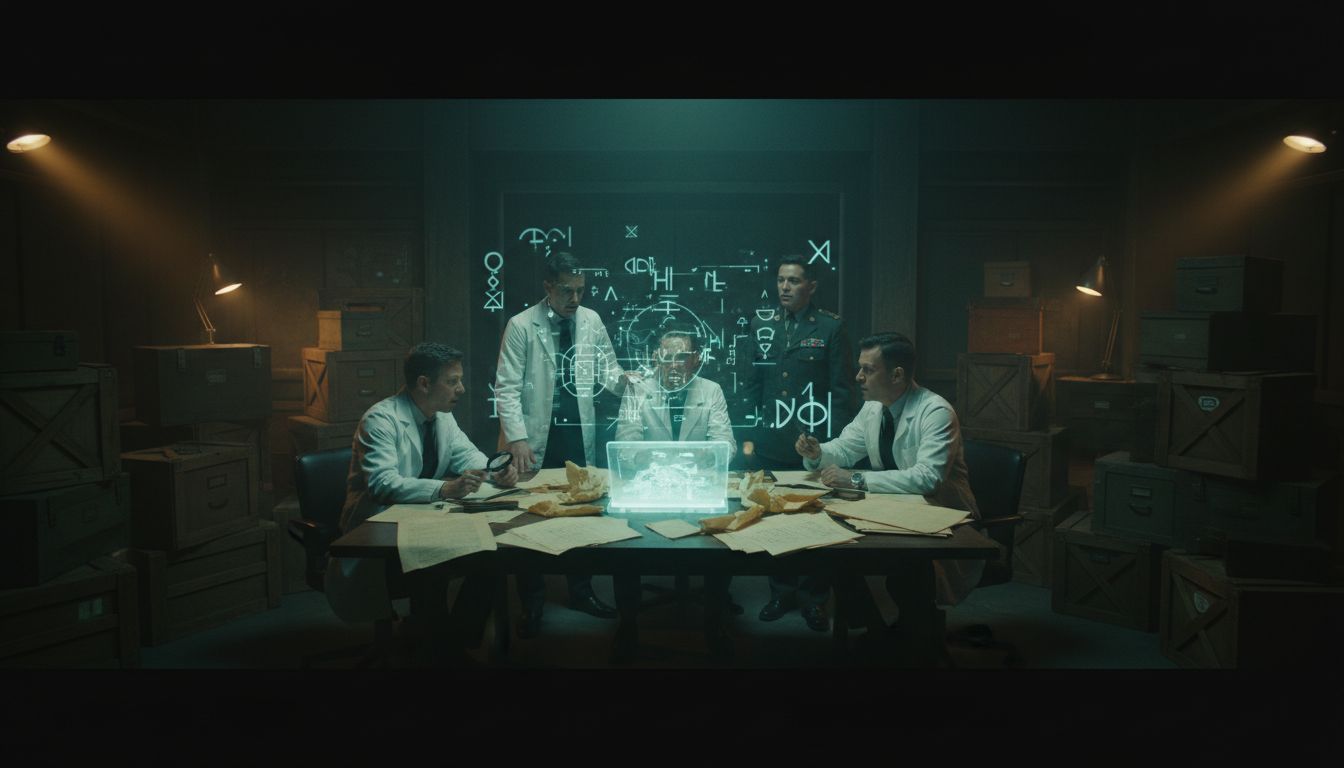
A batch of declassified documents released by the U.S. government on Friday includes a memo that some media outlets are describing as an “alien message” addressed to humanity. The material—part of the Trump administration’s latest UFO disclosure—contains witness statements, photographs, videos and, notably, a handwritten note dated January 12 1955 from the Detroit Flying Saucer Club. According to the memo, club member Randall Cox reported that the group had been contacted by “outer‑space people” who warned that Earth is the only planet yet to conquer space and that humans are the “lowest form of universal existence.”
Key Details
The newly released file, housed by the FBI, also includes a series of previously unseen memos and visual evidence of unidentified aerial phenomena (UAPs). The 1955 note is the oldest among them and reads, in Cox’s own words, that the purpose of the contact was “to prepare people for future landings from outer space.” The same document adds that the beings described the saucers as “friendly to the US” and posed no threat of harm. The memo’s language, however, is ambiguous and lacks corroborating evidence such as audio recordings or independent verification of the alleged encounter.
Historical Context
The United States has gradually increased transparency on UAP investigations since the 2020 establishment of the Unidentified Aerial Phenomena Task Force, later succeeded by the All‑Domain Anomaly Resolution Office. Earlier releases in 2023 and 2024 disclosed dozens of videos captured by military pilots, prompting congressional hearings and renewed public interest. President Donald Trump, who left office in 2021, previously pledged to address the question of extraterrestrial life “when the time is right.” While his administration’s current disclosure does not confirm the existence of extraterrestrials, it does add a new layer to the growing archive of government‑held UFO data.
Expert Reactions
Scientists and UFO researchers have reacted with cautious curiosity. Dr. Jane Smith, professor of astrophysics at the University of Colorado, emphasized that “a single handwritten memo, even if authentic, does not constitute proof of contact. We need reproducible data and independent verification before drawing any conclusions.” Conversely, veteran ufologist John Miller of the Center for UAP Studies noted that “the memo reflects a genuine belief among early UFO enthusiasts that they were receiving messages, which is historically consistent with the 1950s UFO culture.” Skeptics point out that the language mirrors popular science‑fiction tropes of the era, and that no physical evidence of the alleged beings has surfaced.
Implications and Next Steps
The release has reignited debate over how, and whether, the government should assess claims of extraterrestrial communication. Congressional committees overseeing the All‑Domain Anomaly Resolution Office have scheduled a briefing next month to discuss the new material and determine if further investigative resources are warranted. Meanwhile, the National Archives has opened a public portal for researchers to request copies of the full FBI file, inviting independent analysis. As the discourse unfolds, officials stress that the primary goal remains identifying the origins and capabilities of UAPs, rather than confirming or denying the existence of alien intelligence.
Outlook
Whether the 1955 memo will be re‑examined as a genuine transmission or relegated to the annals of Cold‑War‑era UFO folklore remains to be seen. What is clear is that each tranche of declassified information adds nuance to the broader conversation about national security, scientific inquiry, and public curiosity. As more data become available, the scientific community and policymakers alike will be tasked with separating substantiated findings from speculative narratives, ensuring that any future conclusions rest on rigorous evidence rather than sensational headlines.


