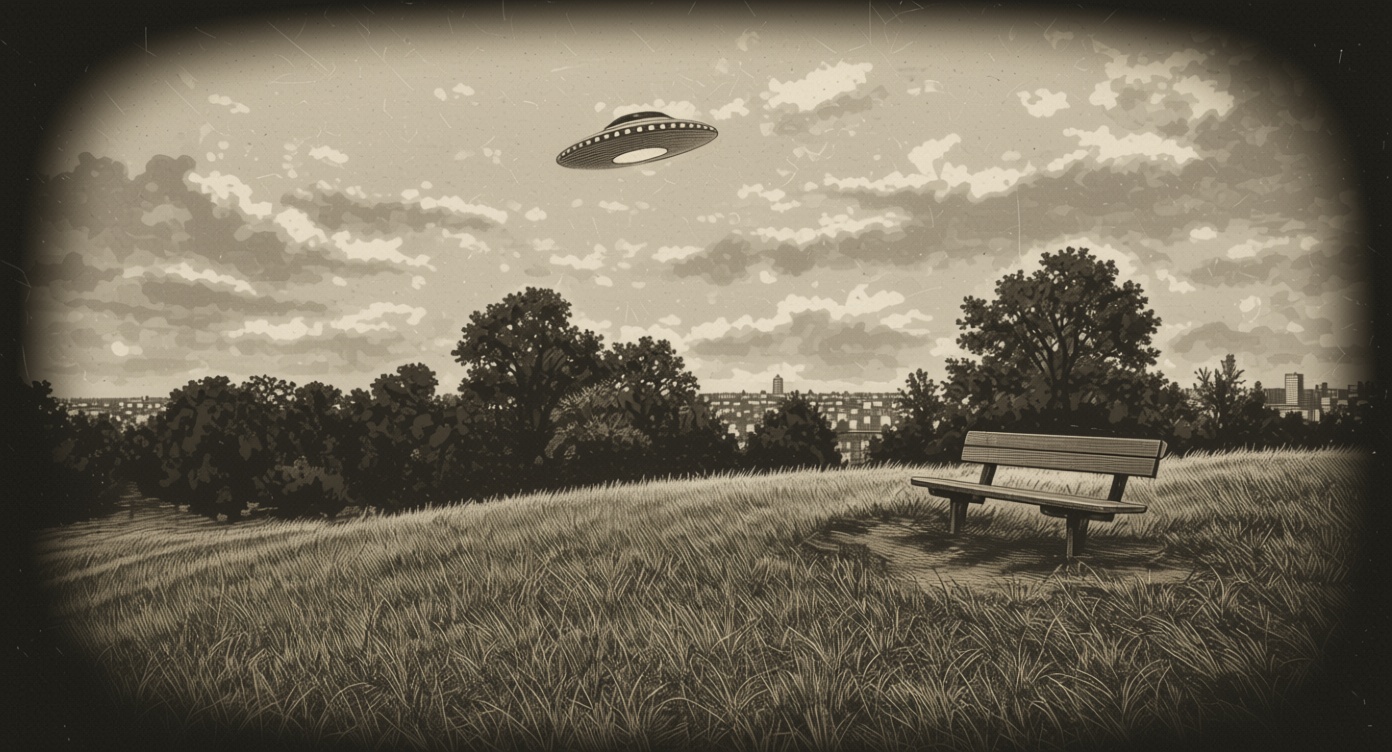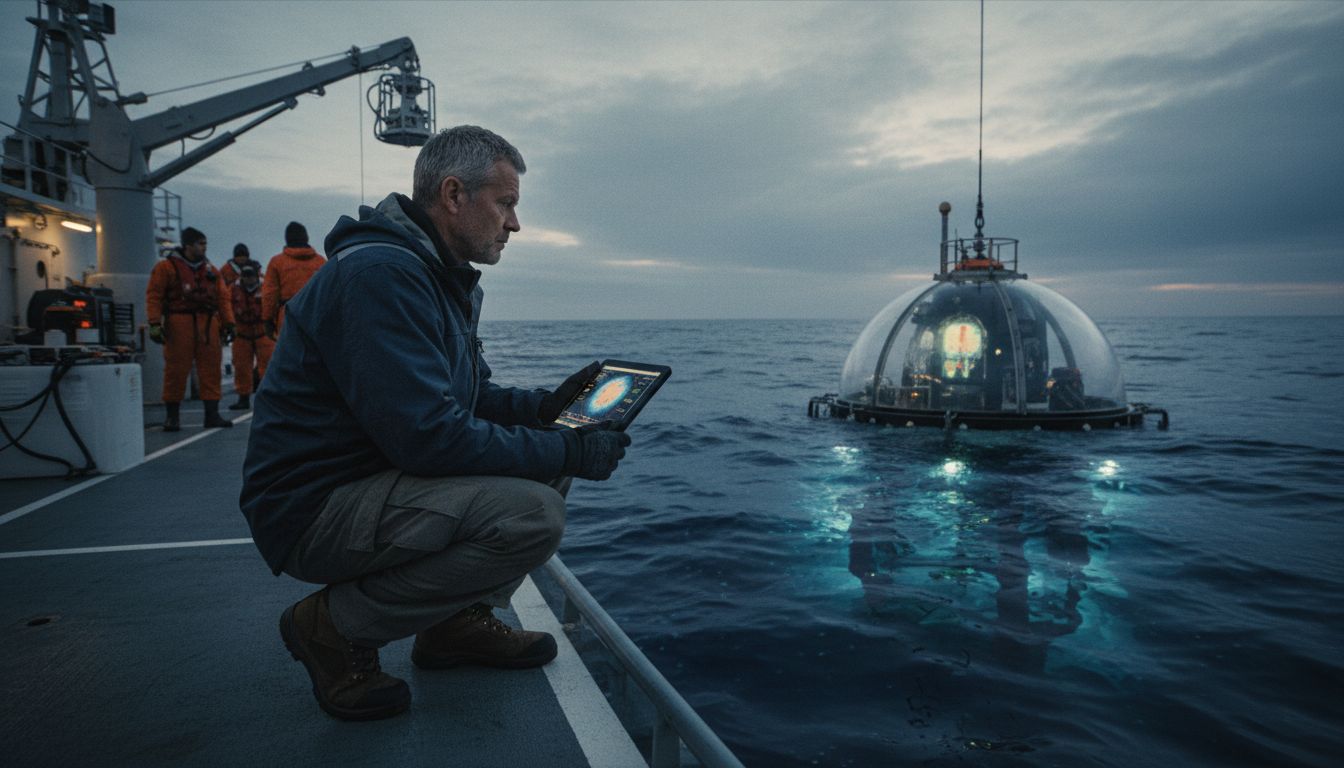
A growing contingent of physicists and astrobiologists is arguing that the most compelling evidence of extraterrestrial technology may already be hidden in plain view, disguised as everyday objects or natural phenomena. Dr. Elena Martínez, a professor of astrophysics at the University of Arizona and a leading voice in the “interstellar probe” hypothesis, told Newsweek that the probability of an alien civilization deploying autonomous surveillance devices in the solar system is “non‑negligible,” and that such probes would have every incentive to remain undetected. “If an intelligent species wanted to study humanity without interfering, the smartest strategy would be to blend in with the background—whether that means masquerading as a weather balloon, a cloud formation, or even a piece of terrestrial debris,” Martínez said.
Her comments come amid a surge of Unidentified Aerial Phenomena (UAP) reports that have been formally acknowledged by the U.S. government. In June 2024, the Office of the Director of National Intelligence released a preliminary assessment that catalogued more than 140 incidents involving objects that exhibited flight characteristics beyond known aeronautical capabilities. While most of those cases remain unexplained, the report stopped short of attributing them to extraterrestrial sources, instead calling for “rigorous scientific analysis.” Since then, congressional interest has intensified: a Senate‑passed bill, now moving to the House, would allocate $250 million through the end of January to fund a coordinated UAP research program, an effort Martínez hopes will include “systematic searches for anomalous signatures that could indicate an artificial origin.”
The idea of hidden probes is not new, but recent advances in sensor technology and data analytics have given researchers tools to test the hypothesis more concretely. Martínez’s team is collaborating with the SETI Institute to scan atmospheric and orbital data for patterns that defy natural explanations—such as objects maintaining precise positions relative to Earth’s magnetic field, or emitting narrow‑band radio frequencies that do not match known sources. In a pilot study released last month, the group identified a cluster of high‑altitude objects that appeared to follow a coordinated lattice formation over the Pacific Ocean for several hours. Although the data are still being vetted, Martínez cautioned that “correlation does not equal causation,” but emphasized that such anomalies merit deeper investigation rather than dismissal.
Skeptics warn that the “probe” narrative risks conflating unrelated phenomena with speculative extraterrestrial intent. Dr. Michael Hsu, a senior researcher at the Aerospace Defense Analysis Center, noted that many UAP sightings can be traced to atmospheric optics, classified military tests, or sensor glitches. “We have a responsibility to apply Occam’s razor,” Hsu said, “and to prioritize terrestrial explanations before invoking alien technology.” Nonetheless, he acknowledged that the current climate of openness—spurred by the Pentagon’s establishment of the All‑Domain Anomaly Resolution Office—creates a rare opportunity for interdisciplinary scrutiny that could either confirm or refute the probe hypothesis with scientific rigor.
The broader scientific community is watching closely, as the outcome could reshape both astrobiology and planetary security policy. If evidence of an extraterrestrial probe were to emerge, it would raise immediate questions about intent, communication protocols, and the legal status of foreign objects in Earth’s airspace. Conversely, a thorough, evidence‑based dismissal would reinforce confidence in existing aerospace monitoring systems. For now, Martínez urges patience and methodical research. “The universe is vast, and our tools are just beginning to catch up,” she said. “Whether we find a hidden observer or not, the process of looking will expand our understanding of the cosmos and our place within it.”