Overview
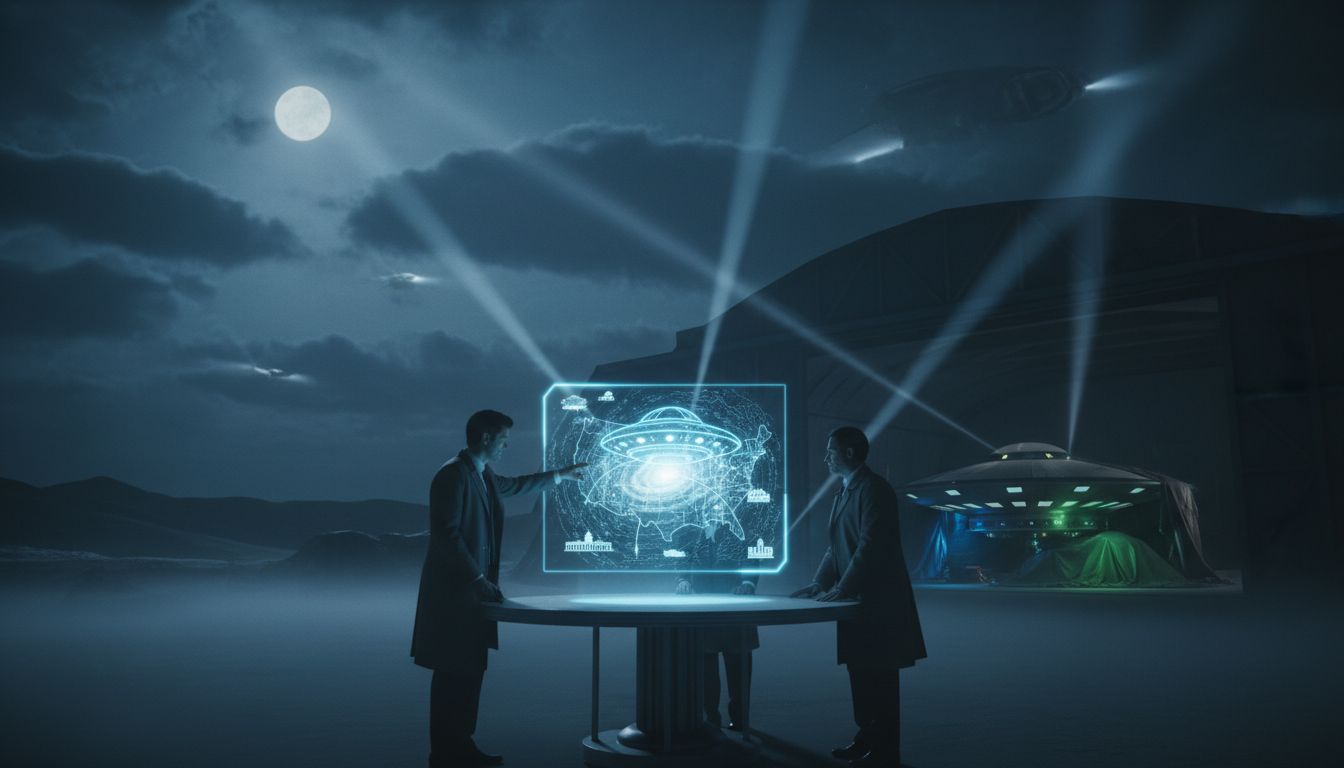
U.S. lawmakers are increasingly foregrounding the search for extraterrestrial life in hearings, budget requests and campaign rhetoric. From Senate subcommittees probing “unidentified aerial phenomena” (UAP) to bipartisan bills earmarking funds for NASA’s astrobiology programs, the issue has moved from fringe curiosity to a political priority. Analysts say the surge reflects a blend of genuine national‑security concerns, a desire to tap into public fascination, and an effort to craft a forward‑looking policy narrative that can win votes and donor support.
Political Drivers
In the past year, several high‑profile legislators—including Sen. Marco Rubio (R‑FL) and Rep. Katherine Clark (D‑MA)—have championed bills that would create a permanent “UAP office” within the Department of Defense and increase funding for deep‑space probes. During a March 2026 hearing, Rep. Clark remarked, “Our citizens deserve transparency on what’s out there, and our security apparatus must have the tools to assess any potential threat.” The same sentiment was echoed by Sen. Rubio, who framed the issue as a strategic imperative: “If an advanced technology—whether terrestrial or otherwise—were to appear in our skies, we must be prepared to respond swiftly and decisively.”
Policy‑makers are also leveraging the topic to signal technological leadership. The bipartisan “Space Exploration and Extraterrestrial Research Act” passed the House in February, allocating $1.2 billion over five years for advanced telescopes and interstellar probes. Proponents argue that investing in the search for life abroad bolsters domestic STEM education and positions the United States at the forefront of a potential new scientific frontier.
Security Implications
The Pentagon’s 2023 UAP assessment, which concluded that a “significant number of incidents remain unexplained,” has become a cornerstone for the security narrative. Former Defense Department official Dr. Ellen Miller, who served on the UAP task force, told The Hindu, “The lack of data does not equate to lack of risk. Unidentified objects could represent advanced foreign capabilities, and we cannot discount that possibility.” Congressional committees have therefore called for expanded sensor networks, joint‑service analysis teams, and clearer reporting protocols—measures that also serve to enhance overall aerospace situational awareness, irrespective of any extraterrestrial origin.
Public and Cultural Context
Polling by the Pew Research Center in late 2025 shows that 68 % of Americans believe the government should disclose any credible evidence of extraterrestrial life, a rise of ten points from 2020. This appetite is fueled by high‑profile media events, such as the release of declassified Navy footage and the popular streaming series “Beyond the Stars.” Cultural scholars note that the current fascination mirrors Cold‑War anxieties, where unknown aerial threats spurred both fear and innovation. Dr. Anjali Patel, a sociologist at Georgetown University, observed, “The extraterrestrial narrative offers a modern mythos through which the public processes uncertainty about technology, geopolitics, and humanity’s place in the cosmos.”
Outlook
While enthusiasm for the search for life is palpable, experts caution against politicizing science. NASA Administrator Bill Nelson, speaking at a recent aerospace conference, emphasized that “funding must be guided by rigorous scientific merit, not partisan posturing.” Nonetheless, the convergence of security imperatives, voter interest, and the promise of scientific breakthroughs suggests that the U.S. political establishment will continue to elevate the extraterrestrial agenda in the near term. As legislative calendars fill with bills on UAP oversight and astrobiology research, the United States appears poised to shape both the policy framework and the public discourse surrounding humanity’s quest to answer the age‑old question: Are we alone?


