Overview
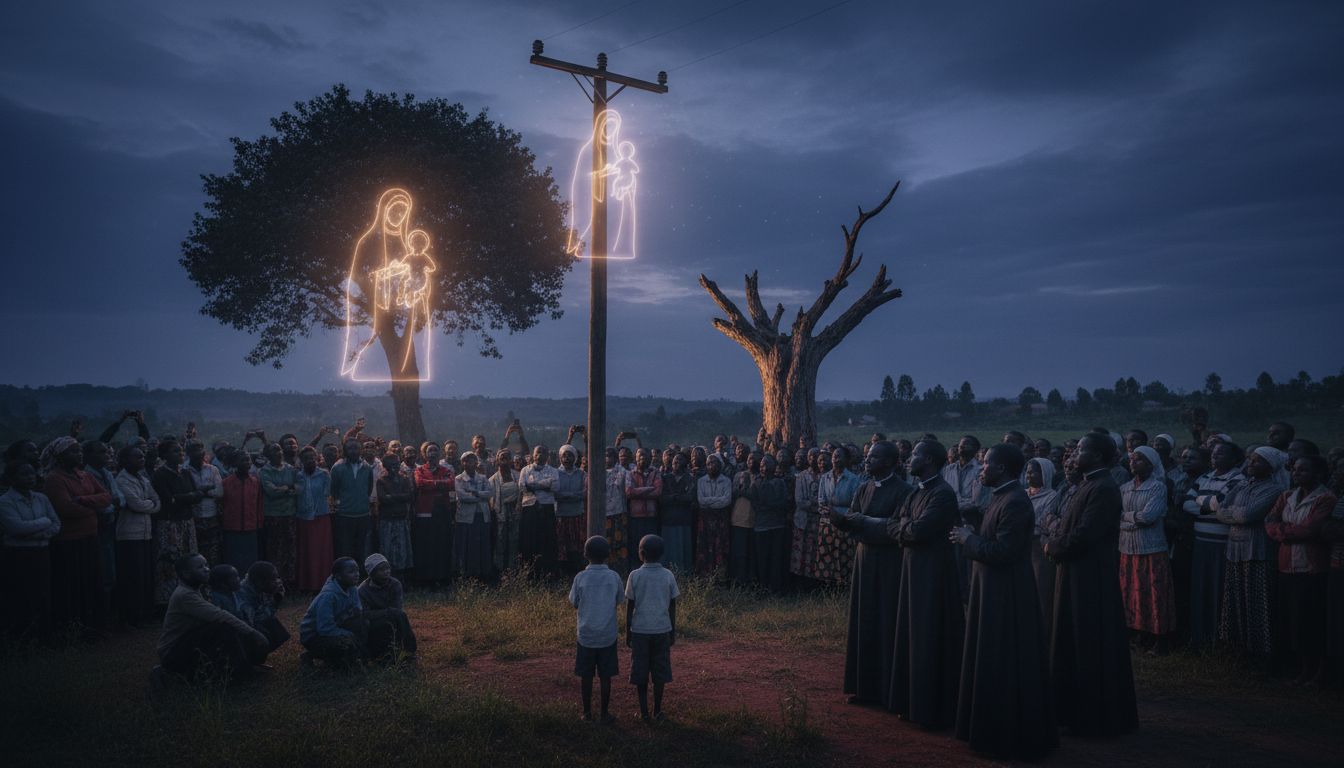
In the northern district of Musanze, Rwanda, a small crowd gathered this week after two local children reported seeing an image of the Virgin Mary cradling the infant Jesus appear first on a hydro‑pole and later on a nearby tree. The sighting, which quickly spread through social media and word‑of‑mouth, has attracted dozens of on‑lookers, some of whom have taken photographs and videos that are now circulating online. While the phenomenon has sparked excitement among believers, it has also prompted church authorities to advise caution and to remind the public of the rigorous process the Catholic Church follows before recognizing any alleged miracle.
Eyewitness Accounts
The children, aged eight and ten, told local police that they were playing near the hydro‑pole on the outskirts of the village of Kinyarwanda when a luminous figure materialised on the metal structure. “It looked like a woman in a white dress, holding a baby,” the older child recalled to a regional reporter. Within hours, the image reportedly shifted to the trunk of a large mango tree, where it remained visible for an estimated fifteen minutes before fading. Villagers who arrived later claimed to have seen a faint, glowing outline and described a feeling of “peaceful warmth.” The incident has been documented in several short video clips posted on platforms such as WhatsApp and Facebook, though the footage remains low‑resolution and unverified.
Church Response
The Catholic Diocese of Byumba, which oversees Musanze, issued an official statement through Bishop Aloysius Nshimiyimana, urging the faithful to “exercise prudence and refrain from attributing supernatural significance until a thorough investigation is completed.” The bishop emphasized that the Church’s canon law requires a multidisciplinary commission—comprising theologians, psychologists, and scientific experts—to assess the authenticity of any claimed apparition. “Pastoral care is essential, but so is safeguarding the integrity of our faith,” Nshimiyimana said in a televised interview. Local parish priests have been instructed to counsel parishioners, discourage mass gatherings at the site, and to report any further developments to the diocesan office.
Historical and Global Context
The Musanze episode revives a longstanding debate within the Catholic hierarchy about who holds the authority to validate miracles. Similar controversies have arisen elsewhere, most famously the Vatican’s inconclusive investigations into the alleged “chronovisor,” a purported device said to view past events—a claim that was never substantiated and remains a cautionary tale about unverified phenomena. Rwanda’s own history includes several reported Marian apparitions, such as the 1990s sightings in the Kibuye region, none of which received formal Vatican recognition. Scholars note that while popular devotion can inspire renewed faith, the Church remains wary of “spiritual sensationalism” that may undermine doctrinal consistency.
Looking Ahead
Authorities in Musanze have pledged to cooperate with the diocesan commission, and a team of local investigators is scheduled to collect physical evidence, interview witnesses, and consult with meteorological experts to rule out natural explanations such as light refraction or electrical discharge. Meanwhile, the site has become a modest pilgrimage spot, with vendors setting up modest stalls selling water and rosaries. Community leaders have called for calm, reminding residents that “faith is a personal journey, not a spectacle.” The outcome of the Church’s inquiry—whether it will dismiss the event as a misperception or move toward a formal declaration—will likely influence how similar claims are handled across the region in the future.


