Overview
On February 19, President Joe Biden announced that his administration had directed the intelligence community to begin the process of identifying and releasing government files related to alien and extraterrestrial life, unidentified aerial phenomena (UAP), and unidentified flying objects (UFOs). The declaration follows a wave of congressional pressure that, beginning in the mid‑1990s, forced the U.S. Air Force to declassify documents concerning the 1947 Roswell incident. While the new initiative promises greater transparency, the Roswell case itself remains a cautionary example of how unverified claims can become entrenched in popular culture despite a robust scientific record.
Historical Background
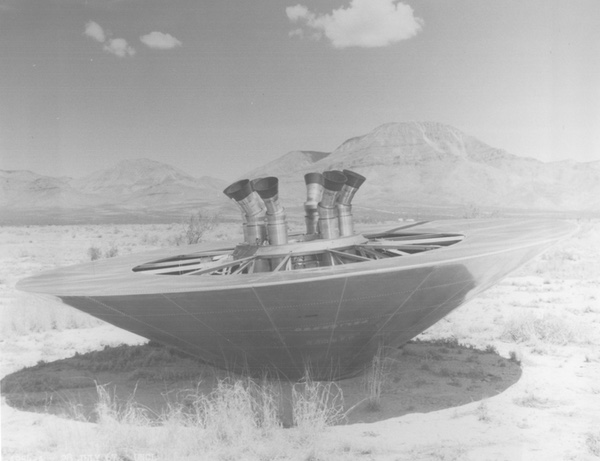
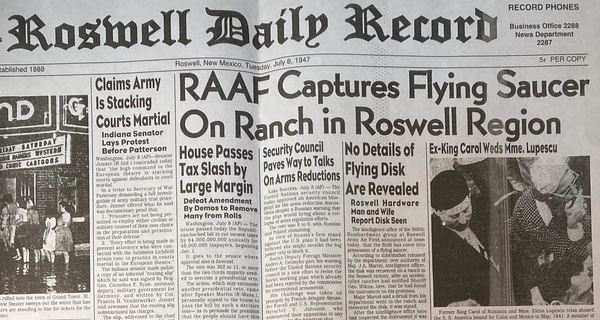
In July 1947 a rancher near Roswell, New Mexico, reported finding strange debris on his property. Initial newspaper headlines proclaimed that the Army Air Forces had recovered a “flying saucer,” only for the military to retract the claim within 24 hours, labeling the material a weather balloon. Decades later, in 1994, the Air Force revised its explanation, stating the wreckage belonged to Project Mogul—a top‑secret program that launched high‑altitude balloons equipped with microphones to detect Soviet nuclear tests. The Air Force’s subsequent reports, The Roswell Report – Fact vs. Fiction in the New Mexico Desert (1995) and The Roswell Report: Case Closed (1997), provided technical documentation that supported the Mogul interpretation and debunked allegations of recovered alien bodies.
The Rise of Mythology
The incident entered the national imagination after the 1980 publication of The Roswell Incident by Charles Berlitz and William L. Moore. The book asserted that the government had not only retrieved a crashed spacecraft but also “alien bodies.” Berlitz, already known for sensational works on the Bermuda Triangle, leveraged the lack of official clarity to weave a narrative that resonated with a public hungry for mystery. Television series, movies, and countless conspiracy‑theory websites have since amplified the story, often ignoring the detailed Air Force investigations. As the Space Review notes, “the book by Berlitz and Moore alleged…sensational paranormal pseudoscientific stories were Berlitz’s bread and butter.”
Scientific and Governmental Perspective
Project Mogul was a legitimate Cold‑War research effort aimed at monitoring acoustic signatures of nuclear detonations. Scientists believed that low‑frequency sound waves could become trapped between atmospheric layers, allowing distant detection of Soviet tests. The program’s balloons carried arrays of microphones, radios, and other instrumentation—materials that, when recovered, could easily be mistaken for “futuristic” debris by observers unfamiliar with the technology. The 1997 Air Force report further clarified that alleged “bodies” were in fact instrumented crash‑test dummies used in high‑altitude experiments, not extraterrestrials. These findings underscore the importance of rigorous, evidence‑based inquiry when evaluating UAP sightings.
Implications for Contemporary UAP Inquiry
The renewed push for declassification, spurred by the president’s recent directive, offers an opportunity to apply the lessons of Roswell to today’s UAP investigations. Transparency can help separate genuine unknown phenomena from misidentified conventional objects, reducing the fertile ground for speculation. As the Space Review editorial observes, “despite decades of speculation, the original claims remain unsubstantiated, highlighting the need for rigorous scientific investigation.” By grounding future disclosures in documented research and peer‑reviewed analysis, policymakers can foster public trust while ensuring that legitimate aerospace and national‑security concerns receive the attention they merit.
Images: