Overview
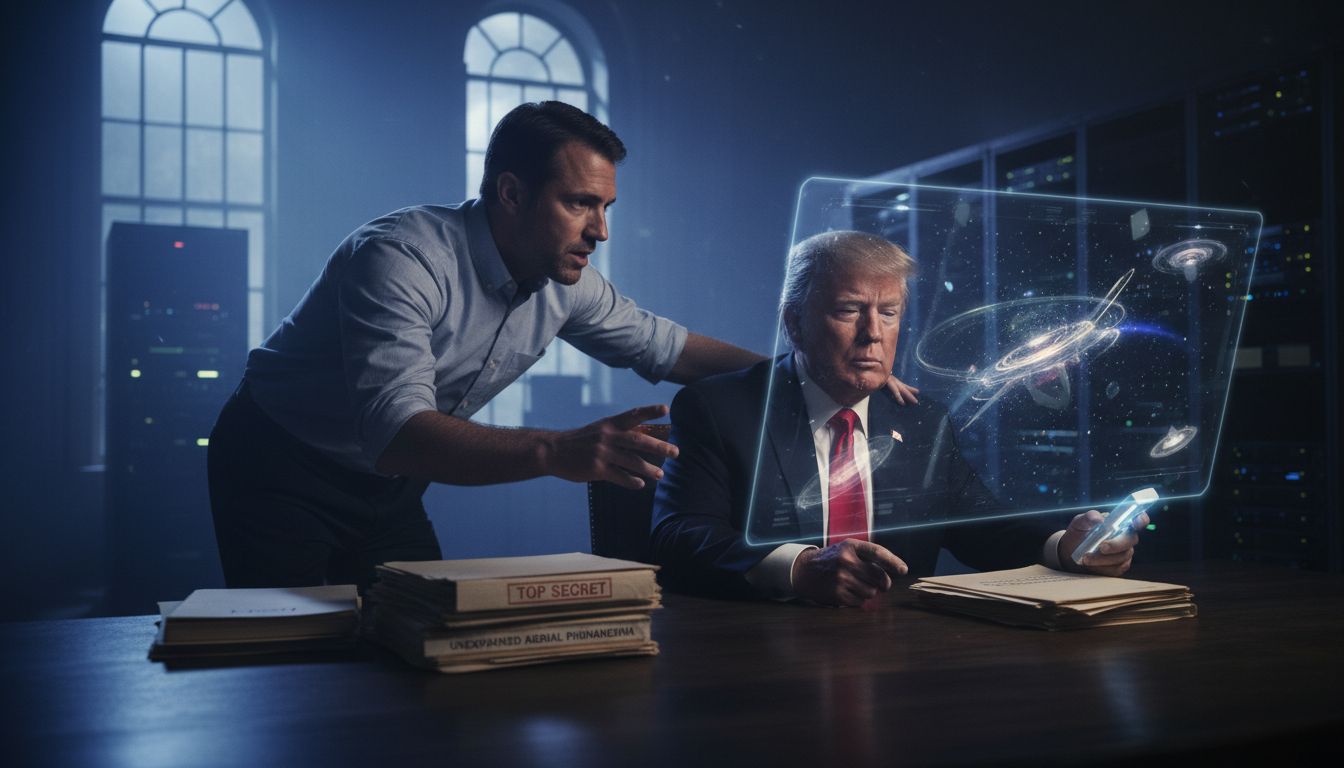
Republican Representative Jim Jordan (R‑Ohio) has publicly urged former President Donald Trump to declassify and release a cache of “wild” Unidentified Aerial Phenomena (UAP) files that remain under the former president’s control. Speaking on the House floor and in a press statement, Jordan argued that “America needs to know” what the government knows about these sightings, emphasizing both national‑security concerns and the need to preserve public trust in government transparency.
Legislative Context
The push for greater openness on UAPs follows a series of high‑profile moves by the Pentagon and Congress over the past few years. In 2020, the Department of Defense established the Unidentified Aerial Phenomena Task Force, later succeeded by the All‑Domain Anomaly Resolution Office (ADARO), to systematically investigate anomalous sightings reported by military personnel. In June 2021, the Office of the Director of National Intelligence released a preliminary assessment that documented 144 incidents, many of which remained unexplained. While that report was publicly available, a substantial volume of raw data, sensor recordings, and intelligence analyses remains classified.
Jordan’s Call to Action
Jordan’s request centers on a “wild” set of files that, according to the congressman, were handed to Trump during the transition after the 2020 election. “The American people have a right to know what our own intelligence agencies have seen in our skies,” Jordan said in a floor speech on April 10. He added that releasing the documents would “bolster confidence in our institutions and ensure that any potential threats are addressed without political interference.” Jordan’s appeal is not merely rhetorical; he has formally submitted a letter of inquiry to the National Archives, requesting that the documents be transferred to the Presidential Records Act system for review and possible declassification.
Security and Public‑Trust Implications
Experts note that the tension between secrecy and disclosure is a longstanding feature of UAP investigations. Dr. Sean M. Graham, a former senior defense analyst, warned that “withholding credible data can fuel speculation and erode trust, especially when the public sees conflicting statements from officials.” Conversely, intelligence officials caution that premature release of raw sensor data could reveal collection methods, sensor capabilities, or source locations, potentially compromising ongoing operations. The Department of Defense has repeatedly stressed that any declassification must balance transparency with the protection of sensitive sources and methods.
Political Landscape
Jordan’s demand arrives amid a broader partisan debate over the handling of UAP information. While several Democratic lawmakers have called for a full congressional briefing on the matter, many Republicans, including Jordan, frame the issue as a matter of accountability and national‑defense readiness. Trump’s own public comments on UFOs have been sporadic, ranging from dismissive remarks to occasional acknowledgment of “something out there.” By pressing the former president, Jordan hopes to sidestep potential political roadblocks and accelerate the release process.
Outlook
The National Archives has not yet responded to Jordan’s request, and it remains unclear whether the “wild” files will be transferred for review. Should the documents be released, analysts anticipate a new wave of scrutiny from both the scientific community and the public, potentially prompting legislative action to formalize UAP reporting mechanisms. For now, Jordan’s appeal underscores a growing consensus in Washington: transparent handling of UAP data is essential to national security and public confidence. The next weeks will reveal whether the former president’s team will comply, and how the intelligence community will navigate the delicate balance between openness and operational security.


