Overview
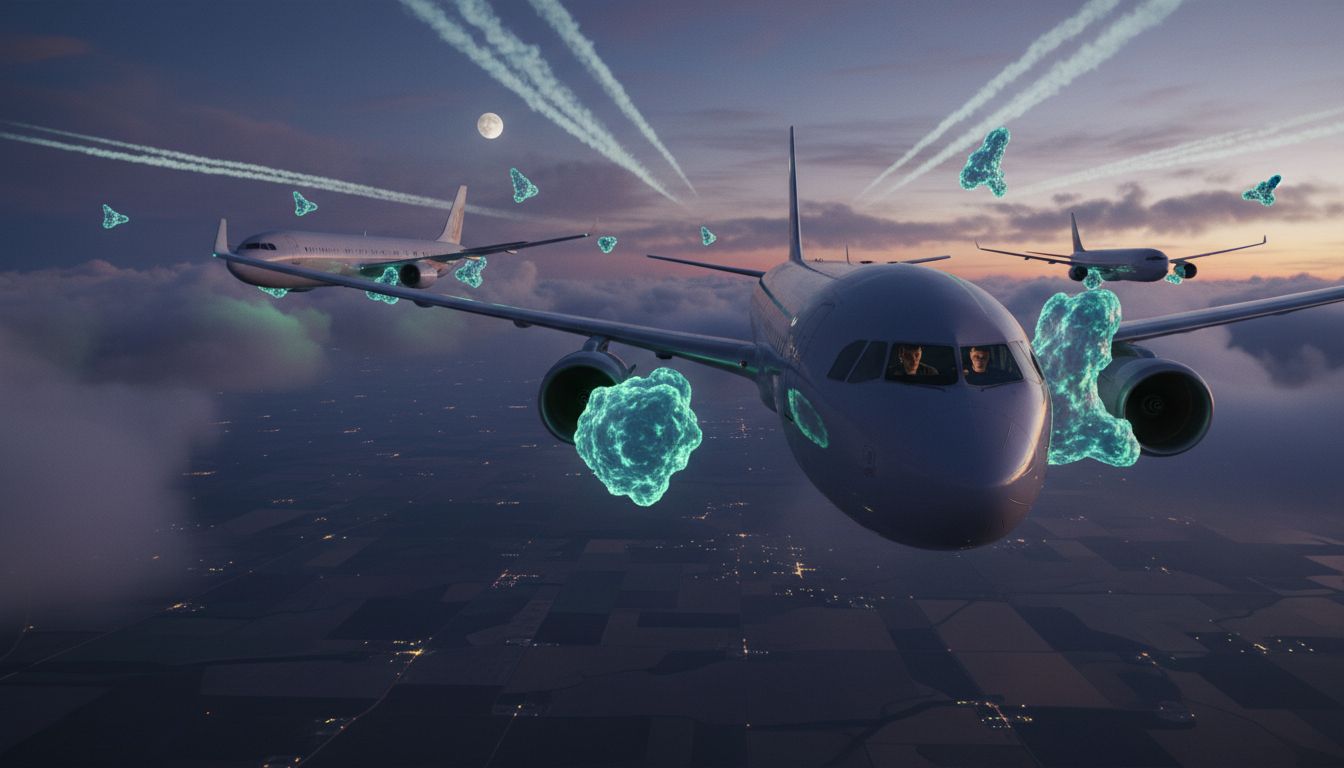
Seventy‑three years after the infamous 1952 “Washington sky‑swarm,” a new series of reports from commercial pilots suggests that unidentified aerial phenomena (UAP) are again appearing in U.S. airspace. Over the past two weeks, pilots operating transcontinental routes from the East Coast to the Midwest have described fast‑moving, highly maneuverable objects that briefly appeared on their flight decks, vanished from radar, and then re‑emerged elsewhere. The EurAsian Times has labeled the cluster of sightings “America’s most dramatic UFO encounter since 1952,” prompting renewed interest from the Air Force’s UAP Task Force and congressional oversight committees.
Historical Context
The 1952 incident, commonly referred to as the “Washington Flap,” occurred during a period of heightened Cold War tension and the Korean War. Radar operators at Washington National Airport, Andrews Air Force Base, and surrounding facilities recorded dozens of erratic blips that dipped, hovered, and disappeared over a 100‑mile radius. Fighter pilots Lt. William L. Patterson and Capt. John McHugo were scrambled in F‑94 interceptors; they reported four bright, steady lights that performed abrupt 90‑degree turns and rapid accelerations—maneuvers beyond the capabilities of known aircraft at the time. At the era’s conclusion, officials attributed the events to temperature inversions, a hypothesis later challenged by subsequent declassified documents and eyewitness testimony.
Recent Pilot Reports
According to statements collected by the Federal Aviation Administration (FAA) and the Air Line Pilots Association (ALPA), at least six commercial crews reported visual contacts with luminous objects between 18,000 and 30,000 feet altitude. Captain Maria Torres of United Airlines recounted, “We were cruising at 29,000 feet when a cluster of white‑blue lights appeared ahead, moved laterally at a speed that seemed to exceed the speed of sound, then vanished from our view and from the aircraft’s transponder.” Similar accounts were logged by pilots of Delta, American, and Southwest airlines on routes crossing the Ohio River Valley and the Great Lakes region. In each case, onboard radar and ATC secondary surveillance radar showed no corresponding return, and the objects were not detected by ground‑based primary radar installations.
Official Response
The Department of Defense’s UAP Task Force, re‑established in 2023, issued a brief statement acknowledging the reports and confirming that the incidents are under review. “We are coordinating with the FAA, the National Oceanic and Atmospheric Administration, and civilian aviation stakeholders to gather all available data, including radar logs, flight‑deck video, and pilot testimonies,” the statement read. Congressional Representative James Miller (R‑OH), a member of the House Committee on Armed Services, has requested a briefing on the matter, noting that “repeated, unexplained contacts in busy air corridors merit thorough investigation to ensure the safety of our national airspace.”
Analysis and Outlook
While the recent sightings share superficial similarities with the 1952 events—particularly the rapid, erratic flight patterns and lack of radar signature—experts caution against drawing direct parallels without comprehensive data. Dr. Elena Ruiz, a senior researcher at the Center for Aerospace Studies, emphasized that “atmospheric phenomena, advanced drone technology, or classified test flights can produce visual and radar anomalies that mimic classic UAP descriptions.” Nonetheless, the convergence of multiple independent pilot reports within a short timeframe is unusual and has prompted calls for expanded sensor coverage, including the deployment of high‑resolution infrared cameras at key waypoints. The upcoming UAP Task Force briefing, scheduled for March 2026, is expected to provide preliminary findings and outline next steps for inter‑agency collaboration.
In sum, the resurgence of unexplained aerial encounters over U.S. airspace—echoing the dramatic 1952 Washington incident—has reignited both public fascination and governmental scrutiny. As data collection intensifies and oversight bodies demand transparency, the aviation community awaits a clearer understanding of whether these phenomena represent a new security challenge, a technological frontier, or a natural atmospheric mystery.


