
Overview
Philosophy professor Michael Grosso recounts a striking incident that occurred after a classroom discussion on the mind‑body problem. A student, identified only as “LS,” claimed to have experienced an out‑of‑body episode the night before and, according to Grosso, used that state to move a music stand in his apartment. The episode has led Grosso to question whether consciousness is generated by the brain or received from an external source, and to explore how brain trauma, near‑death experiences (NDEs) and savantism might inform that debate.
Incident Details
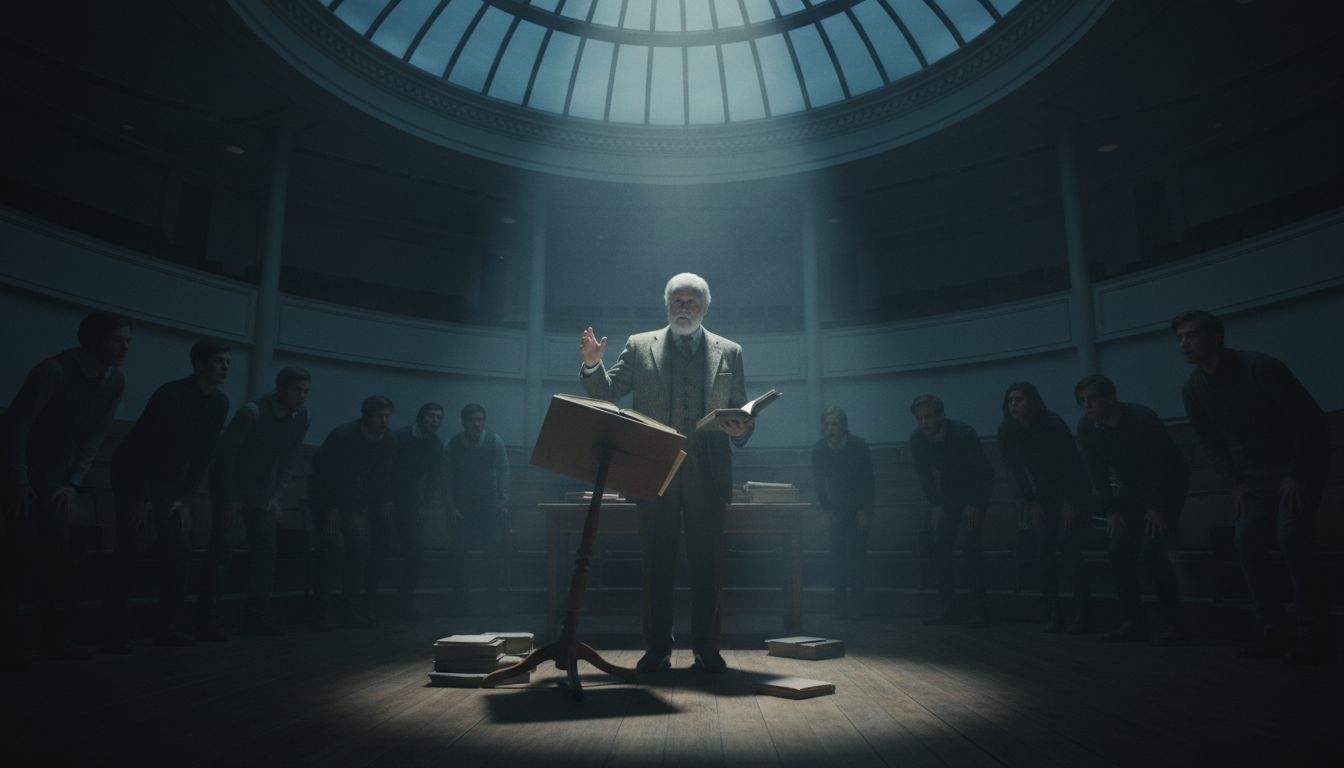
Grosso describes the event in a blog post dated 26 November 2025. After a lecture on the relationship between mind and body, LS approached him and hinted at a personal out‑of‑body experience (OBE). “Is it a real experience? For sure, and I know from my own experience,” she told him. A week later, Grosso awoke to find his music stand displaced from its usual spot against the bookcase to the center of the living room. At that moment his phone rang; LS called and said, “How do you like the new furniture arrangement?” She explained that, while drifting off to sleep, she had felt herself hovering above her bed, then “traveled about 25 miles, entered through the walls of my house and physically rearranged a piece of my furniture.” Grosso writes that the stand’s movement was “a shocking fact that I could not deny.”
Expert Commentary
While the narrative is compelling, scholars emphasize the need for independent verification before drawing conclusions about paranormal causation. Dr. Elena Martínez, a cognitive neuroscientist at the University of California, notes, “Anecdotal reports of objects moving during OBEs are intriguing, but they must be corroborated by video, sensor data, or third‑party testimony to be scientifically useful.” Similarly, philosopher of mind Dr. Aaron Patel observes that personal accounts “highlight the limits of our current models” but do not, on their own, overturn the prevailing materialist view that consciousness arises from neural activity.
Scientific Context
The mind‑body problem remains a central unresolved issue in philosophy and neuroscience. Studies of near‑death experiences and acquired savant syndrome—where individuals develop extraordinary abilities after brain injury—have prompted some researchers to entertain the possibility that altered brain states can produce atypical conscious experiences. A 2022 review in Consciousness and Cognition found that NDEs often involve vivid perceptions of “leaving the body,” yet the mechanisms are still debated, with hypotheses ranging from hypoxia‑induced cortical disinhibition to culturally mediated expectations. Likewise, cases of enhanced cognition after trauma, such as the famous savant Kim Peek, illustrate that brain injury can sometimes reconfigure neural networks, leading to heightened abilities, but these phenomena do not constitute evidence for consciousness existing independently of the brain.
Implications and Outlook
Grosso’s account underscores a broader tension between subjective experience and empirical rigor. He writes that “personal experience” can be more persuasive than statistical data, a stance that resonates with many who feel current scientific frameworks are insufficient to explain consciousness. Nonetheless, the scientific community generally requires replicable methodology, controlled experiments, and peer‑reviewed evidence to revise foundational theories. As Dr. Martínez cautions, “Without systematic data—such as electromagnetic recordings or controlled replication—claims of external manipulation remain speculative.”
The episode also raises practical questions about how universities might address extraordinary claims made by students. While academic freedom protects the exploration of unconventional ideas, institutions typically encourage critical analysis and methodological transparency. Grosso’s story may prompt philosophy departments to incorporate discussions of anomalous experiences alongside traditional metaphysical arguments, fostering a balanced dialogue that respects personal narratives without abandoning scientific standards.
The article draws on Michael Grosso’s personal blog post and commentary from experts in neuroscience and philosophy. No independent verification of the music‑stand incident has been reported as of this writing.


