Overview
Nearly a century after British explorer Percy Fawcett disappeared in the Amazon while hunting for a legendary lost city, archaeologists say they may be closing in on the real-world civilization that helped inspire his quest. Using LiDAR and other remote-sensing tools, researchers have identified a vast ancient complex in northern Bolivia that appears to include roads, canals, reservoirs, and agricultural works spread across an area of nearly 20,000 square kilometers. The discovery is adding fresh weight to the idea that the Amazon was once home to highly organized societies far larger and more sophisticated than long assumed.
Fawcett’s 1925 expedition, which included his son Jack Fawcett and Jack’s friend Raleigh Rimell, vanished without a trace as they searched for what he called “The Lost City of Z.” For decades, the story fed both mystery and speculation. But archaeologists now argue that modern technology is revealing something more substantial than myth: the archaeological footprint of complex Amazonian societies that may have preserved the core of what early explorers were trying to find.
What the New Survey Reveals
At the center of this reassessment is LiDAR—light detection and ranging—a laser-mapping technique that can penetrate dense forest canopy and expose features hidden from ground view. In the Amazon, where thick vegetation can make traditional excavation slow and incomplete, LiDAR has transformed the field by revealing earthworks and settlement patterns invisible from the jungle floor. The technology has already reshaped understanding of ancient civilizations in Mesoamerica and South America, and the new Bolivian data continue that trend.
The site imagery from Cotoca, Bolivia, shows a large, interconnected landscape built to manage water, move people, and support agriculture. According to the broader summary of the findings, the complex includes roads, canals, reservoirs, and farming systems, suggesting not isolated villages but a coordinated regional network. That scale is especially notable because it challenges the long-standing stereotype of the Amazon as an environment capable of supporting only small, scattered groups.
Rethinking the Amazon’s Past
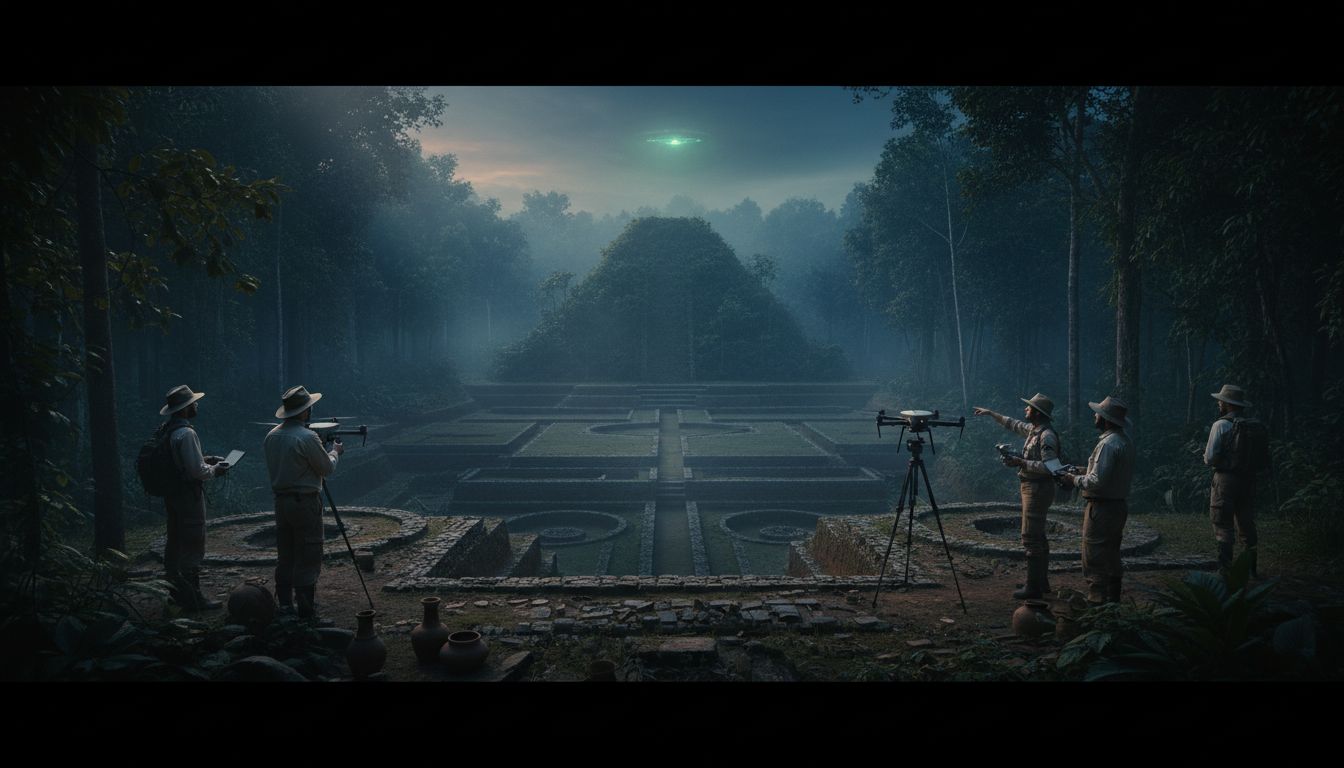
Archaeologist José Iriarte of the University of Exeter, writing in The Conversation, said the appeal of the new discoveries is that they are finally helping researchers find the kind of “lost civilisation” explorers like Fawcett imagined—though by modern means rather than expeditionary guesswork. “The reward is that we’re finally finding the ‘lost civilisation’ that explorers like Percy Fawcett were searching for a century ago,” he wrote, noting that today’s archaeologists are doing so “by cajoling a drone rather than battering through jungle.”
That distinction matters. The evidence now emerging does not prove Fawcett found the exact city he sought, but it does strongly suggest that his intuition about the Amazon’s ancient human history was not misplaced. Rather than an empty wilderness, the region appears to have supported dense populations that shaped the forest through engineering, agriculture, and long-distance connectivity.
Why It Matters Now
The new findings underscore how rapidly archaeological research is changing as aerial imaging, drones, and LiDAR expose hidden landscapes across the globe. In the Amazon, that means scholars are no longer asking whether advanced societies existed there, but how extensive they were and how they interacted across vast territories. As more sites are mapped, the old narrative of an untouched rainforest is giving way to a more complex history—one in which human settlement and environmental adaptation were deeply intertwined.
For historians, the implications are significant: Fawcett’s disappearance remains a mystery, but the civilization he was chasing is beginning to come into focus.