Overview
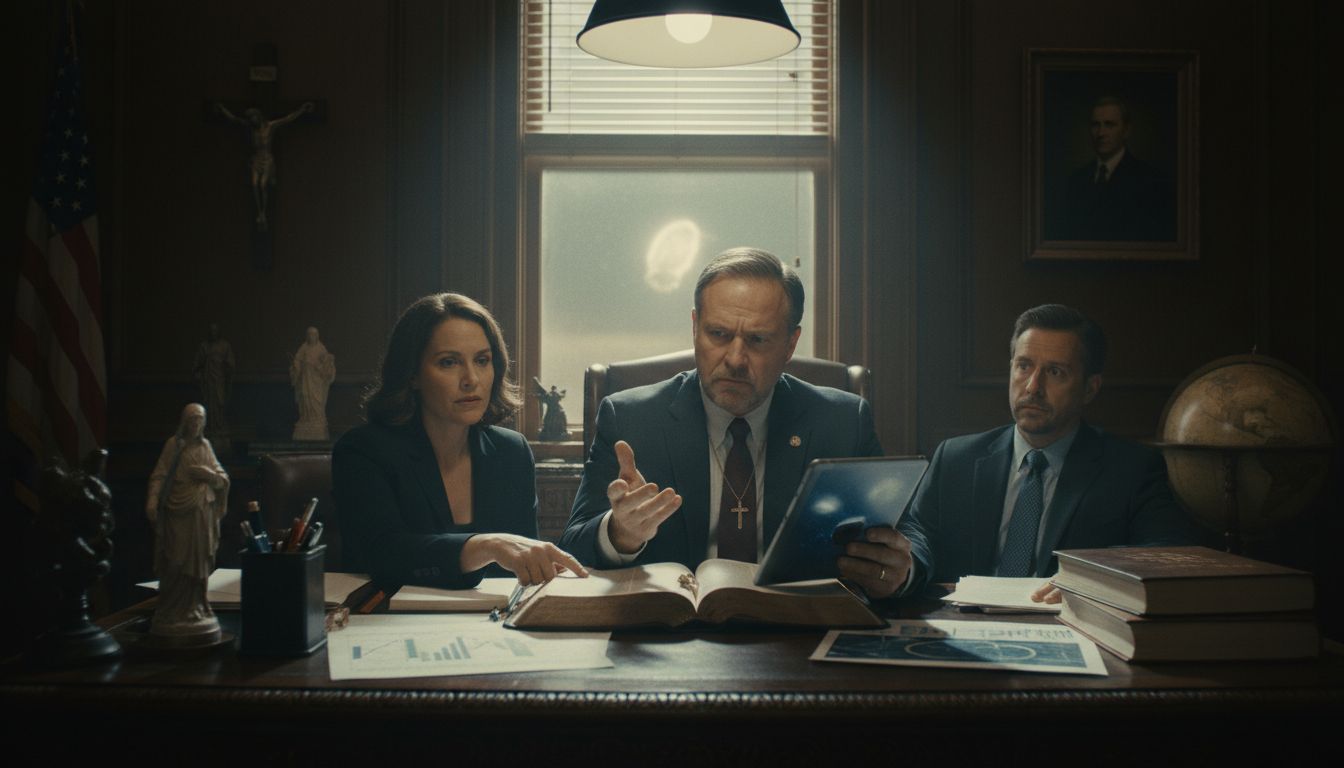
In the weeks following the Pentagon’s unprecedented release of hundreds of previously classified Unidentified Aerial Phenomena (UAP) files, a cohort of Christian‑identified Republican lawmakers has entered an unexpected public debate: how to interpret the data through a biblical lens while safeguarding national security. The declassified material—ranging from 2004‑2023 sensor recordings to pilot testimonies—has reignited calls for greater transparency, but it has also forced some legislators to confront theological questions that have long been left to the pews rather than the halls of Congress.
Faith Meets the Files
Republican members of the House Foreign Affairs Committee, including Rep. Tim Johnson (R‑OH) and Rep. Jim Banks (R‑IN), have spoken openly about reconciling the phenomena with Scripture. Johnson told a closed‑door briefing, “If we are to believe that God created the heavens, then any aerial mystery must ultimately fit within that divine order.” Banks echoed the sentiment, adding, “The Bible talks about angels and heavenly hosts; we need to consider whether these sightings are a modern manifestation of that language, not a threat to our faith.” Their remarks have spurred a series of informal roundtables with evangelical leaders, who argue that the UAP reports could be “a contemporary test of faith rather than a secular mystery.”
Legislative Push for Transparency
While theological reflection dominates the conversation, the same lawmakers are also championing concrete policy measures. The UAP Transparency Act, re‑introduced in the 118th Congress, seeks to mandate quarterly public reports from the All‑Domain Anomaly Resolution Office (AARO) and to create a bipartisan oversight panel with members drawn from the Intelligence and Armed Services committees. Sen. Susan Collins (R‑ME), a known advocate for “faith‑friendly” policy, said, “Transparency does not diminish God’s sovereignty; it simply ensures our citizens are informed about what our armed forces encounter.” The bill enjoys tentative support from both sides of the aisle, though skeptics warn that premature disclosure could compromise classified methods.
National‑Security Concerns
Defense officials stress that the UAP files are primarily a national‑security issue. AARO director Sean Moulton briefed members of Congress that many of the sightings involve “advanced sensor signatures that defy known aeronautical capabilities,” urging caution before drawing theological conclusions. Yet the Republican faith‑based caucus argues that acknowledging a possible “spiritual dimension” does not undermine security protocols. “We can pursue rigorous scientific analysis and maintain our belief that God is sovereign over all creation,” Johnson asserted during a hearing, highlighting the desire to avoid a false dichotomy between faith and empirical inquiry.
Looking Ahead
As the debate unfolds, both religious and security communities are watching for a balanced approach that respects constitutional separation of church and state while honoring the convictions of a sizable voting bloc. Future hearings are slated to feature theologians from the National Association of Evangelicals alongside aerospace engineers, a pairing that underscores the unique crossroads at which these Republican lawmakers find themselves. Whether the next congressional session will produce legislation that satisfies both biblical interpretation and transparent oversight remains uncertain, but the conversation has undeniably shifted the UFO discourse from fringe speculation to a mainstream policy arena.


