Overview
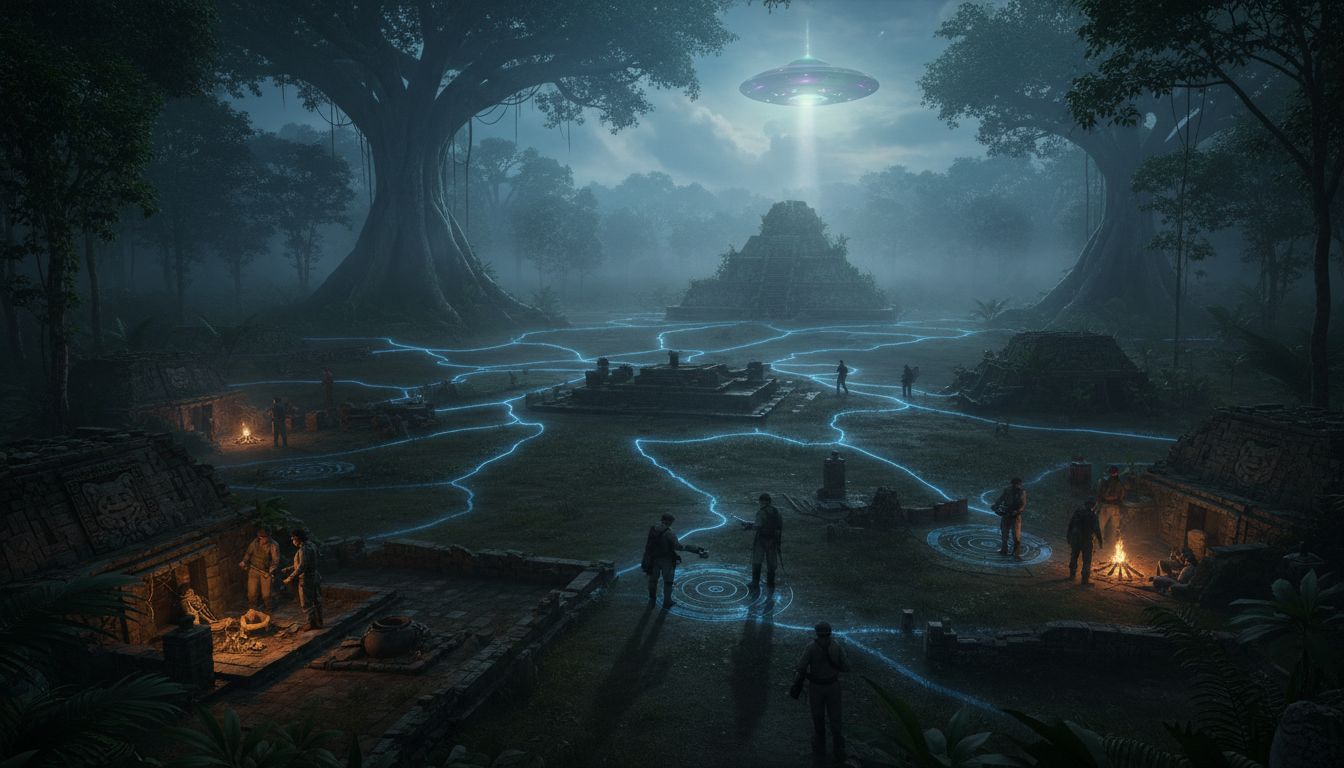
Archaeologists working in Brazil’s western Amazon have uncovered a multifunctional site that was occupied for more than a millennium, beginning around 1,100 years ago. The settlement, located near the headwaters of the Rio Xingu, served both as a residential hub and a burial ground, offering a rare glimpse into the daily lives and spiritual practices of Indigenous peoples long before European contact. The find is part of a broader series of excavations that have begun to map an extensive network of ancient roads linking disparate societies across the rainforest, challenging earlier assumptions that the Amazon was sparsely populated prior to colonization.
The Discovery
The team, led by Dr. Ana Silva of the Federal University of Pará, employed a combination of LiDAR scanning, ground‑penetrating radar, and traditional excavation techniques. “The aerial imagery revealed linear features that resembled engineered pathways, extending for several kilometers,” Dr. Silva explained. Subsequent digs uncovered ceramic sherds, stone tools, and human remains arranged in patterned graves, indicating a complex social structure. Radiocarbon dating of charcoal from hearths and burial contexts consistently points to an initial occupation circa 900 CE, with continued use through the 15th century, just before the arrival of Portuguese explorers.
Pre‑Colonial Connectivity
The road-like features, now identified as “terra‑caminhos,” appear to connect the newly documented settlement with at least three other contemporaneous sites, some located over 150 km away. These corridors suggest coordinated trade, information exchange, and possibly ceremonial pilgrimages among Amazonian groups. “We are seeing evidence of a regional infrastructure that facilitated the movement of goods such as exotic feathers, cacao, and medicinal plants,” said Maria Gonzalez, a cultural anthropologist with Brazil’s National Institute of Historic and Artistic Heritage (IPHAN). The discovery aligns with recent satellite‑based studies that propose a dense mosaic of polities and exchange routes throughout the pre‑colonial Amazon basin.
Legal Protection and Conservation
Brazilian law, which safeguards archaeological sites of national significance, was invoked shortly after the findings were announced. The Ministry of Culture, in coordination with IPHAN, has placed the area under protective status, preventing unauthorized excavation or development. Moreover, the federal government has announced plans to incorporate the site into a new national park, slated for establishment in 2027. “Preserving this landscape is essential not only for scientific inquiry but also for honoring the cultural heritage of the Indigenous descendants who still inhabit the region,” remarked João Pereira, director of the Amazonia Conservation Agency.
Implications and Future Research
The revelation of a sophisticated settlement‑burial complex, coupled with an extensive road network, reshapes the narrative of Amazonian pre‑colonial societies from isolated villages to interconnected urban-like networks. Researchers anticipate that ongoing excavations will uncover additional artifacts that could clarify trade commodities, social hierarchy, and environmental management practices. International collaboration is already in motion, with UNESCO expressing interest in supporting a multidisciplinary study that integrates archaeology, paleoecology, and Indigenous oral histories. As Dr. Silva noted, “Each layer we peel back tells us that the Amazon was a vibrant, organized civilization long before Europeans set foot here.”
Looking Ahead
The forthcoming national park will provide a controlled environment for both preservation and public education, allowing visitors to learn about the Amazon’s deep past while protecting its delicate ecosystems. Local Indigenous groups have been consulted throughout the process, ensuring that any interpretive materials respect their ancestral connections to the land. With the site now legally protected and slated for further scientific investigation, the Amazon may finally receive the recognition it deserves as a cradle of complex human ingenuity, rewriting centuries of historical understanding about the continent’s earliest inhabitants.