Overview
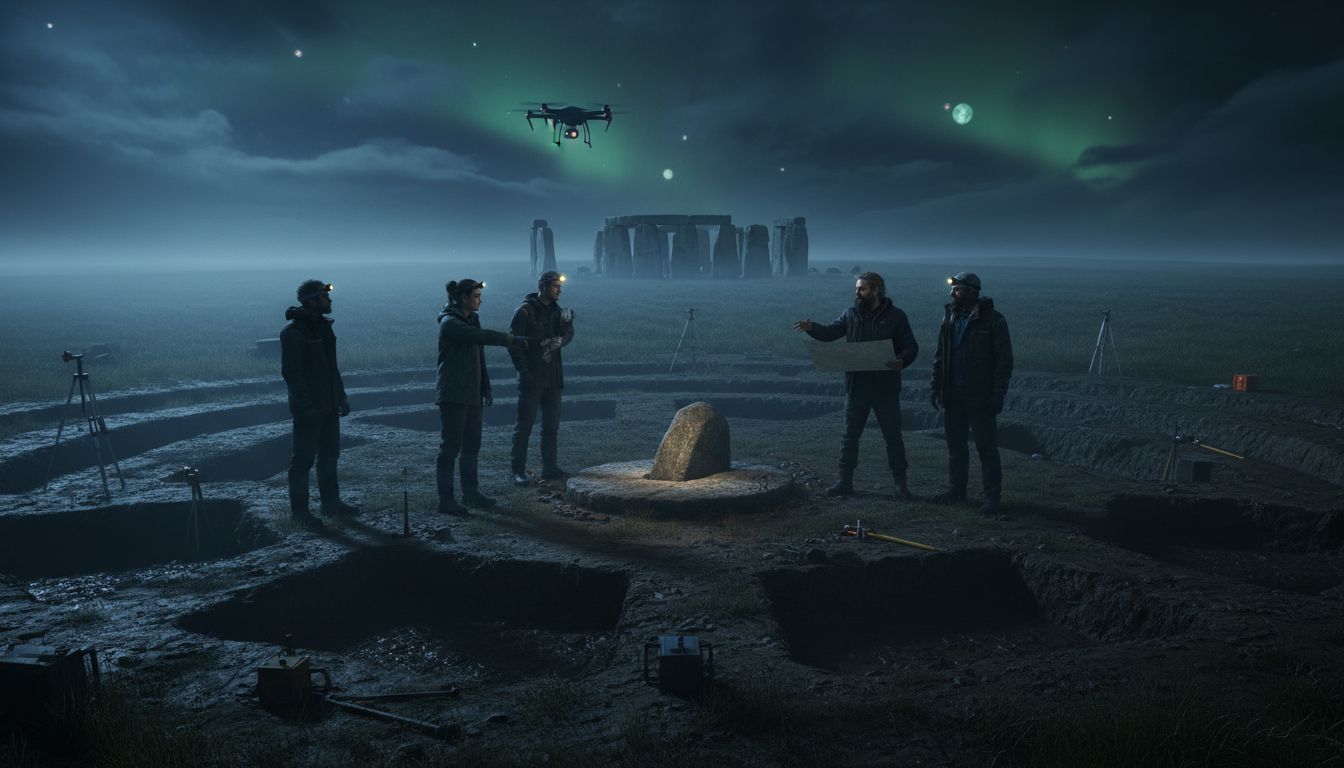
Archaeologists working around the iconic Stonehenge landscape have reached a consensus that a series of deep pits discovered near Durrington Walls are human‑made structures dating to the Late Neolithic, roughly 4,000 years ago. The findings, published in Internet Archaeology, stem from a multi‑year investigation that combined geophysical surveying, sediment analysis, and radiocarbon dating. The pits, each about 30 feet (9 m) wide and 15 feet (4.5 m) deep, are arranged in a near‑perfect mile‑wide circle encircling the Durrington Walls henge and the nearby Woodhenge timber circle. Their regular spacing and alignment with earlier monuments such as the Larkhill causewayed enclosure suggest a deliberate, large‑scale construction project that may represent the largest prehistoric monument yet identified in Britain.
Methodology and Evidence
The research team, led by Professor Vincent Gaffney of the University of Bradford, returned to the site in 2023 and 2024 with a suite of modern techniques. High‑resolution magnetometry and ground‑penetrating radar mapped the pits’ interiors, revealing clean, vertical walls and a lack of natural karst features that would indicate sinkholes. Core samples extracted from the pit fill contained stratified layers of clay, charcoal, and organic material that could be radiocarbon‑dated to the period of Durrington Walls’ occupation (c. 2600–2400 BC). “They can’t be occurring naturally,” Gaffney told The Guardian, emphasizing that the combination of engineered geometry and the absence of geological processes “just can’t happen.”
In addition to the physical data, the team examined pollen and phytoliths preserved in the sediments, which pointed to a cleared, possibly ceremonial landscape surrounding the pits. The pits’ orientation appears to echo the sunrise and sunset points observed from Stonehenge, hinting at a shared cosmological purpose. While the exact function remains debated—ranging from ritual deposition sites to water‑management features—the consensus now leans toward a deliberate, symbolic architecture linked to the Neolithic community that built Durrington Walls.
Context Within Wider Archaeological Discoveries
The Durrington Walls pits join a growing roster of unexpected finds that are reshaping our understanding of ancient societies. Earlier this year, Danish researchers announced the preservation of a 2,000‑year‑old boat recovered from a lake in Jutland, providing rare insight into Iron Age shipbuilding and trade networks across the North Sea. Meanwhile, a collaborative study of Maya settlements in the Yucatán Peninsula has revised long‑standing theories of urbanization, suggesting that regional cooperation rather than hierarchical city‑states drove the Classic period’s architectural boom. Together, these discoveries underscore a broader pattern: complex, large‑scale engineering projects were more common in pre‑modern societies than previously thought.
Implications for Neolithic Britain
If the pit circle is indeed a human‑made monument, it forces scholars to rethink the social organization required to mobilize labor for such an undertaking. Durrington Walls has long been recognized as a residential and ceremonial hub complementary to Stonehenge, but the scale of the pit circle implies a centralized planning authority or a shared ritual agenda that extended across the wider landscape. The alignment with the much older Larkhill enclosure also suggests a continuity of sacred geography, where successive generations deliberately linked new constructions to ancient sites to legitimize their own cultural narratives.
Looking Ahead
Future work will focus on targeted excavations within select pits to retrieve any artefacts or human remains that could clarify their purpose. The research team plans to integrate 3‑D modeling of the entire pit circle with landscape archaeology software to simulate how the structure would have appeared to Neolithic observers. As Professor Gaffney notes, “Understanding the intention behind these massive shafts will illuminate how our ancestors perceived and shaped their world.” The ongoing dialogue between cutting‑edge technology and meticulous fieldwork promises to keep the Stonehenge environs at the forefront of prehistoric research for years to come.


