Overview
Archaeologists working at Kalambo Falls in Zambia have uncovered what may be the oldest known wooden structure ever found, dating to at least 476,000 years ago and long before the appearance of Homo sapiens. The discovery, published by researchers from the University of Liverpool and Aberystwyth University, suggests that early humans were not only shaping wood for tools and firewood, but also engineering built environments far earlier than previously recognized. In a broader sense, the find adds weight to the idea that prehistoric societies may have passed through a largely overlooked “Wood Age”—one that survives only in rare, waterlogged archaeological deposits.
What the team found
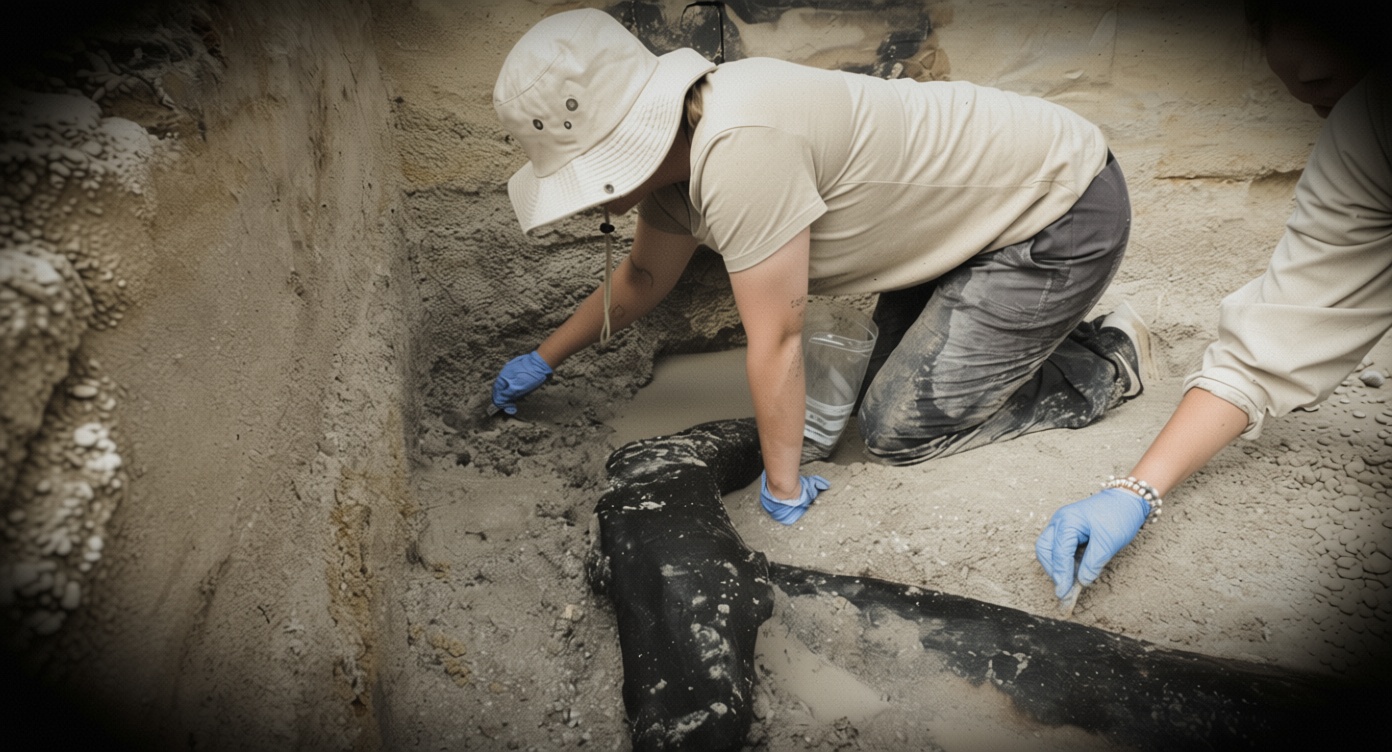
The structure consists of two large logs that were deliberately shaped and joined together, with stone-tool cut marks showing that the wood was modified to fit. Researchers say the arrangement may have formed the base of a platform, walkway, or raised working area, though the exact purpose remains unknown. What is clear, however, is that the builders were not using the logs incidentally. They appear to have planned the construction, selected materials, and invested substantial labor in fitting the pieces together. Until now, the use of wood by ancient humans was mostly inferred from simple tools such as sticks, spears, and fire-making implements—not from architecture or built structures.
“This find has changed how I think about our early ancestors,” study author Larry Barham said in a news release. “Forget the label ‘Stone Age,’ look at what these people were doing: they made something new, and large, from wood. They used their intelligence, imagination, and skills to create something they’d never seen before.” The statement reflects a growing view among archaeologists that early hominins were more technologically flexible—and more capable of complex planning—than traditional labels suggest.
How the wood survived
Wood rarely survives over hundreds of thousands of years because it usually rots away. Kalambo Falls is unusual because its permanently high water levels helped preserve organic material that would normally disappear from the record. Since the wood was far too old for radiocarbon dating, the team used luminescence dating, which estimates when surrounding sediments were last exposed to sunlight. That method placed the structure at 476,000 years old, while four wooden tools from the same area—including a wedge—were dated to around 324,000 years ago.
Geoff Duller, another study author, said luminescence dating offers “a glimpse into human evolution,” underscoring the importance of sites like Kalambo Falls where organic remains can survive. The age of the structure also matters because it predates the oldest widely accepted Homo sapiens fossils, including those from Jebel Irhoud in Morocco dated to roughly 315,000 years ago.
Why it matters
The find challenges the assumption that Stone Age people were always highly mobile and reluctant to alter their surroundings. At Kalambo, ancient humans had access to water, woodland, and food, and may have stayed long enough—or returned often enough—to undertake a construction project requiring foresight and cooperation. While the species responsible remains unknown, the discovery strengthens the case that multiple hominin groups in Africa possessed advanced cognitive and technical abilities long before modern humans emerged. More broadly, it is a reminder that archaeological “anomalies” need not be sensational to be significant: sometimes they simply reveal that our picture of the past has been incomplete.