Overview
Arizona’s Painted Desert has long attracted stories of exploration, lost civilizations and unexplained encounters. A recent article, A Time Slip in the Painted Desert, revisits 19th-century reports that prospectors and explorers encountered what appeared to be a ghostly platoon of Spanish conquistadors searching for the legendary Seven Cities of Gold. The accounts have since been interpreted by some paranormal researchers as possible “time slips”—brief, unexpected experiences in which witnesses believe they have entered another historical period.
The stories concern an expedition reported to have taken place in 1883 and described in a widely circulated news dispatch published in 1890. An unnamed writer portrayed the region as a vast, dangerous wilderness on the Colorado Plateau, with elevations ranging from approximately 5,000 to 7,000 feet and deep chasms that made travel difficult and unpredictable. “This vast section is a wild and desolate waste,” the account stated, describing an environment that, at the time, remained comparatively unexplored by outsiders.
The Conquistador Reports
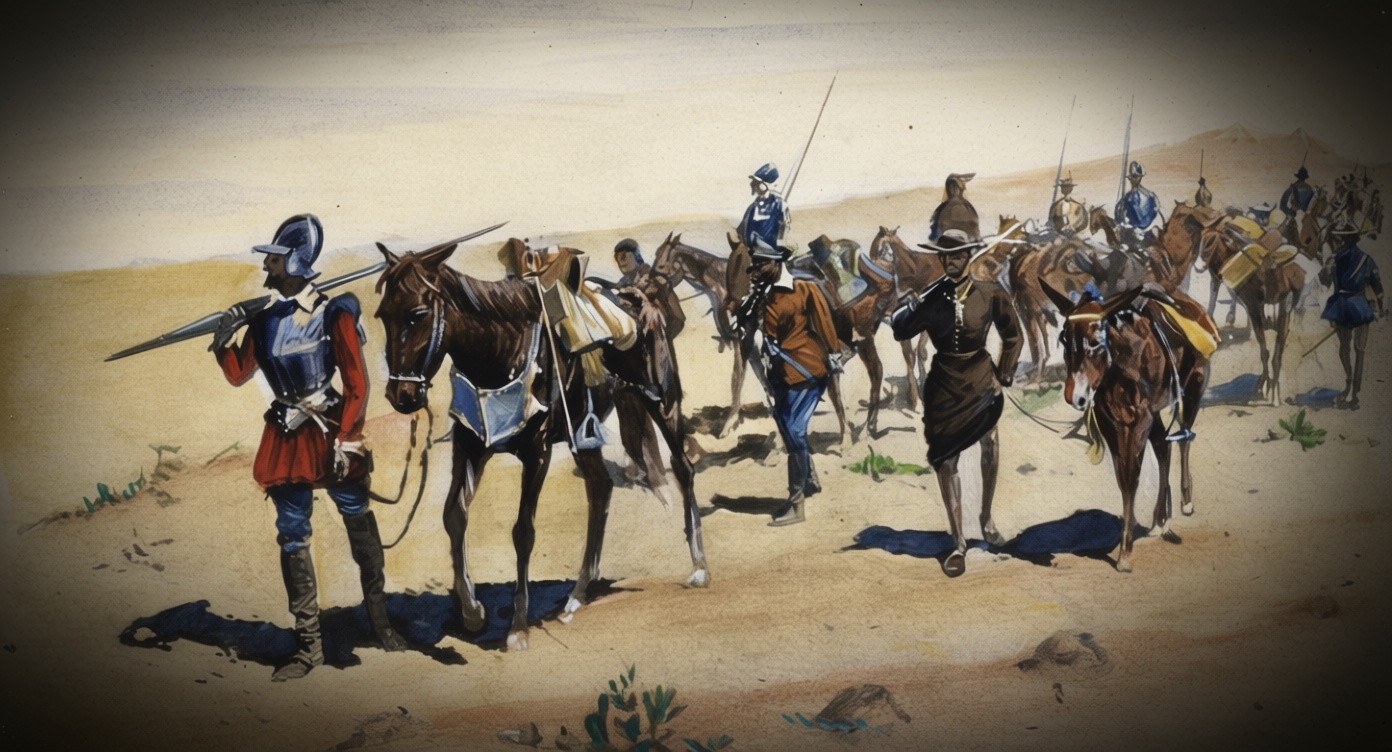
According to the article, members of the expedition claimed to see armored Spanish soldiers moving through the desert—figures seemingly connected to the 16th-century expeditions led by Francisco Vásquez de Coronado. Coronado’s historical search for the Seven Cities of Gold took place more than three centuries before the reported encounters, creating the central premise of the time-slip interpretation.
The Painted Desert itself is a striking setting for such accounts. Its name refers to the vividly colored layers of siltstone, mudstone, shale, limestone and volcanic material exposed by extensive erosion. Although tradition sometimes attributes the name “El Desierto Pintado” to Coronado’s men, the article notes that geologist J. S. Newberry is generally credited with naming the region the Painted Desert after surveying it in 1858.
No physical evidence has established that the reported soldiers were anything other than mistaken observations, folklore or embellished retellings. Dr. Ciarán O’Keeffe, a psychologist at Buckinghamshire New University who has studied paranormal claims, has offered several possible explanations for time-slip experiences. These include exhaustion, hunger, fear, alcohol or drug use, altered states of consciousness and confirmation bias. He has also speculated that electromagnetic environments might affect perception in unusual circumstances. “I’m sure no rational explanation will ever suffice for someone who’s experienced the terrifying sensation of slipping backwards in time,” O’Keeffe told the Daily Mail in 2024.
The Alleged Dragon Fossil
The article also examines a separate, broadly similar curiosity: an 1894 Montana newspaper and telegraph report describing enormous petrified reptile bones that allegedly resembled those of a dragon. The remains were said to be so large and unusual that they quickly attracted attention, but the account did not lead to a confirmed fossil discovery. The bones were never recovered or made available for scientific examination.
That absence is significant. Without specimens, photographs, excavation records or independent witnesses, the report cannot be assessed as evidence of an unknown giant reptile. The article further notes that the discoverer may have had a financial interest in attracting mining investors, providing a possible motive for exaggeration or fabrication. As with the Painted Desert stories, the dragon account is best understood as a historical mystery rather than proof of an extraordinary phenomenon.
Historical Context
Together, the reports illustrate how remote landscapes, limited communication and the sensational press of the late 19th century could transform ambiguous observations into enduring legends. The accounts remain compelling as examples of American frontier folklore, but neither the alleged time slips nor the dragon-like fossil has been independently verified.