Overview
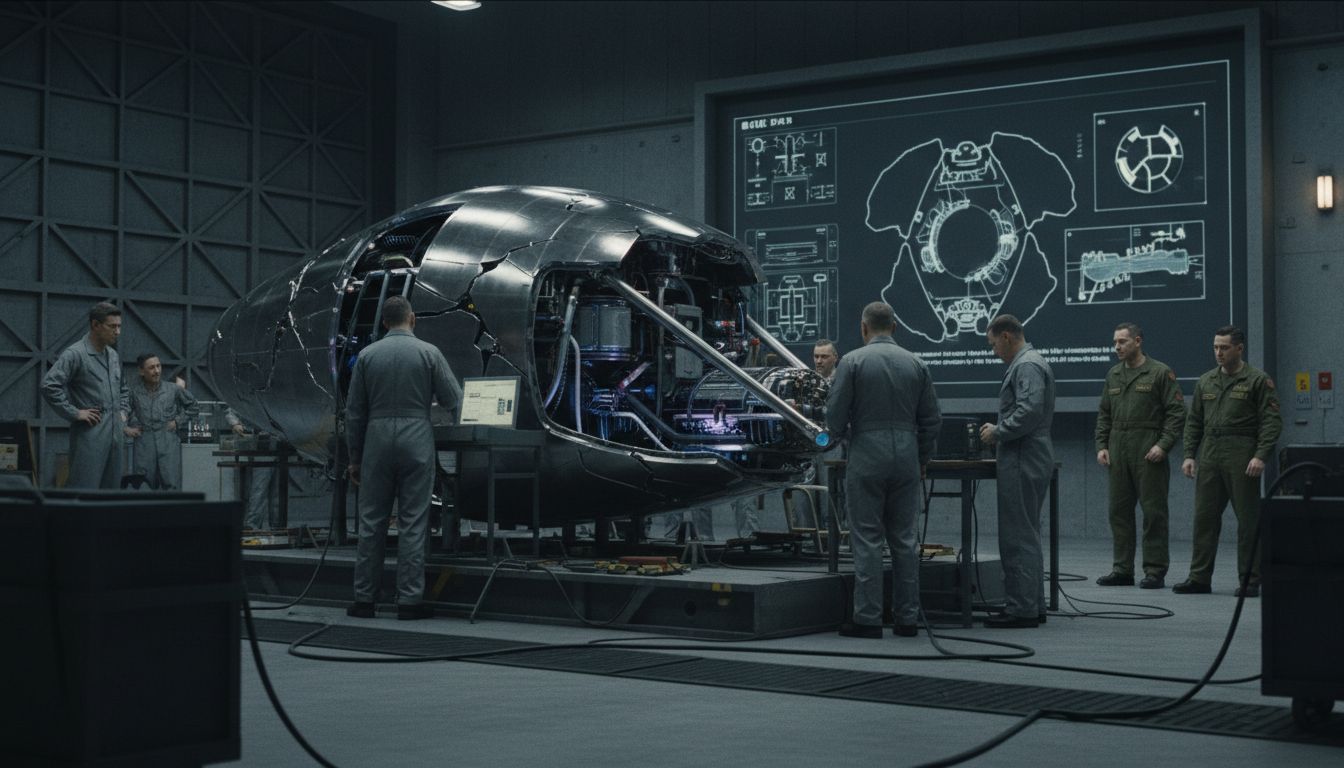
A recent essay by Harvard astronomer Avi Loeb revisits one of the most persistent questions in the UAP debate: what, if anything, the U.S. government may have learned about alleged alien technology. Rather than asserting that recovered extraterrestrial craft have been proven to exist, Loeb frames the issue as an unresolved contest between two possibilities — either whistleblowers such as David Grusch are describing the recovery of intact non-human craft, or references to “alien technology” have sometimes been used more loosely to describe advanced human-made systems tied to classified programs or foreign adversaries. The central point of his argument is that the public cannot distinguish between those scenarios without direct access to evidence.
Loeb’s post emphasizes that the real barrier to clarity has long been restricted access to firsthand information. According to the article, whistleblowers may have been prevented from speaking freely by nondisclosure agreements, confidentiality contracts, or other legal constraints. That tension has become a defining feature of the modern UAP debate: advocates for disclosure argue that important information may be locked inside government channels, while skeptics caution that extraordinary claims require extraordinary evidence. In Loeb’s telling, the only way to settle the question is through a credible process that allows qualified reviewers to examine whatever material exists.
New Disclosure Mechanisms
The essay highlights a significant development: an announcement by the Department of War authorizing a legal waiver for UAP disclosure through a system described as the Presidential Unsealing and Reporting System for UAP Encounters, or PURSUE. Loeb presents the move as a major step toward easing legal concerns that have kept current and former government employees from sharing what they know. He also points to a memo reportedly issued on July 31, 2026 by Principal Deputy Director of National Intelligence Aaron Lukas as part of the same broader push toward disclosure.
In the post, Loeb calls the development a “moment of truth” for whistleblowers who have argued that they were bound by secrecy rules. The article suggests that if individuals with direct knowledge now come forward, it could help determine whether UAP-related claims involve recovered alien craft, misidentified conventional systems, or classified defense programs. Importantly, the piece does not provide evidence that such craft exist; instead, it argues that the newly announced disclosure pathway may create a more structured environment for testimony and review.
Broader Implications
Loeb also situates the issue within a wider scientific and public-interest context. He says the UAP Science Advisory Council would be prepared to assist in evaluating any evidence that emerges, with the stated goal of helping verify claims “wherever the data leads.” That language reflects a recurring theme in UAP discussions: even among researchers who are open to unconventional explanations, the priority is supposed to be independent analysis rather than assumption. The article frames disclosure not as proof of extraterrestrial contact, but as an opportunity to replace speculation with documentation.
The public significance of the issue is hard to miss. For years, congressional hearings, whistleblower allegations, and media coverage have fueled interest in whether the government has withheld information about anomalous craft. Loeb’s article taps into that momentum while stopping short of confirmation. In effect, it argues that the real story is not what has already been proven, but what may finally be examinable if officials and witnesses are now allowed to speak more openly.
What Comes Next
For now, the central takeaway is one of careful uncertainty. The article does not establish that the U.S. government has recovered alien technology, nor does it verify claims of reverse-engineering. Instead, it underscores how disclosure mechanisms, legal protections, and whistleblower testimony could shape the next phase of the debate. If the new reporting framework leads to credible evidence, it could mark a turning point in UAP research. If not, it may simply reinforce how difficult it remains to separate rumor, secrecy, and fact.