Overview
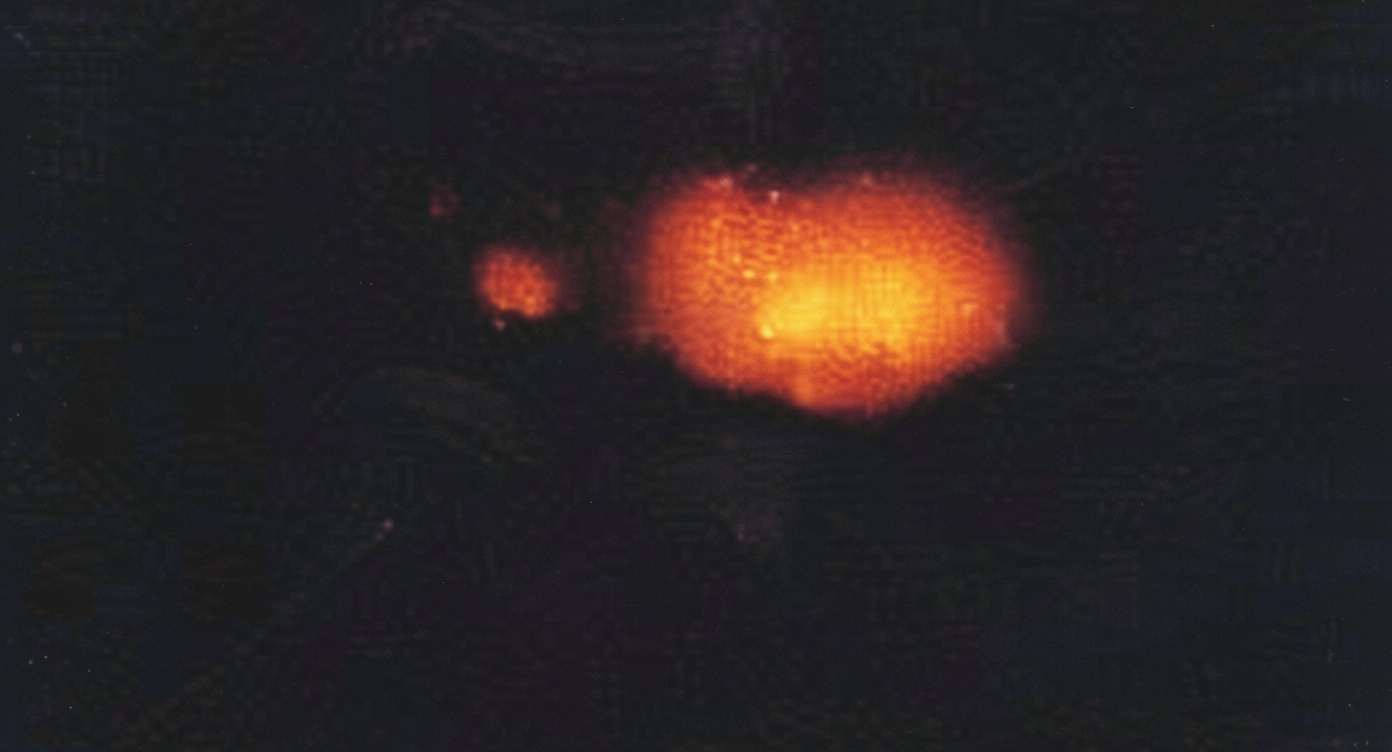
A revived discussion in the UFO field is drawing attention to earth lights — unexplained luminous phenomena reported near fault lines, seismic zones and other geologically active areas — with one article suggesting they may be produced by an as-yet unknown subatomic entity called a vorton. The piece, excerpted from a 1997 lecture script on “earth lights and the re-invention of ufology,” argues that if such a particle were confirmed, it could force a major rethink in quantum physics, plasma physics and UFO research alike. For now, however, the proposal remains highly speculative, sitting at the edge of mainstream science.
Historical Roots of the Theory
The article places the idea within a long history of researchers trying to separate luminous anomalies from conventional aircraft sightings and atmospheric effects. It notes that Charles Fort was among the first to observe a recurring coincidence between strange “meteors” and earthquakes, while later investigators such as John Keel linked unusual lights to geological faulting and magnetic anomalies. French researcher Ferdinand Lagarde and writer Vincent H. Gaddis also contributed to the early effort to isolate “soft” light phenomena from standard UFO reports. By the mid-1970s, researchers including Andrew York and the article’s author mapped centuries of strange reports in Leicestershire and found that meteorological oddities and UFO accounts clustered over faulted regions, reinforcing the idea that the landscape itself may play a role.
From Tectonic Strain to Vortons
The article then revisits the work of neuroscientist and geologist Michael Persinger and Gyslaine Lafreniére, who argued that UFO reports may be tied to electromagnetic effects generated by tectonic strain in the Earth’s crust. Their Tectonic Strain Theory proposed that immense stresses beneath the surface could produce fields that manifest in localized ways, much as atmospheric energy can produce everything from a breeze to a tornado. The new twist in the article is the suggestion that these effects may be mediated by a mysterious particle — the vorton — which, if real, would help explain how geological stress could translate into visible light displays. In that sense, the theory tries to bridge geology, electromagnetism and particle physics in a single framework.
Reports Beyond the Lights
What makes the article more unusual is that it does not stop at lights alone. It points to reports of paranormal effects, including human-like apparitions, in areas where earth lights have been observed, and suggests that these accounts may not be entirely separate from the luminous phenomena. While the article does not claim proof of a consciousness component, it hints that the overlap between lights, apparitions and subjective experiences could indicate a broader process not yet understood by conventional science. That idea remains controversial, but it reflects a long-standing pattern in ufology: that certain locations seem to generate not just sightings, but a wider cluster of anomalous reports.
Why It Matters
For advocates, the significance of the vorton hypothesis is not that it settles the UFO question, but that it offers a testable mechanism for a class of sightings often dismissed as misidentifications. If earth lights are tied to geological stress and exotic particle behavior, the implications could extend far beyond ufology into fundamental physics. Even so, the evidence cited in the article is largely correlational, not definitive, and the vorton remains hypothetical. The piece’s broader claim is more modest: that by taking earth lights seriously, researchers may be opening a path to a more scientifically grounded understanding of some UFO reports — and perhaps to phenomena that are still far stranger than the category of “lights in the sky” suggests.