Overview
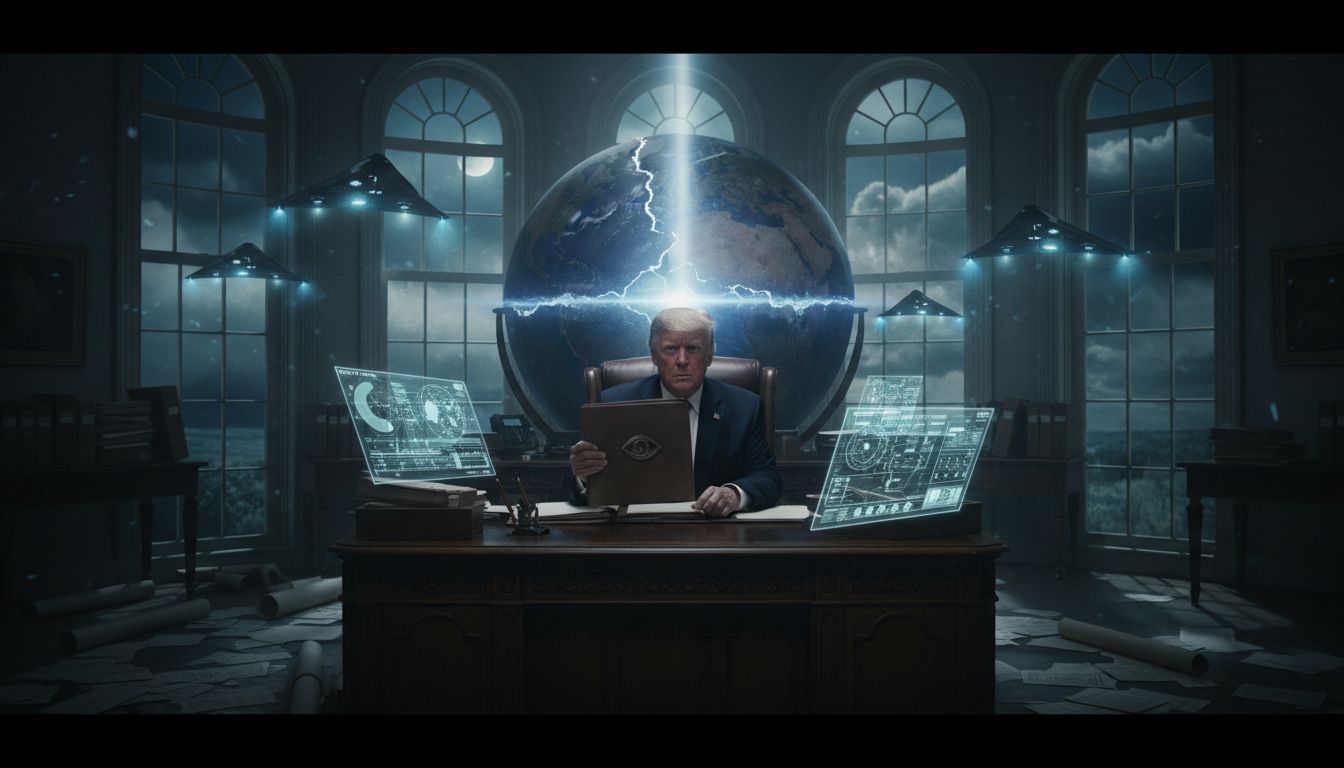
President Donald Trump issued an unprecedented directive on Friday ordering all federal agencies to declassify and publicly release every existing document related to unidentified flying objects (UFOs) and unidentified aerial phenomena (UAP). In a brief statement released by the White House, the president said the move reflects “the public’s right to know” and aims to bring “full transparency to a subject that has long been shrouded in secrecy.” The order, signed as an executive memorandum, applies to the Department of Defense, the Office of the Director of National Intelligence, the Federal Aviation Administration, and any other agency that holds relevant material.
Background
The United States has maintained a patchwork of classified investigations into UFOs for decades, most notably the Pentagon’s Advanced Aerospace Threat Identification Program (AATIP), which was officially terminated in 2017 but whose records remained largely classified. In June 2021, the Office of the Director of National Intelligence released a preliminary assessment acknowledging that many UAP sightings could not be easily explained. Since then, congressional committees have pressed for greater oversight, and several former officials have called for a public release of the data. President Trump’s latest order builds on these pressures, representing the first time a sitting president has mandated a comprehensive, agency‑wide declassification.
Expected Disclosures
The memorandum instructs agencies to compile, review, and release all reports, videos, sensor data, and analytical findings concerning UFOs and UAPs that are not protected by national security exemptions. While the exact volume of material is unclear, insiders familiar with the process estimate that hundreds of documents and dozens of classified videos could become publicly available within the next six months. The White House has indicated that a “phased release schedule” will be employed to allow agencies to redact genuinely sensitive information while still providing the public with substantive insight into past investigations.
Reactions
Reactions have been mixed across the political spectrum. Senator Maria Cantwell (D‑WA), chair of the Senate Intelligence Committee, welcomed the move, stating, “For too long the American people have been denied access to information that could have profound implications for national security and scientific understanding.” Conversely, Representative Jim Jordan (R‑OH) cautioned that premature disclosure could compromise ongoing intelligence operations, urging agencies to balance transparency with security considerations. Within the defense establishment, a senior Pentagon official, speaking on condition of anonymity, said the directive “will be a massive undertaking but reflects a genuine desire to restore public trust.” Advocacy groups such as The UFO Disclosure Project have hailed the order as a historic breakthrough, while skeptics warn that the released material may still be inconclusive.
Outlook
The executive order is expected to trigger a wave of new disclosures, prompting renewed academic and media scrutiny of the UAP phenomenon. Analysts predict that the declassified files could reignite debates over aerospace safety, potential foreign adversary capabilities, and the need for a coordinated inter‑agency framework to monitor anomalous aerial events. As agencies begin the arduous task of sorting, redacting, and publishing the records, observers will watch closely for any substantive findings that could reshape policy or scientific inquiry. Regardless of the eventual content, the president’s directive marks a decisive shift toward openness, signaling that the era of secretive UFO investigations may be drawing to a close.


