Overview
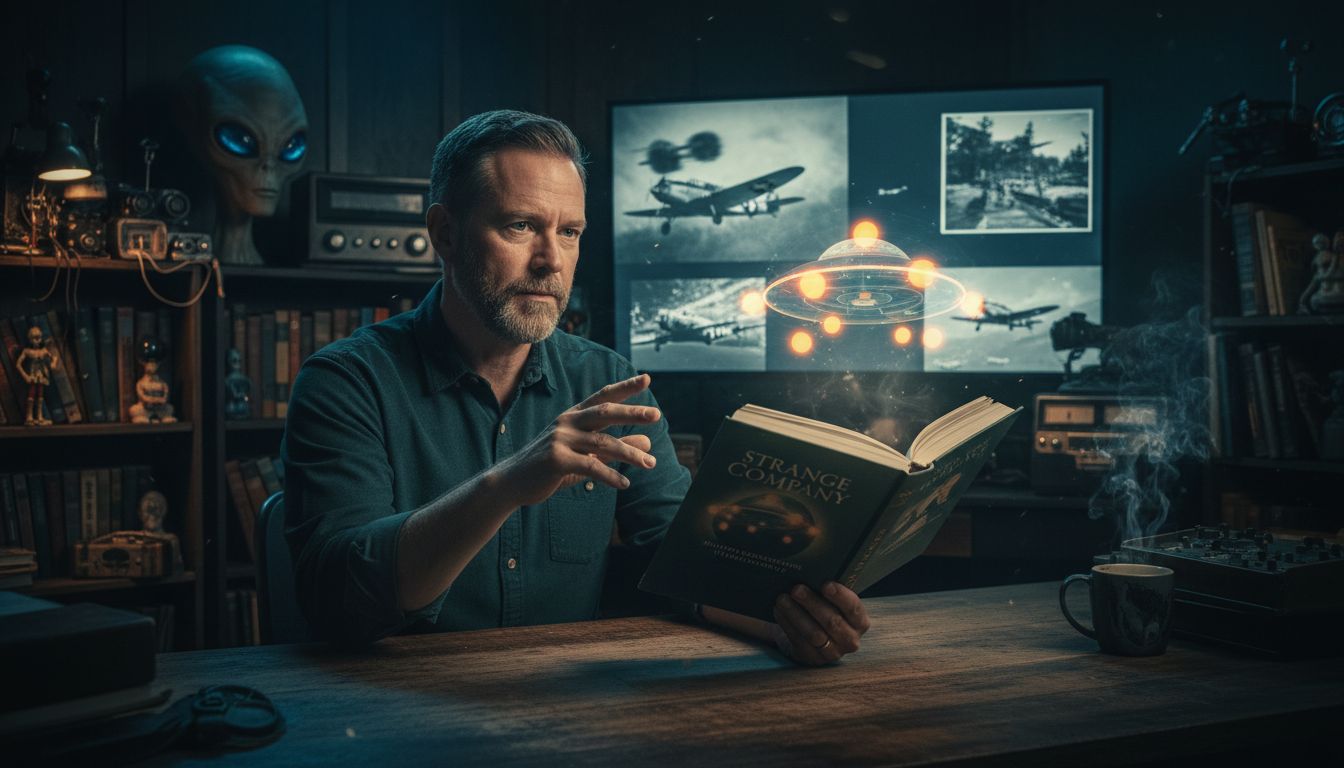
In the latest episode of UFO Talker, host Michael Ryan sits down with author Keith Chester to discuss his newly released book Strange Company: Military Encounters with UFOs in World War II. The November 12, 2025 broadcast, part of the podcast’s fourth season, moves beyond the familiar “foo‑fighter” anecdotes of flickering lights over European battlefields and delves into a broader archive of Allied pilot reports, classified documents, and previously unseen photographs. Ryan praises Chester’s meticulous research, noting that the work “sets a new benchmark for historical UFO scholarship” while remaining accessible to both seasoned ufologists and newcomers to the field.
Research Findings
Chester’s book compiles over 200 documented sightings by Allied aircrew, drawing on de‑classified mission logs, after‑action reports, and personal diaries. Among the cases highlighted is a late‑1944 encounter over the Rhineland, where a formation of P‑51 Mustangs reported a “silvery disc” that executed impossible maneuvers before vanishing without a trace. Chester argues that these reports share common characteristics—high speed, erratic flight paths, and lack of conventional propulsion—that distinguish them from known wartime phenomena such as weather balloons or flares. The author also examines a 1970s eyewitness account from a former RAF ground crew member who recalled a “bright, pulsating object” hovering above a bomber squadron during a night raid, a testimony that had never been published in the open‑source literature.
Unpublished Evidence
A highlight of the conversation was the discussion of unpublished photographs that Chester obtained from the National Archives and private collections. One striking image, described by Ryan as “the clearest wartime UFO photo we’ve heard of,” shows a faint, elongated shape trailing luminous tails against a cloudy night sky, captured by a Luftwaffe pilot who later defected to the Allies. Chester explains that the photo was part of a broader intelligence dossier circulated among SHAEF (Supreme Headquarters Allied Expeditionary Force) officials, though it never reached the public domain. “The fact that Eisenhower’s command had these files suggests a level of institutional awareness that has been largely ignored,” Chester told the host.
Historical Context
The term “foo‑fighter” originated in 1944 when Allied pilots coined a nickname for unexplained aerial phenomena that appeared during combat missions. Historically, the term has been reduced to a footnote of “mysterious lights” in mainstream histories. Chester’s research, however, places these sightings within a strategic intelligence framework, arguing that Allied commanders monitored the reports for potential threats or technological insights. The book explores what senior leaders, including General Eisenhower, might have known, citing memos that reference “unidentified aerial objects” in operational briefings. While the author stops short of asserting extraterrestrial origins, he emphasizes the need for a rigorous, archival‑based approach to understand the phenomenon’s impact on wartime decision‑making.
Reception and Outlook
Christine Scott, a veteran ufology researcher, contributed a brief review that aired during the episode, lauding Strange Company for “bridging the gap between anecdote and academic inquiry.” Ryan echoed this sentiment, noting that the book “offers a roadmap for future scholars who want to investigate wartime UFO reports without resorting to sensationalism.” The episode concludes with a preview of a forthcoming second part, where Chester will address post‑war de‑classification efforts and the lingering questions about how the U.S. and British governments handled the data. Listeners are encouraged to explore the full interview on the UFO Talker podcast platform, where additional audio clips of the original pilot testimonies are available.
Bottom line: Keith Chester’s Strange Company revitalizes the WWII “foo‑fighter” narrative by grounding it in extensive primary‑source research, newly released imagery, and a nuanced examination of Allied intelligence practices. As Michael Ryan and his guests underscore, the book not only enriches the historical record but also sets a higher standard for future investigations into the enduring mystery of unidentified aerial phenomena.