Overview
Harvard astronomer Avi Loeb is again making the case that major scientific advances are rarely achieved by those who simply arrive first, but by those who persist longest. In a recent essay titled “History Is Not Made by Those Who Begin, But by Those Who Persevere,” Loeb linked that principle to the search for Unidentified Anomalous Phenomena (UAP), arguing that sustained inquiry — not reflexive skepticism or premature certainty — is what ultimately separates real discovery from speculation.
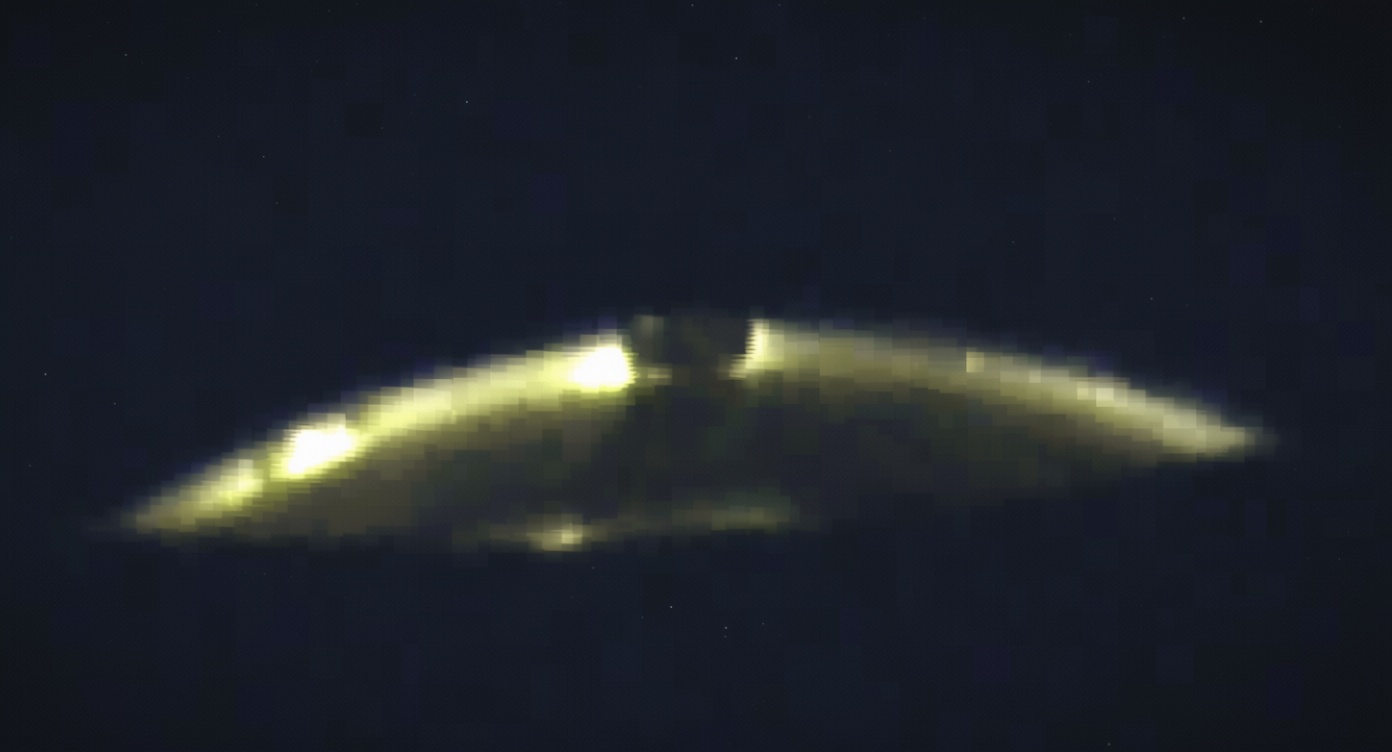
Loeb opened by acknowledging that the UAP field has long been cluttered with misinformation, wishful thinking, and “crackpot fairy-tales.” Many sightings, he noted, can be explained by mundane causes such as balloons, drones, broken satellite fragments, optical artifacts, meteors, or cosmic-ray imprints. But he argued that the latest data collected by advanced U.S. government systems deserve close attention, citing recent reporting from the Office of the Director of National Intelligence (ODNI) and the Pentagon’s All-Domain Anomaly Resolution Office (AARO) on “orbs” exhibiting behavior that appears to fall outside the performance envelope of known human technology.
Persistence as a Scientific Method
For Loeb, the larger point is not that every strange sighting signals something extraordinary, but that serious science requires perseverance in the face of uncertainty. He has made a career of pressing uncomfortable questions, most notably through his controversial but widely discussed hypothesis that the interstellar object ʻOumuamua may not have been a standard asteroid or comet. That willingness to challenge prevailing assumptions, he argues, is essential if researchers hope to move beyond dismissive narratives and examine the evidence on its own terms.
The essay frames perseverance as a defining trait of historical and scientific progress. In Loeb’s view, breakthroughs are often resisted at first, especially when they upset established models. He suggests that UAP research sits squarely in that tradition: a field where the evidence is incomplete, the signal is mixed with noise, and the temptation to either overstate or ignore anomalies remains strong. His message is that careful, repeated investigation is the only credible path forward.
A New Invitation in Boston
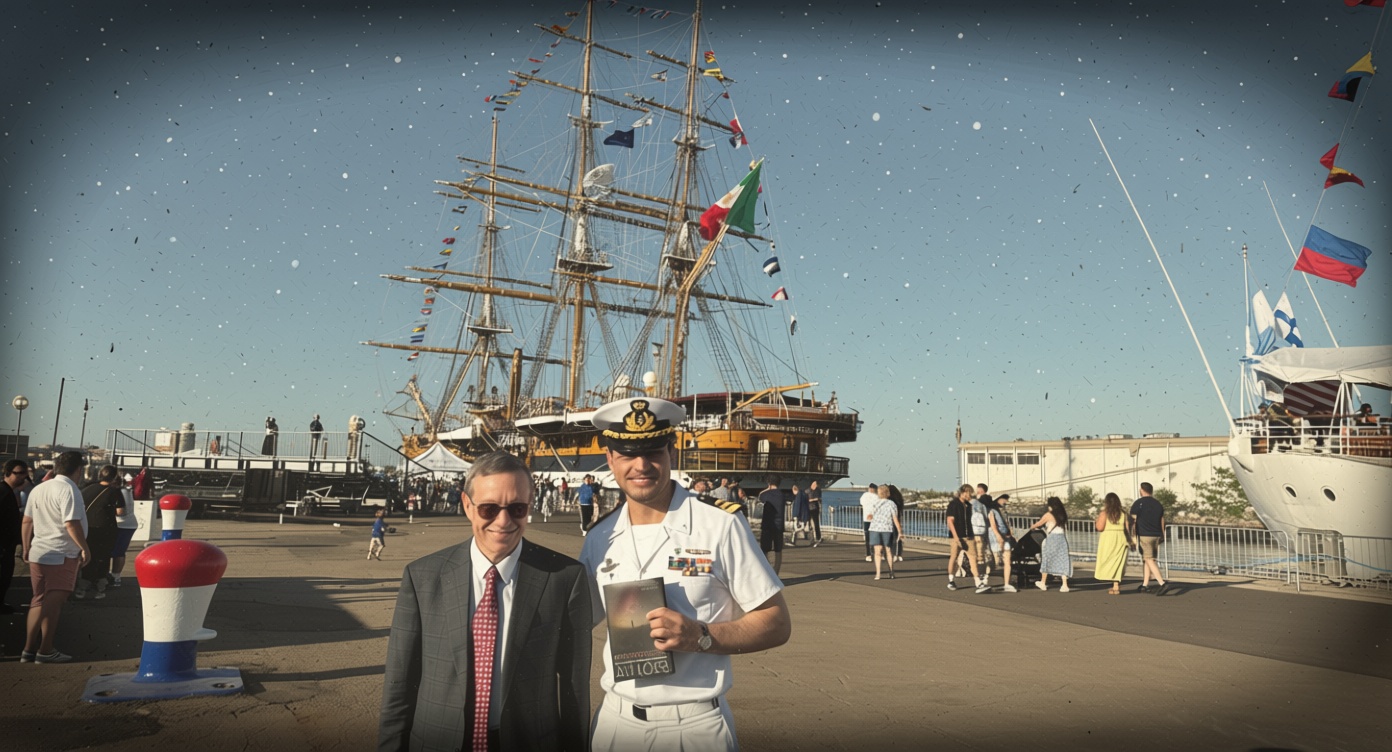
Loeb’s reflections came alongside a personal exchange that illustrates how his ideas continue to resonate beyond academia. He said he recently received a letter from Alessandro Alcibiade, an Italian Navy Medical Officer, consultant neuropsychiatrist, and flight surgeon serving with both the Italian Navy and the European Space Agency. Alcibiade wrote that he had followed Loeb’s work for years and was inspired by his willingness to challenge conventional thinking through rigorous scientific inquiry.
The invitation came as the Italian Navy training ship Amerigo Vespucci was scheduled to visit Boston from July 11 to 14, where Alcibiade said he would be leading a biomedical research campaign involving the Italian Space Agency (ASI), the Italian Institute of Technology (IIT), and ESA. The project is designed to study human adaptation to prolonged operational stress and isolation as an analogue for future long-duration spaceflight — a reminder that the same persistence needed to investigate UAP also drives research in human space exploration.
Why It Matters
The exchange underscores a broader theme in Loeb’s writing: that scientific progress depends on the willingness to keep asking hard questions, even when the subject is controversial. In the case of UAP, that means acknowledging that many reports have ordinary explanations while also recognizing that some cases remain unresolved and deserve disciplined scrutiny.
By tying the search for UAP to the larger history of scientific discovery, Loeb is arguing for a posture of measured persistence rather than certainty or cynicism. In his view, the truth — whether about anomalous objects in the sky or the future of space travel — is more likely to emerge from those who continue investigating after others have moved on.