Overview
In a new Medium essay titled “Do UAP Flag New Physics?”, astrophysicist Avi Loeb argues that unidentified anomalous phenomena should not be brushed aside simply because they do not fit within current scientific assumptions. Rather than treating UAP as a threat to established ideas, Loeb frames them as a potential opportunity: if some anomalies ultimately prove real and persistent, they could point to gaps in modern physics or even to phenomena that require new theoretical explanations. His central message is not that UAP already prove new laws of nature, but that science should remain open to evidence that challenges the status quo.
A historical warning against certainty
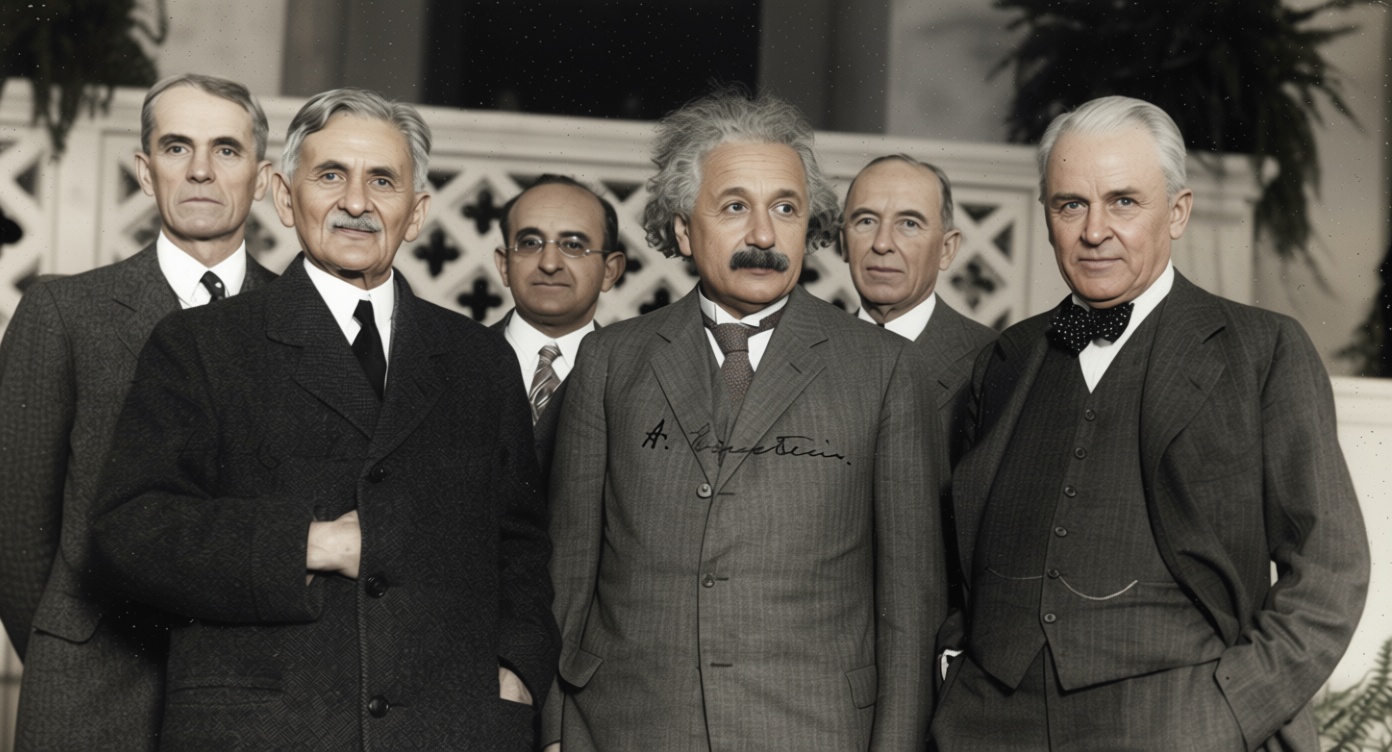
Loeb opens by invoking a famous example of scientific overconfidence: Albert A. Michelson, the first American to win a Nobel Prize in science, who said in 1894 that the major laws of physics had effectively been discovered and that future progress would come only in the “sixth place of decimals.” In hindsight, that statement came just before three of the most consequential revolutions in physics: special relativity, general relativity and quantum mechanics. Loeb uses that history to argue that respected experts can become attached to the completeness of the frameworks they know best, even when the next major breakthrough is waiting outside the boundaries of accepted thinking.
Old physics works — until it doesn’t
A major theme of the essay is that new physics does not replace old physics in the regimes where the old physics already works. Loeb notes that classical mechanics still describes the motion of cars, Newtonian gravity remains useful for many low-speed, weak-field calculations, and quantum mechanics becomes essential at small scales. The point, he writes, is that scientific revolutions tend to emerge when researchers encounter domains that were not previously imagined or measured with sufficient precision. In that sense, he argues, UAP should be treated as a possible sign that something unfamiliar is being observed, rather than as an embarrassment to be dismissed in advance.
Why Loeb says fundamental science matters
Loeb also broadens the argument beyond UAP, criticizing what he sees as a growing neglect of fundamental science in favor of near-term applied technologies. He says it is shortsighted for entrepreneurs and institutions to pour resources into areas such as artificial intelligence and quantum technologies while allowing basic research to be underfunded. In his view, that approach amounts to “watering the branches of the tree of knowledge while drying up its roots.” He also takes aim at what he describes as a consensus-driven academic culture, suggesting that too much deference to convention can slow disruptive discovery and discourage serious attention to anomalies.
UAP as a scientific test case
For Loeb, the significance of UAP is not that every unexplained sighting points to alien technology or exotic physics. Instead, the value of the subject lies in the discipline it demands: careful observation, repeatable analysis and a willingness to distinguish between noise, misidentification and genuine unknowns. That framing reflects Loeb’s long-running public role as one of the most prominent scientific voices arguing that anomalous aerial reports deserve more rigorous study. His latest essay continues that pattern, positioning UAP as a reminder that scientific humility is not a weakness but a prerequisite for discovery.
Broader implications
The essay arrives amid broader debate over how mainstream science should handle unexplained aerial reports, especially as governments and researchers have increased scrutiny of UAP in recent years. Loeb’s argument is ultimately a call to method rather than belief: keep an open mind, investigate anomalies carefully and avoid assuming that current theories are the final word. Whether UAP ever reveal genuinely new physics remains unknown, but Loeb’s message is clear — history suggests that dismissing anomalies too quickly can be its own form of error.