Overview
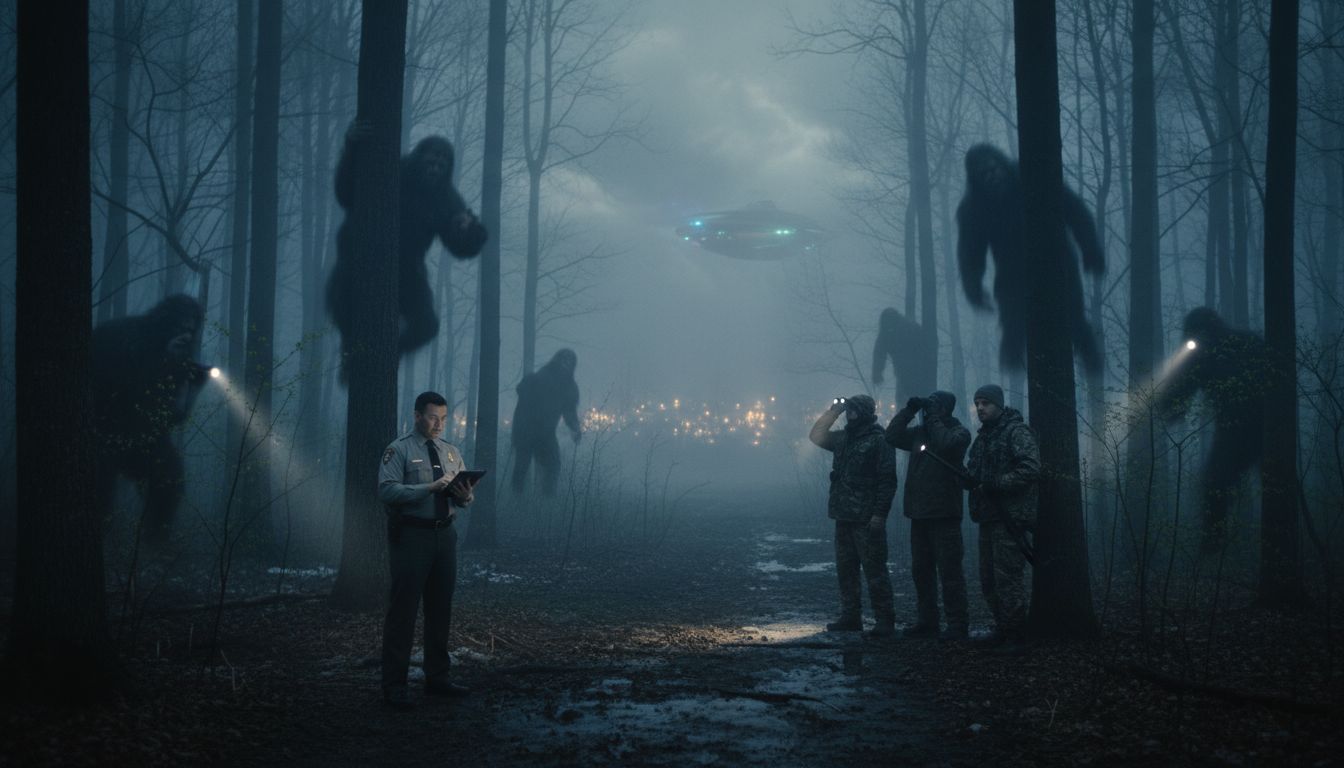
In early March 2026, a cluster of eight reported Bigfoot sightings emerged from the heavily forested region of northeastern Ohio. The reports, filed through local wildlife hotlines and social‑media groups, sparked a surge of interest among cryptozoology enthusiasts while prompting a measured response from state officials. At the same time, a hunter in western South Dakota described a series of unexplained knocks, clicks, and guttural noises near a remote stand of pine, which he attributed to a possible Bigfoot rather than a mountain lion. The dual incidents have reignited public debate over the credibility of such encounters and the standards for evidentiary proof.
Ohio Sightings
The Ohio sightings were documented between March 3 and March 12, with witnesses ranging from seasoned hikers to weekend campers. Most accounts described a large, upright‑walking figure, roughly seven to eight feet tall, covered in dark hair and moving silently through the woods. One camper, who asked to remain anonymous, recounted seeing the creature pause near a clearing before disappearing into the underbrush, noting that “the silhouette was unmistakably human‑like, yet the gait was something else entirely.” None of the reports included photographs, footprints, or other physical traces, leaving investigators with only verbal testimonies.
Official Response
Local law‑enforcement agencies and the Ohio Department of Natural Resources (ODNR) have publicly expressed skepticism regarding the claims. ODNR spokesperson Lisa Hernandez stated, “We take all wildlife reports seriously, but without concrete evidence—such as DNA, clear video, or verified tracks—we cannot substantiate the existence of an unknown hominid in our forests.” The department has offered to assist in a systematic survey of the reported locations, emphasizing that any investigation must adhere to established wildlife‑monitoring protocols. Meanwhile, the Ohio State Police have logged the sightings as “unidentified wildlife incidents,” a standard classification for reports that fall outside known species categories.
South Dakota Incident
Approximately 800 miles west, a 52‑year‑old hunter named Mark Thompson described a night in early March when he heard a pattern of rhythmic knocks on a stand of aspen trees, followed by low, guttural sounds that resembled a “deep, resonant growl.” Thompson initially suspected a mountain lion but dismissed the idea after noting that the noises persisted for over ten minutes and were accompanied by a distinct, heavy footfall pattern. He reported the event to the South Dakota Game, Fish and Parks Department, which logged the observation but, like its Ohio counterpart, requested any physical evidence before pursuing further inquiry.
Expert Insight
Dr. Emily Harper, a professor of anthropology at the University of Michigan who has studied North American folklore, cautioned against drawing premature conclusions. “Human perception is highly adaptable in low‑light, high‑stress environments,” she explained. “While the enthusiasm of eyewitnesses is understandable, the scientific method demands verifiable data—hair samples, clear footprints, or high‑resolution video.” Harper added that “the recent uptick in reports may reflect a cultural resurgence of interest in cryptids, fueled by media coverage and online communities, rather than an actual increase in sightings.” She urged both states to employ motion‑activated cameras and scent‑tracking dogs in future field surveys.
Looking Ahead
Both Ohio and South Dakota officials have indicated plans to coordinate with academic researchers and private wildlife‑monitoring groups to conduct systematic field studies in the affected areas. Funding proposals are under review to install trail cameras and acoustic sensors capable of capturing any anomalous activity. Until such data are collected, the eight Ohio reports and the South Dakota auditory account remain anecdotal, highlighting the ongoing tension between public fascination and the rigorous standards of scientific inquiry.


