Overview
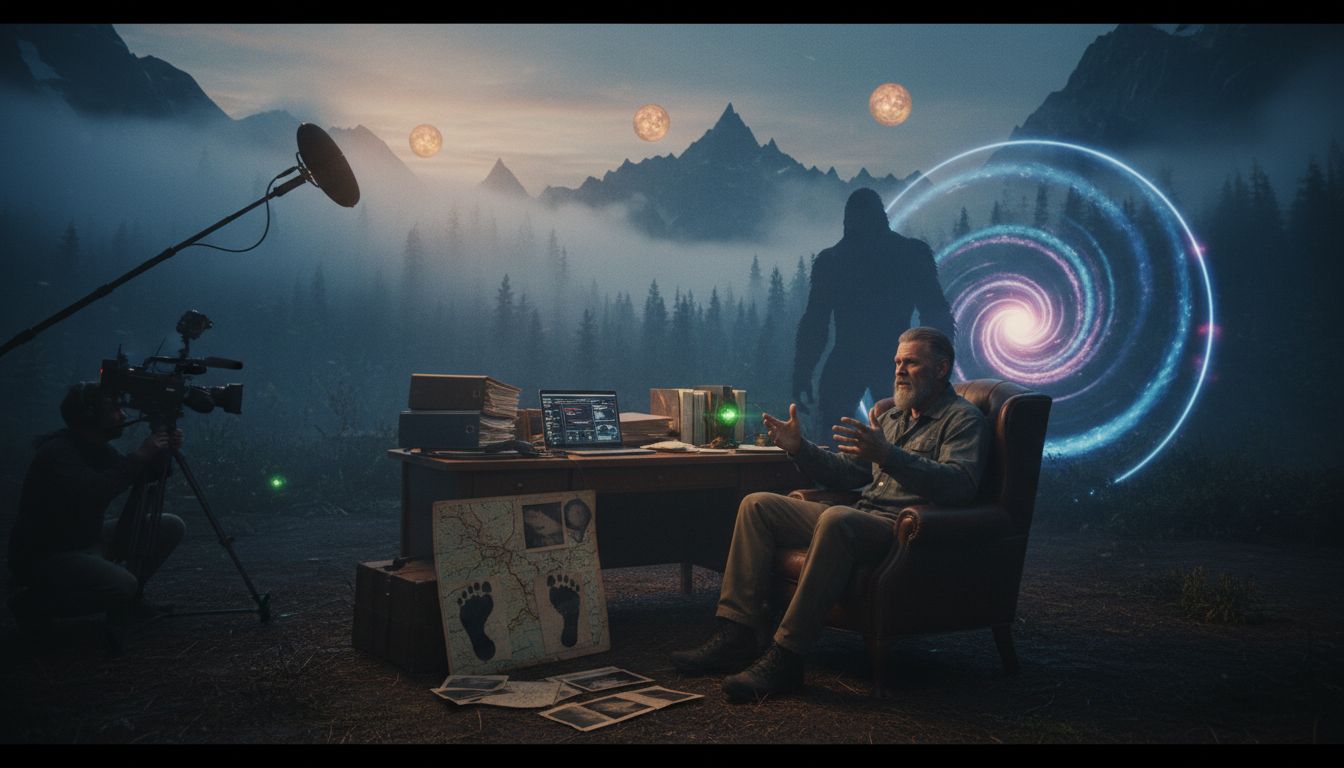
In a recent interview with NewsNation’s “Reality Check”, Dr. John Green—director of the North American Bigfoot Research Association (NABRA) and author of The Sasquatch Enigma—outlined the organization’s latest scientific initiatives, highlighted a series of unexplained disappearances in the Pacific Northwest, and explored a possible overlap with the U.S. government’s growing focus on unidentified aerial phenomena (UAP). While the conversation ventured into speculative territory, Green emphasized that “rigorous data collection and transparent analysis are the only ways to move this field out of folklore and into credible research.”
DNA Testing Efforts
Over the past 18 months NABRA has partnered with the genetics department at the University of Washington to subject more than 300 hair, skin and trace‑fluid samples—collected from alleged Bigfoot sightings—to next‑generation sequencing. According to Green, “the majority of the samples match known North American fauna, but roughly 5 percent returned DNA profiles that did not align with any cataloged species.” The unidentified sequences have been lodged in the National Center for Biotechnology Information (NCBI) database for further comparison.
Green cautioned that “contamination, degraded material, and the limits of current reference libraries mean we cannot yet claim discovery of a new hominin.” He noted that the lab’s blind‑control protocols have been designed to address exactly those concerns, and that the findings will be submitted to a peer‑reviewed journal later this year. The effort marks one of the most systematic, academically vetted attempts to apply molecular biology to cryptozoology.
Disappearances and Patterns
The interview also touched on a cluster of missing‑person cases reported between 2018 and 2025 in Washington’s Cascade Range and Oregon’s coastal forests. While law‑enforcement agencies have attributed most incidents to accidents or foul play, Green pointed out that “seven of the 23 cases share strikingly similar circumstances: hikers vanished after reporting strange sounds, low‑frequency vibrations, and brief visual sightings of a tall, bipedal figure.”
He stressed that NABRA is compiling a searchable database that cross‑references disappearance reports, wildlife camera footage, and acoustic recordings. “If there is a pattern, we need to see it in the data, not in anecdote,” he said. Critics argue that correlating unrelated incidents risks confirmation bias, but Green maintains that a transparent, open‑source repository allows independent verification.
The UAP Connection
The most provocative segment of the interview concerned the potential link between Bigfoot reports and recent UAP investigations. In June 2025, the Department of Defense released an unclassified report acknowledging over 400 unexplained aerial sightings, many occurring near forested regions that are also hotspots for cryptid claims. “We’ve noticed a temporal overlap—several UAP sightings were logged within hours of reported Bigfoot encounters,” Green observed.
He clarified that the connection is hypothetical and not supported by direct evidence. “It could be a case of misidentification—people see a strange light and a silhouette and merge the narratives,” he said. Nonetheless, NABRA has begun logging UAP reports alongside traditional Bigfoot data to explore whether atmospheric or electromagnetic anomalies might influence animal behavior, potentially creating the illusion of a humanoid presence.
Looking Ahead
Green concluded with a call for interdisciplinary collaboration. He announced that NABRA will host a symposium in September 2026, inviting wildlife biologists, forensic geneticists, and aerospace experts to evaluate the overlapping datasets. Funding for the DNA program, he said, has been secured through a grant from the National Science Foundation’s “Emerging Phenomena” initiative, marking a rare instance of federal support for cryptid research.
While the scientific community remains skeptical, the systematic approach outlined by Green—combining molecular analysis, rigorous case documentation, and openness to ancillary phenomena—signals a shift toward evidence‑based inquiry in a field long dominated by speculation. Whether these efforts will uncover a new species, explain a series of disappearances, or simply debunk myths remains to be seen, but the methodology sets a higher standard for future investigations.


