Overview
Recent reporting by KLAS 8 News Now has revived Bob Lazar’s decades‑old claims that he worked at a clandestine “S4” facility located near the famously restricted Area 51. The segment, which aired on Tuesday night, revisits Lazar’s 1989 interview in which he alleged that the government was storing and reverse‑engineering extraterrestrial craft. The renewed exposure has sparked a surge of online discussion, renewed inquiries from journalists, and a fresh wave of skepticism and support from both the scientific community and UFO enthusiasts.
Background on Lazar’s Allegations
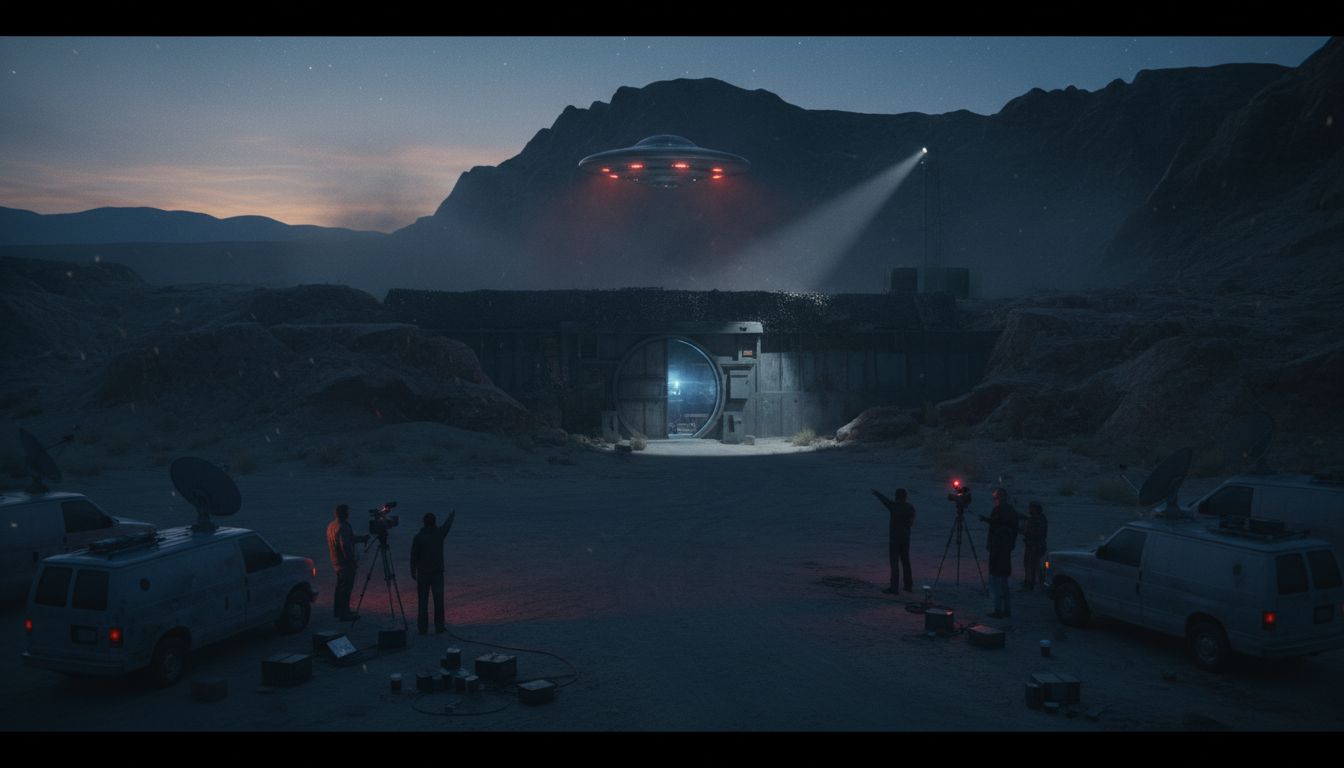
Bob Lazar first entered the public eye in 1989 after a series of interviews with a Las Vegas television station. He asserted that he was employed as a physicist at a secretive site called S4, situated roughly 20 miles south of the Groom Lake test range. According to Lazar, the facility housed “nine flying saucers” of alien origin, and he was tasked with deciphering their propulsion systems, which allegedly relied on a then‑unknown element he called “Element 115.” Over the years, Lazar’s story has been both championed by UFO advocates and dismissed by skeptics who point to inconsistencies in his academic credentials and the lack of corroborating evidence.
New Coverage and Its Impact
The KLAS 8 piece, titled “Bob Lazar’s UFO claims gain traction with ‘S4’ success,” revisits Lazar’s narrative by juxtaposing archival footage with recent statements from researchers who claim to have uncovered declassified documents hinting at unusual activity near the Nevada Test and Training Range. The report quotes a former Department of Defense analyst, who said, “There are still gaps in the public record regarding off‑site testing areas. While I can’t confirm Lazar’s specifics, the existence of auxiliary sites is well‑documented.” The segment also includes a brief interview with a physicist from the University of Nevada, Reno, who cautioned, “Extraordinary claims require extraordinary evidence; without verifiable data, the scientific community remains unconvinced.”
Social‑media metrics indicate the story has generated over 1.2 million views across platforms within 48 hours, with hashtags such as #S4 and #BobLazar trending in the U.S. and parts of Europe. A petition urging the Senate Armed Services Committee to request a formal inquiry into the alleged site has gathered more than 45,000 signatures, illustrating the breadth of public curiosity.
Reactions from Experts and Officials
Responses to the renewed attention have been mixed. James Miller, a senior researcher at the National Aviation Reporting Center on Anomalous Phenomena (NARCAP), remarked, “Lazar’s story has always been a cultural touchstone for UFO discourse, but the lack of peer‑reviewed data keeps it in the realm of anecdote.” Conversely, Dr. Emily Hernandez, a former Air Force intelligence officer now consulting for a civilian aerospace firm, noted, “The government’s historical reluctance to disclose classified testing locations fuels speculation. While Lazar’s specific claims are unverified, the notion that secretive test sites exist is plausible.”
In a brief statement, the Department of Defense declined to comment directly on the KLAS report, reiterating its standard position that “any release of classified information would be handled through appropriate channels.”
Implications and the Road Ahead
The resurgence of Lazar’s narrative underscores a broader shift in the public’s appetite for transparency regarding unidentified aerial phenomena (UAP). Since the 2020 release of the Office of the Director of National Intelligence’s UAP report, congressional hearings, and the establishment of the All‑Domain Anomaly Resolution Office (AARO), there is heightened scrutiny of past claims that were once relegated to fringe forums. Whether the KLAS coverage will translate into formal investigations remains uncertain, but it has undeniably re‑energized the debate over the credibility of Lazar’s testimony and the existence of hidden facilities like S4.
As the conversation evolves, journalists and researchers alike are calling for rigorous documentation—flight logs, material analyses, or corroborating testimonies—that could move the discussion from speculation to substantiated fact. Until such evidence emerges, Bob Lazar’s story will continue to occupy a liminal space between cultural myth and potential whistle‑blower revelation.