Overview
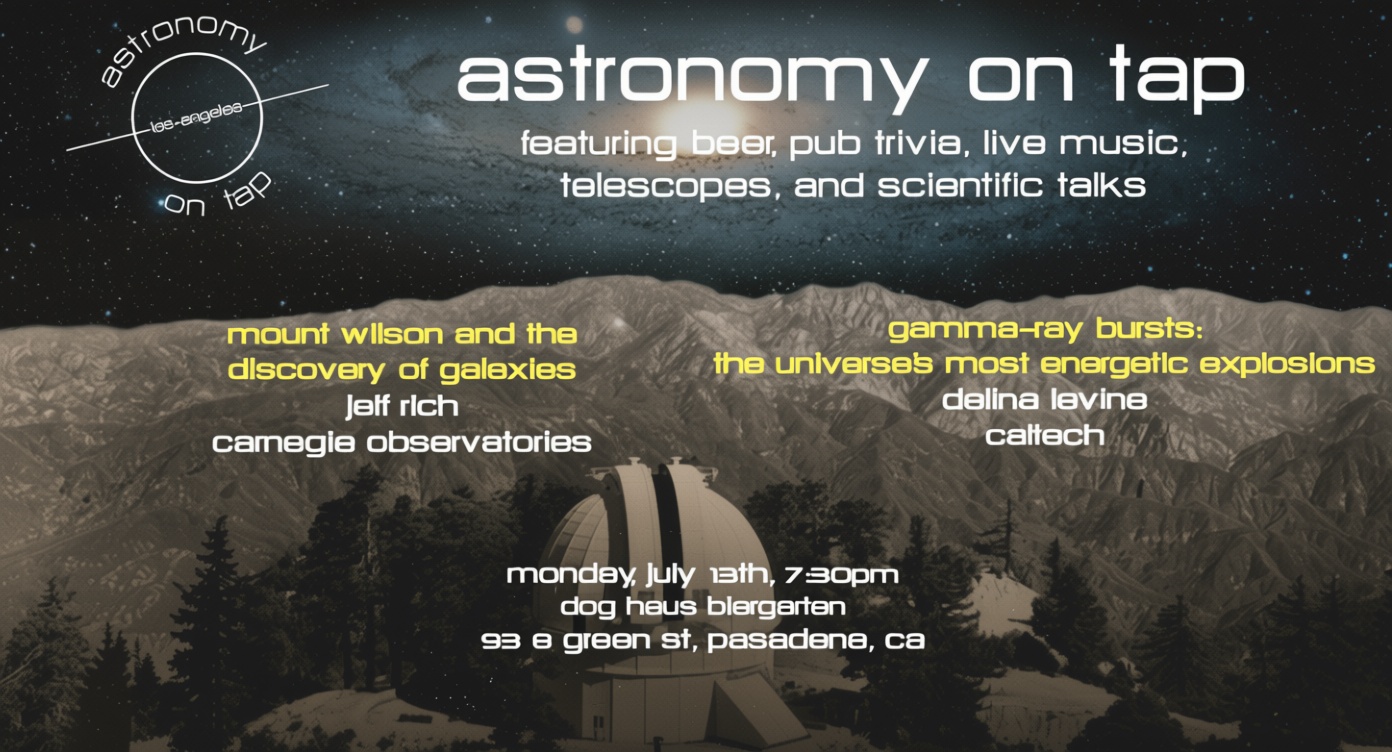
Caltech Astro Outreach recently hosted Dr. Tom Rice, a scientist affiliated with the American Astronomical Society and George Washington University, for a talk examining how researchers assess claims about extraterrestrial life. The presentation, titled “What we talk about when we talk about aliens,” offered a measured look at the science, history, and public controversy surrounding the search for life beyond Earth. Shared in the #ufoX community on July 10, 2026, the roughly 22-minute discussion emphasized that curiosity about alien life must be paired with careful evaluation of evidence.
Rice framed the conversation around what he described as the central principle in this field: “extraordinary claims require extraordinary evidence.” That standard, long associated with Carl Sagan, served as the backbone of his presentation. Rather than dismissing the possibility of extraterrestrial life, Rice argued that the scientific community must distinguish between speculation, preliminary anomalies, and robust findings that can withstand peer review. In an era when UFOs, unidentified aerial phenomena, and interstellar objects often draw intense public attention, he stressed that scientific rigor remains the most important safeguard against overinterpretation.
Astrobiology, SETI, and the Search for Evidence
Rice began by drawing a clear line between astrobiology and SETI, or the Search for Extraterrestrial Intelligence. Astrobiology, he explained, is the broader discipline that studies the origin, evolution, and potential existence of life throughout the universe, including within our own solar system. SETI, by contrast, focuses more narrowly on detecting signs of technological civilizations or non-human technology. That distinction matters, Rice said, because the evidence required to support each kind of claim can differ significantly.
He also placed modern work in context with some of the field’s defining milestones. Among them were Frank Drake’s formulation of the Drake Equation in 1960, the Arecibo Message transmitted in 1974, and the enduring mystery of the “Wow!” signal detected in 1977. Each case, Rice noted, illustrates the tension between scientific excitement and the need for independent verification. While these episodes helped shape public interest in extraterrestrial life, none produced definitive proof of intelligence beyond Earth.
Historical Claims and Scientific Pushback
A substantial portion of the talk revisited episodes in which early enthusiasm outpaced the evidence. Rice pointed to the 1996 claim that the Allan Hills 84001 meteorite from Mars contained fossilized bacteria, a finding that initially drew worldwide attention, including a televised address by President Bill Clinton. That interpretation was later heavily disputed, with many researchers concluding that the evidence did not support a biological explanation. He also referenced the 2010 controversy over GFAJ-1, a bacterium initially described as capable of incorporating arsenic into its DNA, a claim that was later undermined by further analysis.
These examples, Rice suggested, underscore a recurring problem in science communication: once a claim becomes public, especially one involving alien life, it can take on a life of its own. The challenge is not just discovering unusual data, but ensuring that the data can survive scrutiny from the wider scientific community. In Rice’s view, that process is not an obstacle to discovery; it is what gives discovery credibility.
Interstellar Objects and the Loeb Debate
Rice devoted particular attention to the recent debate over interstellar interlopers—objects that originate outside our solar system and are identified by their hyperbolic orbits, meaning their eccentricity is greater than one. He noted that only three such objects have been confirmed so far: ʻOumuamua in 2017, Borisov in 2019, and ATLAS in 2025. These objects have fueled speculation, especially when their behavior appears unusual or not fully explained by standard models.
The most controversial example remains ʻOumuamua, which sparked debate after astronomers observed a slight deviation from its expected trajectory. Professor Avi Loeb of Harvard University has argued that the object could have been an artificial probe or light sail. Rice said Loeb continues to promote technological explanations for similar objects, but emphasized that many astronomers, including Jason Wright and Steve Desch, regard natural mechanisms such as outgassing as far more plausible. He characterized some media coverage of the issue, as well as dismissive attitudes toward other scientists, as “reckless,” warning that premature certainty can distort public understanding.
Conclusion: Skepticism and Openness
Rice concluded with a reminder that the search for extraterrestrial life should remain both open-minded and disciplined. He encouraged viewers to consult resources such as the Astrophysics Data System (ADS) to follow professional debates and examine the underlying research rather than relying on headlines alone. The message of the talk was ultimately straightforward: if life beyond Earth is ever confirmed, it will be one of the most important discoveries in human history, but the burden of proof lies with the evidence, not the expectation.
For now, Rice argued, the most responsible position is cautious skepticism. That does not mean rejecting the possibility of alien life; it means insisting that claims be supported by verifiable data before they are treated as fact. In that sense, the presentation reflected a broader scientific ethic: wonder is essential, but so is restraint.