Overview
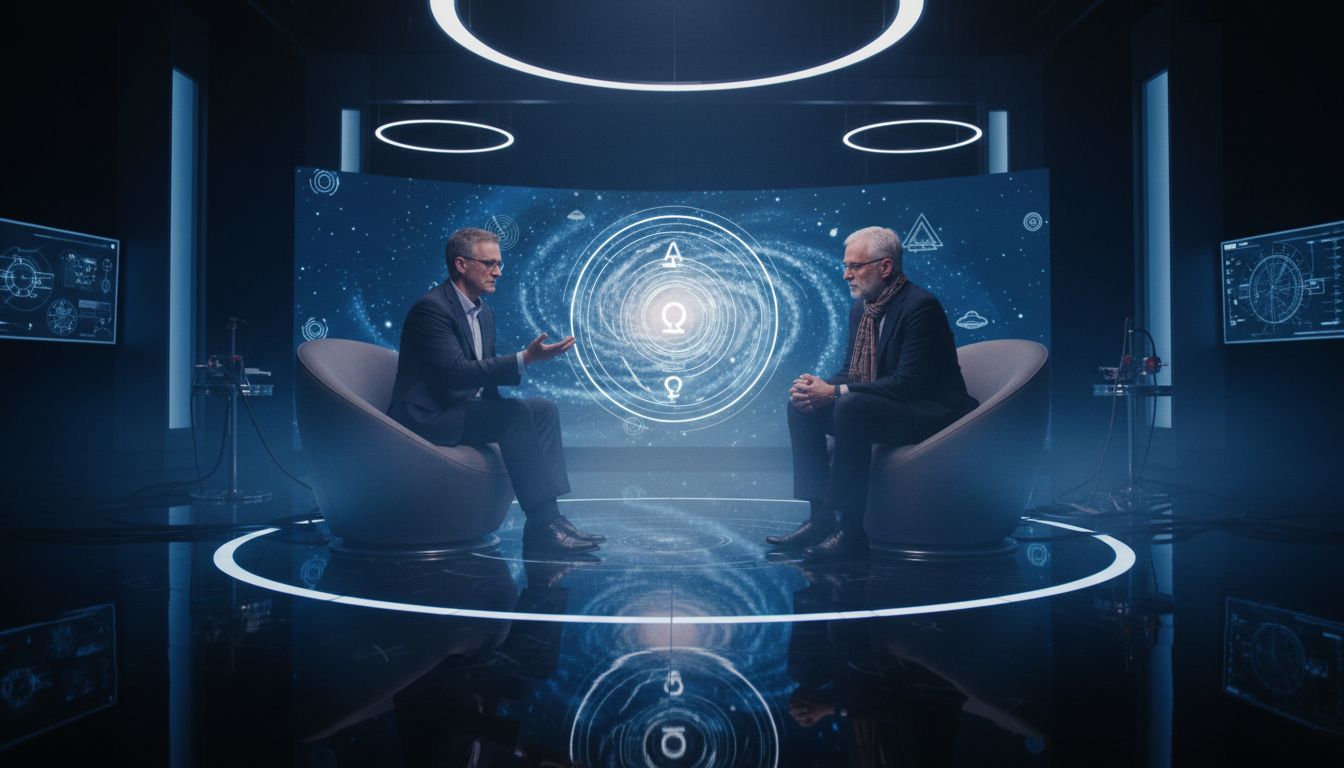
The latest episode of Connecting with Coincidence brings together parapsychologist Dean Radin and host Bernard Beitman to examine whether focused attention can influence physical reality. Recorded for the Coincider platform on December 19, 2025, the conversation frames phenomena traditionally labeled “magic”—telepathy, psychokinesis, and synchronicity—as subjects of systematic laboratory inquiry. Radin, chief scientist at the Institute of Noetic Sciences and author of The Science of Magic, argues that decades of controlled experiments yield “measurable results” that challenge the prevailing view of consciousness as a passive observer.
Key Findings from the Lab
Radin points to a body of research spanning more than three decades in which participants have demonstrated statistically significant effects in tasks designed to test telepathy (information transfer without known sensory channels) and psychokinesis (the ability to affect random physical systems with intention). In a series of double‑blind protocols using random number generators, the aggregated data show effect sizes that, while modest, exceed chance expectations at the 95 % confidence level. Radin also cites field studies of synchronicity, noting that meaningful coincidences tend to cluster during periods of personal transition—a pattern that aligns with his hypothesis that consciousness can modulate probabilistic events. He emphasizes that these findings are “replicable under strict conditions,” a claim that has spurred both interest and criticism within the broader scientific community.
Scientific Context and Skepticism
Mainstream physicists and psychologists remain cautious. Critics argue that the observed effects could stem from methodological artifacts, publication bias, or statistical misinterpretation. The episode references quantum‑mechanical concepts such as wave‑function collapse, but Radin stresses that his work does not invoke exotic physics; instead, it focuses on the measurable interaction between intention and random systems. Independent replication attempts have yielded mixed results, prompting calls for larger sample sizes and pre‑registered protocols. Nonetheless, the discussion highlights a growing niche of researchers who view these anomalies as a frontier for expanding the scientific definition of mind‑matter interaction.
Expanding the Sensory Landscape
Parallel to the mind‑matter debate, a separate line of inquiry is reshaping how we think about human perception. Neuroscientists and psychophysicists have proposed that humans may possess up to 33 distinct senses, extending far beyond the traditional five. These include proprioception, interoception, magnetoreception, and subtle vibration detection, among others. While still under investigation, the expanded sensory model underscores a broader scientific willingness to reconsider long‑standing assumptions about human capabilities—a cultural shift that dovetails with Radin’s call for openness to unconventional phenomena.
Public Engagement: “Senses Unwrapped” Exhibition
London’s Coal Drops Yard will host the interactive exhibition “Senses Unwrapped” through February 2026, offering visitors hands‑on experiences of both established and emerging senses. Curated in collaboration with sensory researchers, the show features installations that let participants test balance, temperature perception, and even low‑frequency magnetic fields. Organizers describe the exhibit as “a bridge between laboratory insight and everyday awareness,” aiming to demystify the science behind extended sensory modalities and, by extension, the kind of consciousness research championed by Radin. The exhibition provides a timely public platform for dialogue about the limits of perception and the possibility that the mind may play a more active role in shaping reality.


