Overview
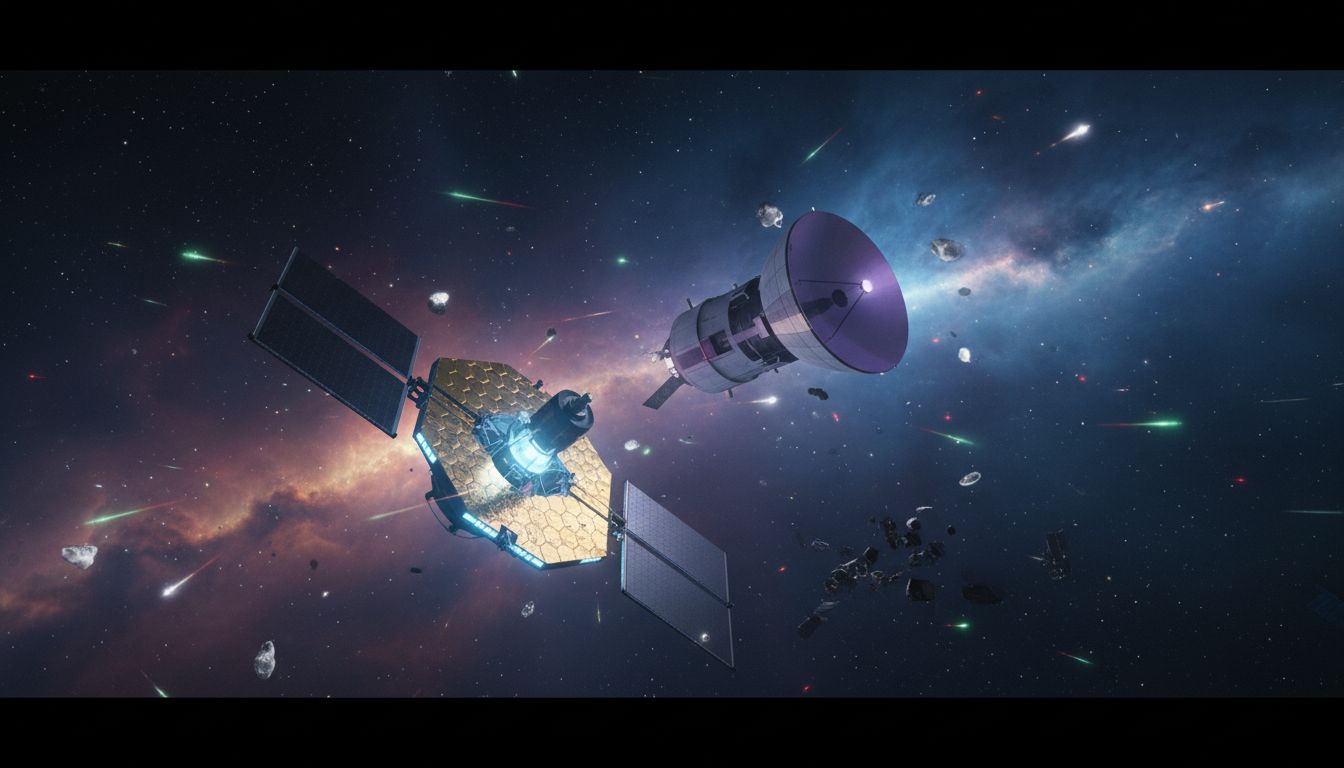
In late January 2026 NASA’s Chandra X‑ray Observatory and the James Webb Space Telescope (JWST) each recorded a series of brief, flickering light signals while surveying distant regions of the sky. The events, lasting only fractions of a second, sparked a flurry of online speculation that they might represent unidentified aerial phenomena (UAP). NASA officials, however, stress that the observations are most likely the result of known astrophysical processes or instrument‑specific effects, and the agencies are now conducting a joint analysis to rule out any truly anomalous source.
Observation Details
Chandra detected the twinkling signatures in the X‑ray band during a routine deep‑field exposure aimed at a galaxy cluster in the constellation Virgo. Simultaneously, JWST’s Near‑Infrared Camera (NIRCam) registered comparable, momentary flashes while imaging a separate field near the Carina Nebula. Both sets of data show a characteristic “blink” pattern: a sudden rise in photon counts followed by an equally rapid decline, repeating irregularly over a span of several minutes. The events were captured by independent detectors operating at vastly different wavelengths, which initially gave the phenomenon an air of mystery.
Scientific Interpretation
Astrophysicists reviewing the raw telemetry point to several plausible explanations. One leading hypothesis is that the flashes are caused by high‑energy cosmic rays striking the detectors, a well‑documented source of spurious signals that can mimic transient light sources. Another possibility involves scintillation—the rapid twinkling of starlight caused by turbulence in Earth’s upper atmosphere, which can affect space‑based instruments when they pass through residual atmospheric particles during low‑Earth‑orbit maneuvers.
“Both Chandra and Webb are incredibly sensitive, and they can pick up minute particle interactions that are indistinguishable from genuine astrophysical events without careful filtering,” said Dr. Megan Alvarez, senior scientist for the Chandra mission. “Our preliminary assessment leans heavily toward instrumental artifacts, but we are leaving no stone unturned.”
Ongoing Analysis and Review
NASA has convened a cross‑mission task force that includes instrument engineers, data analysts, and astrophysicists to conduct a thorough vetting of the recordings. The team will compare the twinkling signatures against a library of known detector glitches, run simulations of cosmic‑ray impacts, and examine the spacecraft telemetry for any anomalous attitude or thermal changes at the time of detection.
“The integrity of our data is paramount,” noted James Patel, JWST program manager, in a press briefing. “We will publish a detailed technical report after the peer‑review process, ensuring the scientific community has full visibility into our methodology and conclusions.”
Context and Implications
Transient light events are not new to high‑energy astronomy; similar bursts have been logged by Chandra and other X‑ray observatories over the past decade, most of which were later attributed to cosmic‑ray hits or instrumental noise. Nonetheless, the simultaneous detection by two flagship observatories has reignited public interest in UAP research, prompting a surge of commentary on social media platforms.
NASA’s measured response underscores its commitment to transparency while avoiding sensationalism. By openly addressing the speculation and outlining the rigorous steps being taken to validate the data, the agency aims to reinforce public trust in scientific inquiry. Should the analysis confirm an exotic origin, it would represent a rare and noteworthy discovery; if not, the findings will still contribute valuable insight into detector performance and background noise mitigation for future missions.
Looking Ahead
The joint Chandra‑Webb investigation is slated to conclude in the coming months, with results expected to appear in The Astrophysical Journal and on NASA’s official website. Until then, scientists encourage observers to treat the twinkling lights as a reminder of the challenges inherent in capturing faint, fleeting signals from the cosmos. As Dr. Alvarez succinctly put it, “Every anomaly, whether mundane or extraordinary, pushes us to refine our tools and deepen our understanding of the universe.”


