Overview
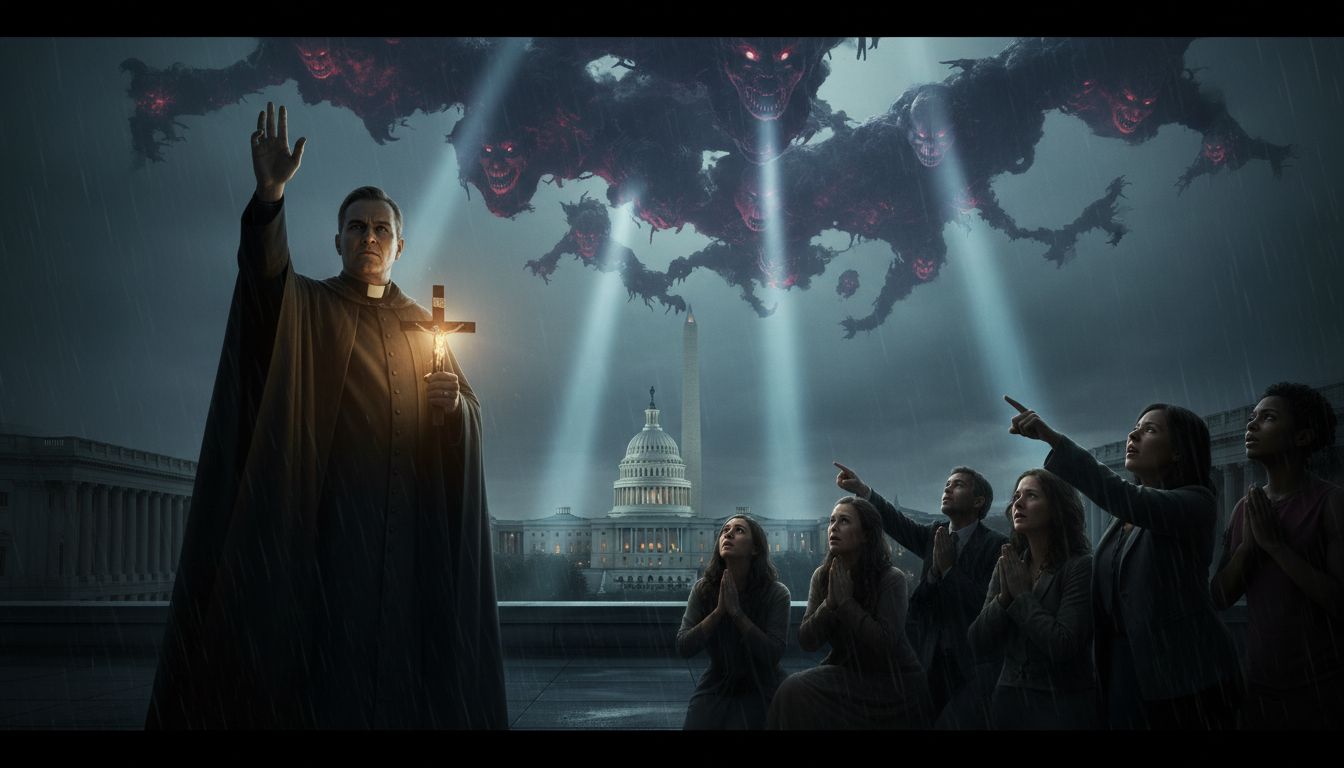
Washington, D.C.’s chief exorcist has entered the public debate over recent unidentified aerial phenomena (UAP) by suggesting that many of the sightings are demonic manifestations rather than extraterrestrial craft. Speaking to The Christian Post, Father Michael J. Kelley, who oversees the Archdiocese’s Office of Spiritual Warfare, warned believers not to become distracted by sensational headlines and to keep their focus on Jesus Christ as the ultimate source of truth and protection. His comments come amid a surge of media coverage following the Pentagon’s release of previously classified UAP videos and a growing number of civilian reports across the nation.
Statement from the Chief Exorcist
Father Kelley described the recent wave of UFO reports as “a modern form of spiritual deception,” noting that the biblical narrative of demonic activity often includes visual and auditory phenomena designed to lure people away from God. “When we see strange lights in the sky, our first instinct may be to wonder about alien life,” he said, “but the Scripture warns us that the enemy can use deception that mimics natural or even supernatural events to draw us away from the truth of Christ.” He cited 2 Corinthians 11:14—“Even Satan disguises himself as an angel of light”—as a theological basis for interpreting some UAP encounters as potential demonic ploys.
Kelley also emphasized the pastoral dimension of his role: “My job is to assist the faithful in discerning what is truly from God and what is not. If a community is frightened by unexplained lights, we respond with prayer, Scripture, and, when necessary, the rite of exorcism to cleanse any spiritual influence that may be at work.”
Spiritual Warfare Context
The chief exorcist’s remarks frame the UFO phenomenon within the broader Christian doctrine of spiritual warfare. The Archdiocese of Washington has, for decades, maintained a team of trained priests who conduct discernment and, when warranted, exorcisms. While the Vatican’s Congregation for the Doctrine of the Faith has issued guidelines on discerning demonic activity, it has not officially linked UFO sightings to demonic activity. Nonetheless, Father Kelley’s statements echo a growing sentiment among some evangelical and Catholic leaders who view the surge of unexplained aerial reports as an opportunity for the Church to reaffirm its spiritual authority.
He urged believers to “anchor their hope in Jesus, not in the fleeting excitement of speculative theories.” In practical terms, Kelley recommended that churches organize prayer vigils, study biblical passages on discernment, and provide counseling for individuals who feel unsettled by UAP encounters.
Reactions from Religious Leaders
Other clergy have responded with cautious agreement. Sister Maria López, a theologian at the Catholic University of America, noted that “while the scientific community continues its investigations, the Church must remain vigilant about the spiritual implications of any phenomenon that captures the public imagination.” She added that “the primary mission is to guide the faithful toward a deeper relationship with Christ, regardless of whether the lights are atmospheric, technological, or something else entirely.”
Conversely, some evangelical leaders, such as Pastor James Hernandez of Grace Fellowship, warned against conflating all UFO reports with demonic activity, urging a balanced approach that respects both scientific inquiry and spiritual discernment. “We must not dismiss legitimate research,” Hernandez said, “but we also must remember that the enemy exploits curiosity.”
Broader Implications
Father Kelley’s comments arrive at a moment when the U.S. government is establishing a UAP Task Force to evaluate national security concerns, and several congressional hearings have already taken place. While the Pentagon’s declassified videos have reignited public fascination, the chief exorcist’s perspective adds a religious dimension to a conversation that has largely been secular.
The intersection of faith and unexplained phenomena may influence how religious communities respond to future sightings. Whether the lights above D.C. are atmospheric anomalies, advanced drones, or, as Father Kelley suggests, spiritual deceptions, the discourse underscores a timeless theological question: How does humanity discern the true source of mystery in a world where science and spirituality increasingly overlap?