Overview
A growing chorus of commentators is warning that contemporary ufology is being co‑opted by groups that blend Christian demonology, occult cult practices, and mythic narratives. The criticism centers on a network of individuals—most notably a self‑styled “New Word of God” cult leader known as MVS and his son, who recently appeared at a 2025 UAP summit and on NewsNation with journalist Ross Coulthart. Observers argue that the rhetoric employed mirrors classic cult techniques, such as invoking “revelation” and encouraging listeners to relinquish personal critical judgment.
Key Figures and Recent Developments
MVS, described in the source as a “classic cult leader,” heads the New Word of God sect. His son, whose name is not disclosed in the public record, has begun to position himself as a thought‑leader in the UFO community. During the 2025 summit, he presented a “scientific” prelude before reiterating themes associated with his father’s teachings, including claims of “received” knowledge from higher sources. The appearance attracted attention after the pair were featured on NewsNation, where the younger Reed (as referenced in the source) discussed a dystopian narrative framing unidentified aerial phenomena (UAP) as a threat to humanity.
The commentary also cites political figures who have entered the debate. Ohio senator‑designate JD Vance, for example, labeled UFOs as “demonic” on a right‑wing podcast hosted by Benny Johnson. Critics suggest Vance’s statements are a political maneuver aimed at courting evangelical voters, noting his alleged ties to tech investor Peter Thiel—who has previously delivered a series of talks titled “Antichrist.”
Cultural and Historical Context
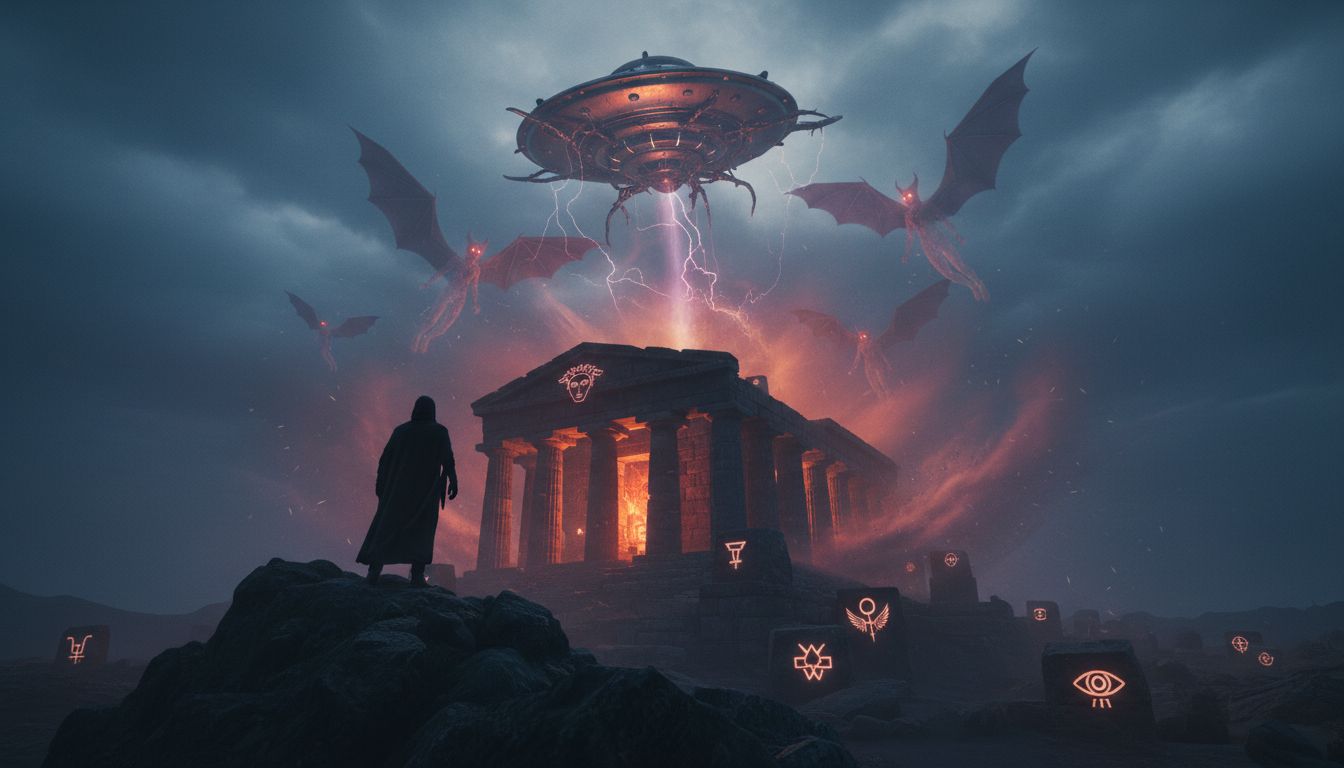
The current narrative draws on a mix of ancient Greek alien myths, Islamic concepts of djinn, and modern Christian demonology. Proponents of the “NHI” (Non‑Human Intelligence) label sometimes describe UFOs as “djinn‑like” or demonic entities rather than extraterrestrial life forms. This syncretic framing, the source argues, resonates with longstanding religious motifs that portray unseen beings as either benevolent or malevolent forces intervening in human affairs.
Such framing is not new to the UFO community; past decades have seen similar overlaps with New Age spirituality and fringe religious movements. What distinguishes the present concern, according to the source, is the apparent coordination among cult leaders, media outlets, and certain political operatives, potentially amplifying the message through mainstream channels.
Concerns Over Influence and Credibility
Critics warn that the fusion of cultic language with UFO discourse could undermine scientific inquiry and foster “perception control.” By presenting unverified claims as revelations, the narrative may encourage followers to suspend skepticism, a tactic reminiscent of classic cult recruitment. The source points to the rapid rise of the younger Reed’s profile as evidence of a well‑funded push to dominate the academic and media landscape surrounding UAP research.
Furthermore, the timing is viewed as strategic. With former President Donald Trump—characterized in the source as a “national cult leader”—still wielding considerable influence, and with his own occasional references to UFO files, the environment is seen as fertile ground for “dystopian” messaging. The convergence of political opportunism, cult dynamics, and sensational UFO claims could, the source argues, blur the line between legitimate investigation and ideological propaganda.
Reactions and Outlook
Responses from the broader scientific and investigative community have been mixed. Some researchers emphasize the need for transparent data sharing and peer‑reviewed analysis, cautioning against the infiltration of unverified belief systems. Others acknowledge that the cultural allure of UFOs inevitably attracts a diverse array of participants, from sincere scientists to fringe groups.
The debate underscores a broader challenge: how to maintain credibility in a field that has historically been plagued by hoaxes, misinterpretations, and sensational media coverage. As the conversation evolves, stakeholders—including government agencies, academic institutions, and media platforms—will need to balance openness to anomalous phenomena with rigorous methodological standards, ensuring that the pursuit of truth is not compromised by cult‑like narratives or political expediency.


