Overview
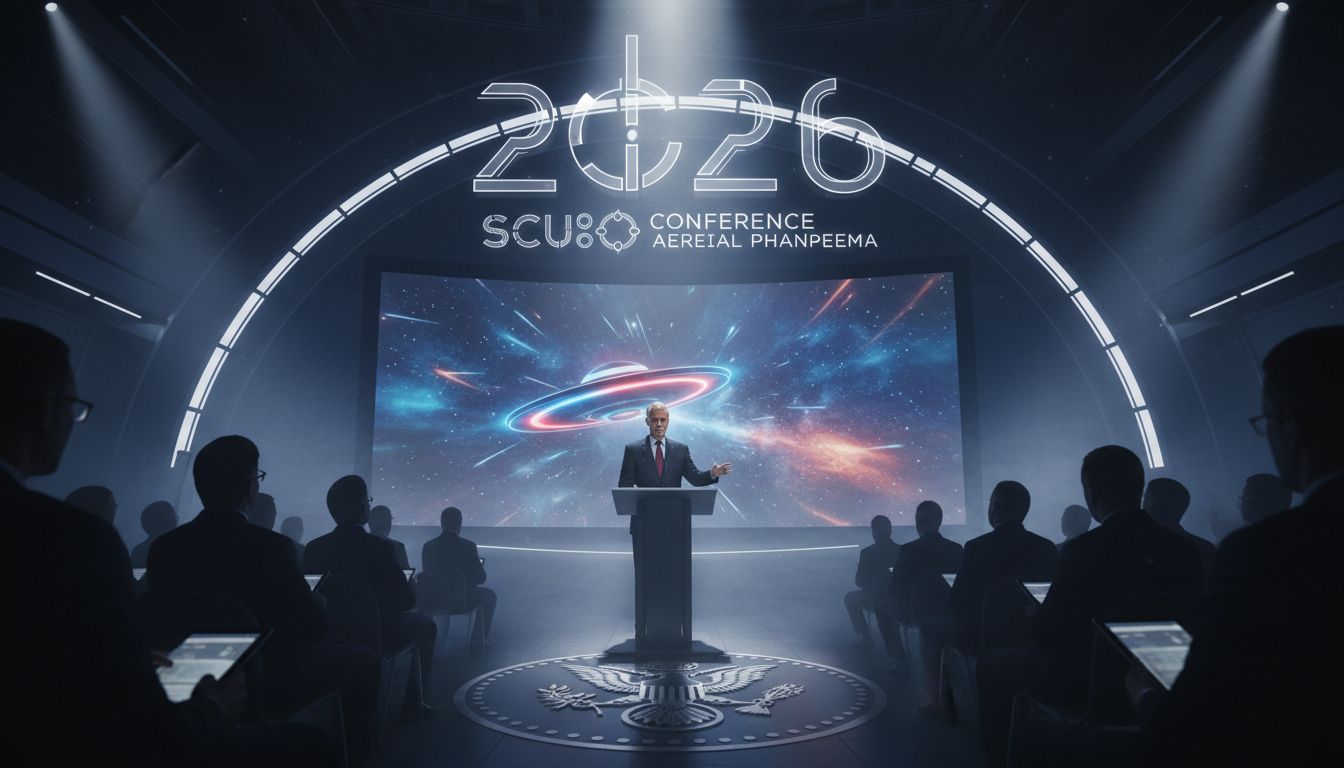
Former Deputy Assistant Secretary of Defense Christopher Mellon is slated to deliver the keynote address at the 2026 SCU Conference on Unidentified Anomalous Phenomena, scheduled for late June in Washington, D.C. Announced by The National Law Review on May 4, the three‑day gathering will bring together 19 leading scientists, legal scholars, and policy makers to examine the wave of UAP (Unidentified Aerial Phenomena) disclosures that have emerged over the past two years. Organizers describe the conference as “the first interdisciplinary forum where national‑security, scientific, and regulatory perspectives converge on the UAP issue.”
Key Participants
Mellon, who served as Deputy Assistant Secretary of Defense for Intelligence Policy from 2009‑2011 and has been a vocal advocate for greater transparency on UAP matters, will open the event with a presentation titled “From Classified Files to Public Policy: Charting a Path Forward.” He will be joined by a panel of scientists from NASA, the National Institute of Standards and Technology (NIST), and several university research teams that have recently published peer‑reviewed analyses of sensor data released by the Office of the Director of National Intelligence (ODNI).
Among the invited legal experts are Professor Katherine Hsu of Georgetown Law, who specializes in aerospace regulation, and former FAA Administrator Michael Whitaker, who will discuss the agency’s evolving role in air‑space governance. The conference’s scientific committee, chaired by Dr. Lena Vargas of the University of Colorado Boulder, includes specialists in radar signal processing, atmospheric physics, and aerospace engineering, ensuring that technical findings are scrutinized alongside policy considerations.
Regulatory Implications
The timing of the SCU Conference aligns with several recent developments that have heightened calls for a formal regulatory framework. In June 2025, the ODNI released a comprehensive report acknowledging that “a subset of UAP observations remain unexplained after rigorous analysis.” Shortly thereafter, the Senate Armed Services Committee held a closed‑door hearing on the national‑security implications of these phenomena.
Mellon is expected to argue that existing statutes—such as the Commercial Space Launch Act and the National Defense Authorization Act—are ill‑suited to address objects that may operate outside conventional air‑space classifications. “We need a clear, statutory pathway that balances national security, scientific inquiry, and civil aviation safety,” he told The National Law Review in a pre‑conference interview. Legal scholars at the conference will explore proposals ranging from a dedicated UAP oversight board within the Department of Defense to amendments that grant the Federal Aviation Administration (FAA) authority to issue temporary flight restrictions for anomalous sightings.
Expected Outcomes
Conference organizers anticipate producing a white‑paper summarizing consensus recommendations for Congress and the Executive Branch. Preliminary drafts suggest three priority actions:
- Standardized reporting mechanisms for civilian pilots and commercial operators, modeled on the existing Aviation Safety Reporting System.
- Funding for interdisciplinary research, earmarked for data‑fusion projects that combine radar, infrared, and optical observations.
- Creation of a statutory liaison office to coordinate between intelligence agencies, the FAA, and scientific institutions.
The final document will be circulated to the Senate Committee on Commerce, Science, and Transportation, the House Committee on Oversight and Reform, and the Office of the Director of National Intelligence before the end of the year.
Next Steps
While the SCU Conference marks a significant step toward institutionalizing UAP analysis, participants acknowledge that broader legislative action may still face political hurdles. “The challenge is not just scientific—it’s about building trust across agencies and the public,” noted Professor Hsu during a breakout session.
Mellon’s involvement underscores the growing credibility of the UAP discourse within national‑security circles. As the conference concludes, the hope among attendees is that the recommendations will catalyze a transparent, accountable framework that can both safeguard airspace and advance scientific understanding of phenomena that remain, for now, unexplained.


