Overview
A newly publicised petroglyph panel in the Quebrada Seca community of Cedeño, Monagas, is being promoted as the oldest known rock‑art site in Venezuela, with tentative ages ranging from 4,000 to 8,000 years. The announcement, made by Cedeño mayor Daniel Monteverde on Instagram, has ignited a debate among archaeologists, heritage officials and Indigenous groups over the adequacy of scientific testing, the handling of the site, and the role of local custodians in its interpretation and protection.
The Announcement and Initial Claims
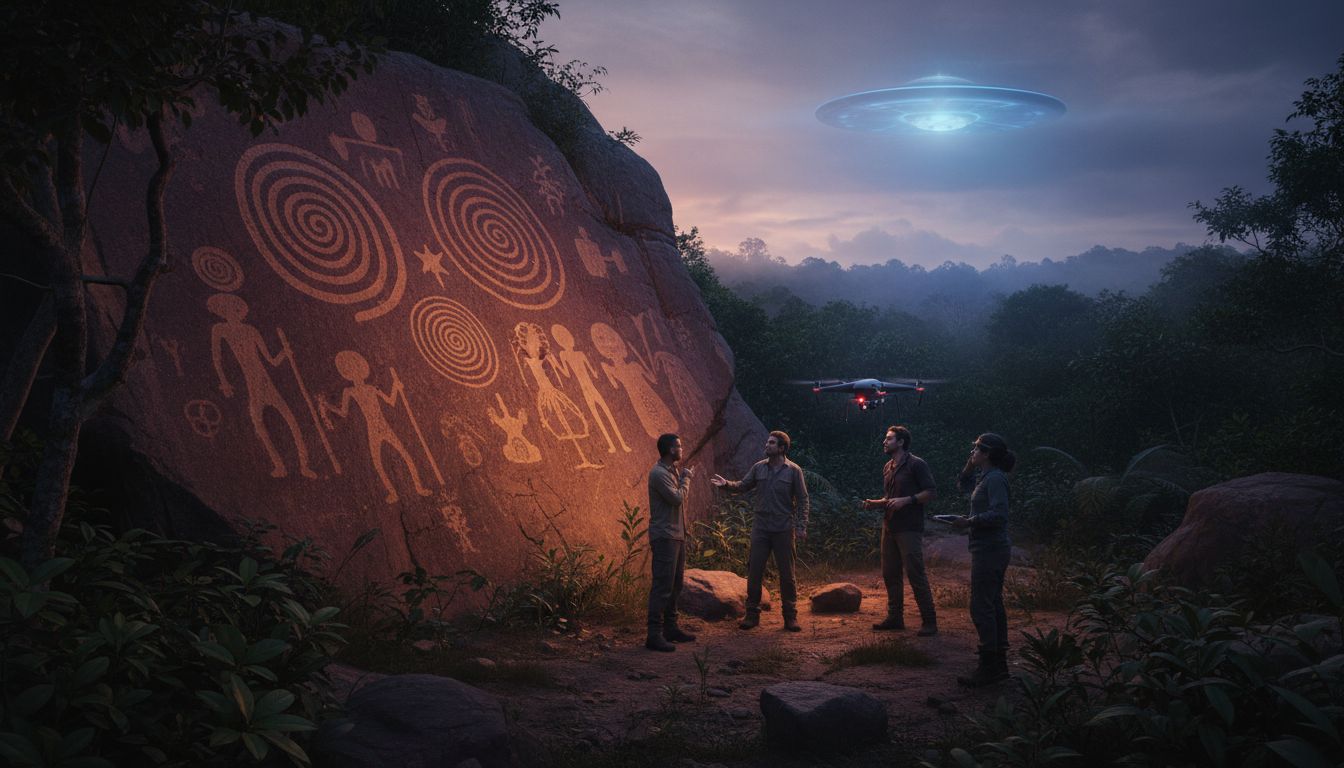
Monteverde, accompanied by a delegation from the National Land Institute (NLI), presented photographs of a carved stone surface featuring spirals, concentric circles and stylised humanoid figures. In a short video he explained that the NLI had “located the petroglyph panel after a series of research expeditions” and that the find could become a cornerstone for “agritourism and adventure tourism” in the region. Historian Luis Peñalver, linked to the NLI, described the discovery as a “milestone” that may illustrate Cedeño’s historic role as a regional corridor for travel and settlement. The mayor also announced plans to geolocate the site, safeguard it against vandalism, and develop an “archaeological route” in partnership with the Ministry of Popular Power for Culture and the National Institute of Cultural Heritage.
Scientific Scrutiny and Methodological Gaps
Despite the enthusiasm, several Venezuelan archaeologists have flagged serious methodological concerns. Rubi de la Valencia, director of the National Rock Art Archive and a specialist who has worked on the nearby Canaima sites, called the claim “highly debatable” and noted that the dating is scientifically unsubstantiated. She asked pointedly, “Which specific laboratory analyses or geochronological techniques were employed to date these petroglyphs? Where is the peer‑reviewed literature?” As of now, no published report details the use of radiocarbon dating, optically stimulated luminescence, or other accepted methods. Moreover, the Instagram footage shows Monteverde touching a petroglyph with water, a practice that can damage pigment residues and lichens that are crucial for future analysis.
Indigenous Custodianship and Ethical Concerns
The petroglyphs sit within a landscape long inhabited by the Chaima and Kariña peoples, whose cultural heritage has been catalogued in the national rock‑art inventory. Critics argue that the announcement bypassed Indigenous consultation, undermining the principle of community‑based stewardship. De la Valencia emphasized that “the claims regarding its dating and origin … lack the perspective of local Indigenous communities.” Indigenous leaders have previously warned that premature publicity can attract looters and tourists before adequate protection measures are in place, potentially eroding the very cultural fabric the carvings represent.
Way Forward and Institutional Responses
Monteverde indicated that a meeting with the Ministry of Culture and the National Institute of Cultural Heritage is imminent, with the aim of securing formal certification and initiating scientific study. The Institute of Cultural Heritage has pledged to conduct “the scientific study and dating of the pieces” and to design a sustainable tourism model that respects the integrity of the monument. For the scholarly community, the next steps will likely involve assembling an interdisciplinary team—archaeologists, geochronologists, conservators and Indigenous representatives—to carry out systematic documentation, non‑invasive sampling, and peer‑reviewed publication. Until such rigor is applied, the 8,000‑year‑old claim remains provisional, and the site’s future will hinge on balancing scientific inquiry, cultural rights, and responsible tourism.


