Overview
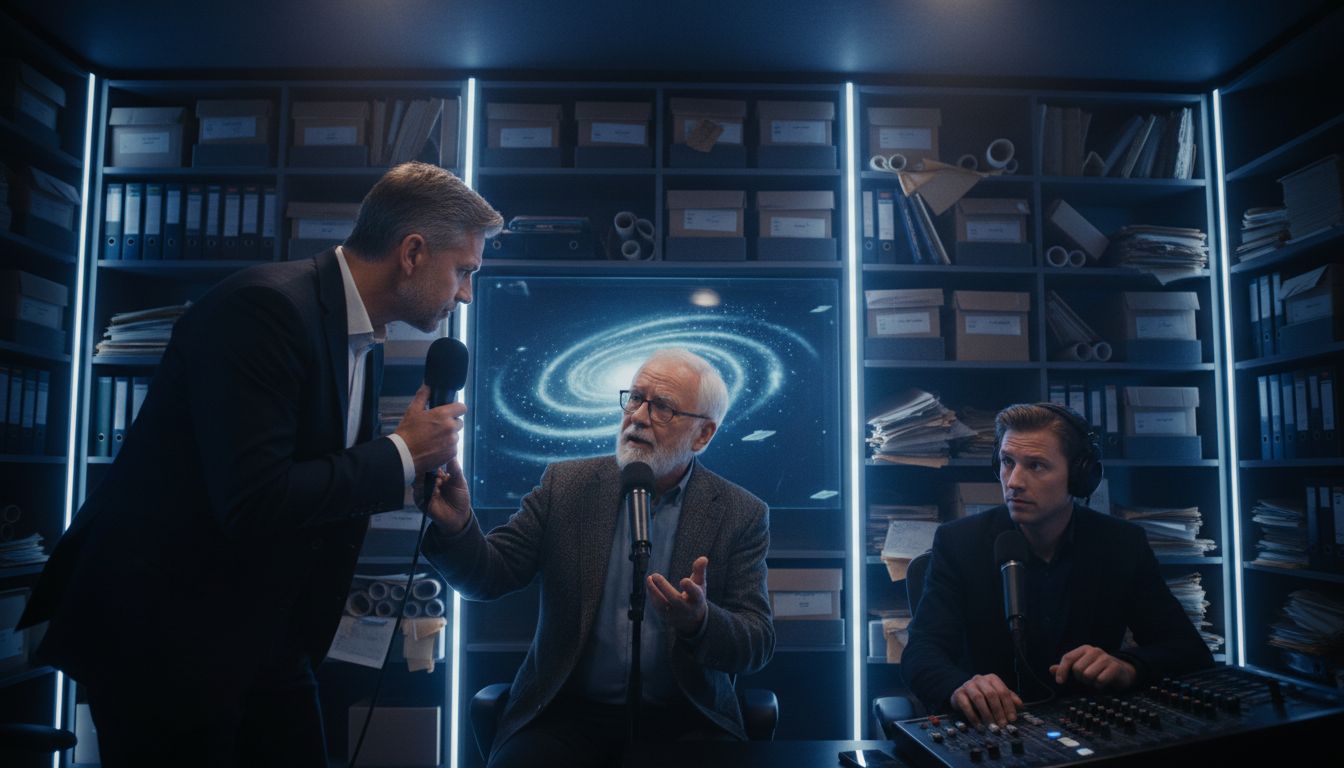
In a 55‑minute episode of the Podcast UFO, host Martin Willis sits down with veteran Swedish ufologist Clas Svahn for a comprehensive look at four decades of research, newly released Swedish security‑police documents, and the growth of the Archives for the Unexplained (AFU). The conversation then shifts to Mitch Randall’s proposal for a low‑cost, nationwide passive‑radar network modeled after the National UFO Reporting Center (NUFORC). The episode closes with a revisit of the 1973 Pascagoula abduction of Calvin Parker, featuring commentary from Dr. Irena Scott and a preview of an upcoming book on the case.
Svahn’s Career and the Swedish UFO Record
Svahn, who has been cataloguing UFO reports since the early 1980s, highlighted the significance of recently declassified files from Sweden’s Säpo (security police) and the armed forces. “These documents confirm that sightings were taken seriously at the highest levels, even if the conclusions were often inconclusive,” he told Willis. Among the most notable cases discussed were the 1975 Malmö lights, the 1976 Uppsala radar contacts, and a series of “ghost aircraft” sightings over the Baltic Sea in the late 1970s. Svahn explained that the AFU’s digitisation effort now makes these records searchable for researchers worldwide, a step he describes as “a watershed for transparency in UFO research.”
The Archives for the Unexplained: Expanding Access
The AFU, founded in 1992, has amassed over 30,000 reports, photographs, and government memos. Svahn detailed recent upgrades to the archive’s metadata system, allowing cross‑referencing of sightings with meteorological data and civilian flight logs. “Our goal is to move beyond anecdote and provide a robust dataset that can be examined statistically,” he said. The episode also noted collaboration with the UFO Research Center of Sweden (UFO‑RC) and academic institutions, aiming to foster peer‑reviewed studies that could clarify patterns in the Swedish UFO phenomenon.
Passive‑Radar Network Proposal
Turning to contemporary detection efforts, Willis introduced Mitch Randall, an engineer who proposes a low‑cost passive‑radar array spanning the United States. Inspired by NUFORC’s crowdsourced reporting model, Randall envisions a network of inexpensive receivers that monitor ambient radio‑frequency emissions to triangulate anomalous aerial objects without emitting signals themselves. “If we can deploy a few hundred kits at hobbyist and community radio clubs, we’ll have a continent‑wide sensor grid for a fraction of the cost of traditional radar,” Randall explained. He cited successful pilot tests in the Midwest, where the system captured unexplained transients coincident with multiple civilian sighting reports.
Revisiting the Pascagoula Encounter
The episode’s final segment revisited the 1973 Pascagoula abduction, focusing on Calvin Parker’s recent reflections. Dr. Irena Scott, a psychologist specializing in trauma and anomalous experiences, offered an analysis of Parker’s narrative consistency over five decades. “While some details have evolved, the core emotional impact and physiological symptoms he describes remain remarkably stable,” Scott observed, adding that such consistency is rare among reported abduction cases. The discussion also teased an upcoming book slated for early 2026, which promises to include previously unpublished interview material and a forensic review of the original medical records.
Looking Ahead
Listeners left the episode with a clear sense that UFO research is entering a new phase of data accessibility and technological innovation. Svahn’s archival work provides a historic foundation, while Randall’s radar concept could supply real‑time detection capabilities. Meanwhile, the continued scholarly attention to classic cases like Pascagoula underscores the field’s growing willingness to apply rigorous academic standards. As Willis concluded, “When historical documentation meets modern instrumentation, we finally have the tools to move the conversation from speculation to evidence‑based inquiry.”


