Overview
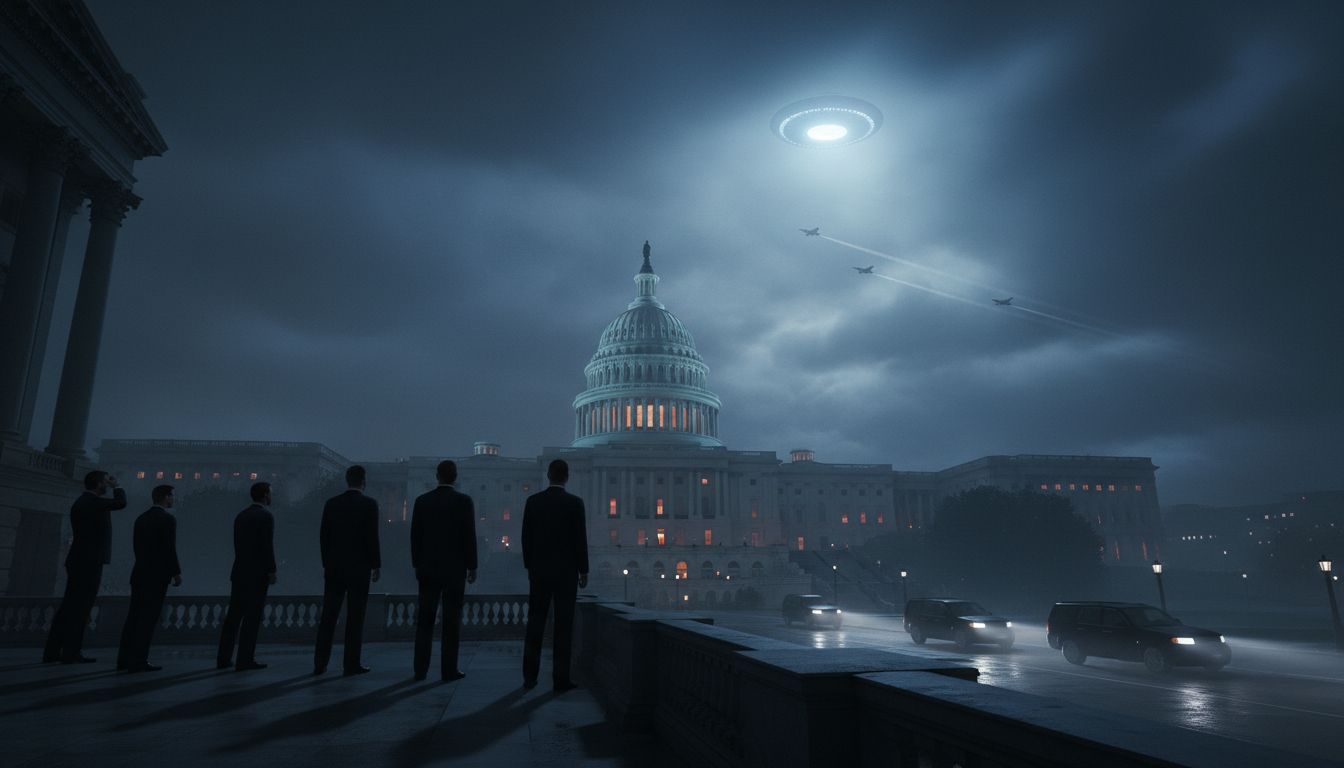
Congressional leaders are intensifying scrutiny of the Department of Defense’s recent UAP (unidentified aerial phenomena) intercepts over North America. In a set of briefings held last week, members of the House Armed Services Committee and the Senate Armed Services Committee asked the Pentagon to provide detailed accounts of each incident, the sensors involved, and any assessment of potential threats. The push coincides with the fiscal‑2026 National Defense Authorization Act (NDAA), which contains three new provisions aimed at strengthening oversight of the military’s All‑Domain Anomaly Resolution Office (ADARO), the agency tasked with investigating anomalous aerial, maritime and space sightings.
Legislative Action
The NDAA provisions require ADARO to submit quarterly briefings to the Armed Services Committees, expand the office’s reporting obligations to the public‑interest UAP Transparency Act, and mandate a review of all intercepts that occur within the continental United States, Canada, and Mexico. Representative Mike Turner (R‑OH), chair of the House subcommittee on intelligence, said, “Our national security depends on knowing whether these objects pose a genuine risk. The American people deserve a clear, accountable picture of what our own sensors are detecting.”
Senator Jack Reed (D‑RI) echoed the sentiment, adding that “the lack of consistent data hampers our ability to allocate resources effectively and undermines confidence in the Department’s own assessments.” The committees have set a deadline of 90 days for the Pentagon to deliver a comprehensive dossier covering at least twelve documented intercepts between June 2024 and September 2025.
Pentagon Response
The Department of Defense, through a spokesperson for the Office of the Secretary of Defense, confirmed receipt of the congressional request and pledged full cooperation. “We are compiling the required information in accordance with the NDAA language and will provide a detailed report that includes sensor data, pilot testimonies, and threat analyses,” the statement read.
Admiral Lisa Franchetti, commander of U.S. Northern Command, offered a cautious note: “While the majority of these encounters have been benign, a small subset exhibits flight characteristics that do not align with known aerospace platforms. We continue to evaluate each case on its own merits.” The Pentagon’s internal memo, obtained by DefenseScoop, indicates that ADARO has already logged 23 UAP events in the North American airspace, of which seven involved active interceptor aircraft or surface‑to‑air missile systems.
Implications for Transparency
If the new reporting requirements are enacted, they could mark the most systematic public disclosure of UAP data to date. Analysts at the Center for Strategic and International Studies (CSIS) note that “regular congressional briefings, coupled with mandated public summaries, would create a feedback loop that improves both intelligence collection and public trust.” However, some lawmakers caution that excessive detail could compromise classified sensor capabilities. Representative John Katko (R‑NY) suggested a redacted summary approach, balancing national‑security concerns with the public’s right to know.
The potential for more frequent public releases may also influence future budget allocations. The FY‑2026 defense appropriations bill includes a modest increase—$12 million—for ADARO’s data‑fusion infrastructure, reflecting congressional belief that improved analytical tools are essential for discerning genuine threats from sensor anomalies.
Historical Context
Congress’s renewed focus builds on a series of milestones that began with the 2021 Office of the Director of National Intelligence (ODNI) UAP report, which acknowledged 144 incidents of “unexplained aerial objects” and called for a standardized reporting mechanism. Subsequent legislation, such as the 2022 UAP Transparency Act, required the DoD to establish a formal reporting channel for pilots. The current NDAA provisions represent the next logical step: moving from internal documentation to legislative oversight and public accountability.
As the 2026 NDAA moves toward final passage, both sides of the aisle appear united in the view that clarity on UAP intercepts is a matter of national security, not sensationalism. Whether the forthcoming reports will reveal a genuine threat—or simply underscore the challenges of modern sensor environments—remains to be seen, but the congressional push ensures that the conversation will stay firmly in the public domain.