Overview
In a recent segment for UFO News, journalist Cristina Gomez reported a convergence of political, scientific, and religious interest surrounding Unidentified Aerial Phenomena (UAP). The piece highlighted a growing demand for transparency from members of Congress, record‑breaking public engagement with newly released Pentagon data, and a measured response from the Vatican’s scientific leadership. By placing these developments side by side, the report underscores how the UAP discussion has moved beyond isolated hearings to become a broader cultural and institutional conversation.
Congressional Push for Disclosure
Representative Tim Burchett, co‑chair of the bipartisan Congressional UAP caucus, announced a shift from seeking additional hearings to demanding full public disclosure of all UAP records. “Washington doesn’t need more hearings; it needs disclosure,” Burchett told reporters, adding that he is in daily contact with the White House and attributing the current opacity to resistance from what he described as the “Deep State.” Burchett noted that conversations about UAPs are now a regular item on the congressional agenda, reflecting a broader bipartisan curiosity that has grown since the 2020 Pentagon report on the phenomenon.
Record Public Interest and Declassified Data
The Department of Defense’s newly launched UAP archive at war.gov/ufo has already surpassed one billion page views, a milestone that analysts say signals unprecedented public appetite for official information. Steve Bassett, executive director of the Paradigm Research Group, pointed out that 340 million hits occurred within the first twelve hours of the site’s debut. Bassett argues that the formal declassification act sends a clear message to newsrooms worldwide: UAP coverage is now a legitimate beat for mainstream journalism. Author Miguel Sancho also drew attention to a 2025 testimony from a senior U.S. intelligence officer who described orange, glowing orbs flying in a “T‑formation” during a helicopter mission over the western United States. Sancho cautioned that some recent sightings may involve advanced foreign drone technology, citing unexplained incursions near Langley Air Force Base as a possible example.
Vatican Perspectives on UAP
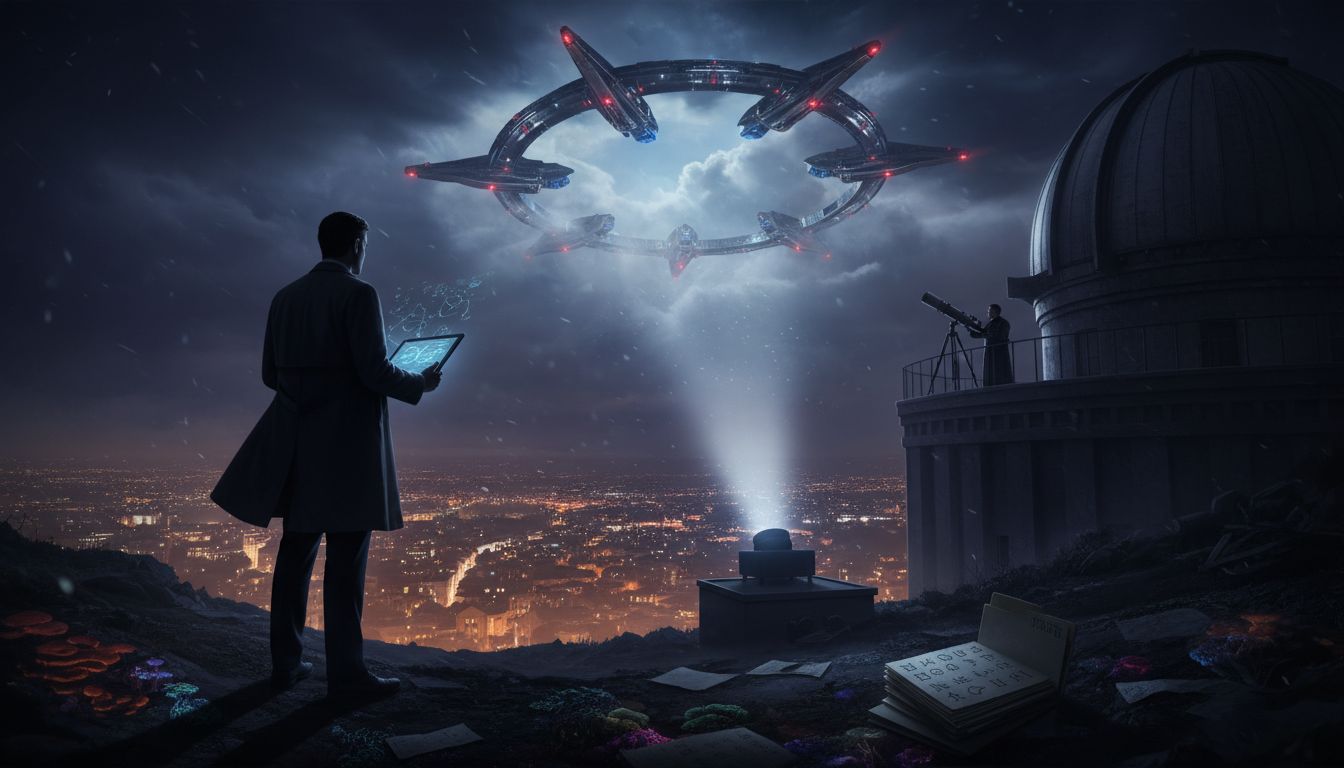
Adding a rare religious dimension to the debate, Father Richard D’Souza, the newly appointed director of the Vatican Observatory, urged a balanced approach that blends scientific rigor with openness. “We must be open to understanding the world while maintaining the skepticism of science,” D’Souza said in an interview, warning against sensationalism before data are vetted by experts. He referenced the Catholic Church’s historic contributions to science, noting that Belgian priest‑astronomer Georges Lemaître first proposed the Big Bang theory. Today, the Vatican Observatory operates a robotic telescope on Mount Graham in Arizona, where it continues to monitor celestial phenomena, including those that could intersect with UAP research.
Outlook and Next Steps
The convergence of congressional pressure, massive public engagement, and scholarly input suggests that the UAP conversation is entering a new phase. Analysts anticipate that the next major milestone could be an executive order mandating the release of all remaining “Special Access Program” files, or a presidential statement that clarifies the government’s stance on recovered materials. Until such a formal disclosure occurs, the discourse will likely remain a mosaic of congressional hearings, scientific analysis, and cautious commentary from institutions like the Vatican. As Gomez’s report makes clear, the focus is shifting from speculation to concrete evidence, and the coming months may determine whether “real disclosure” becomes a political reality or remains an aspirational goal.