Overview
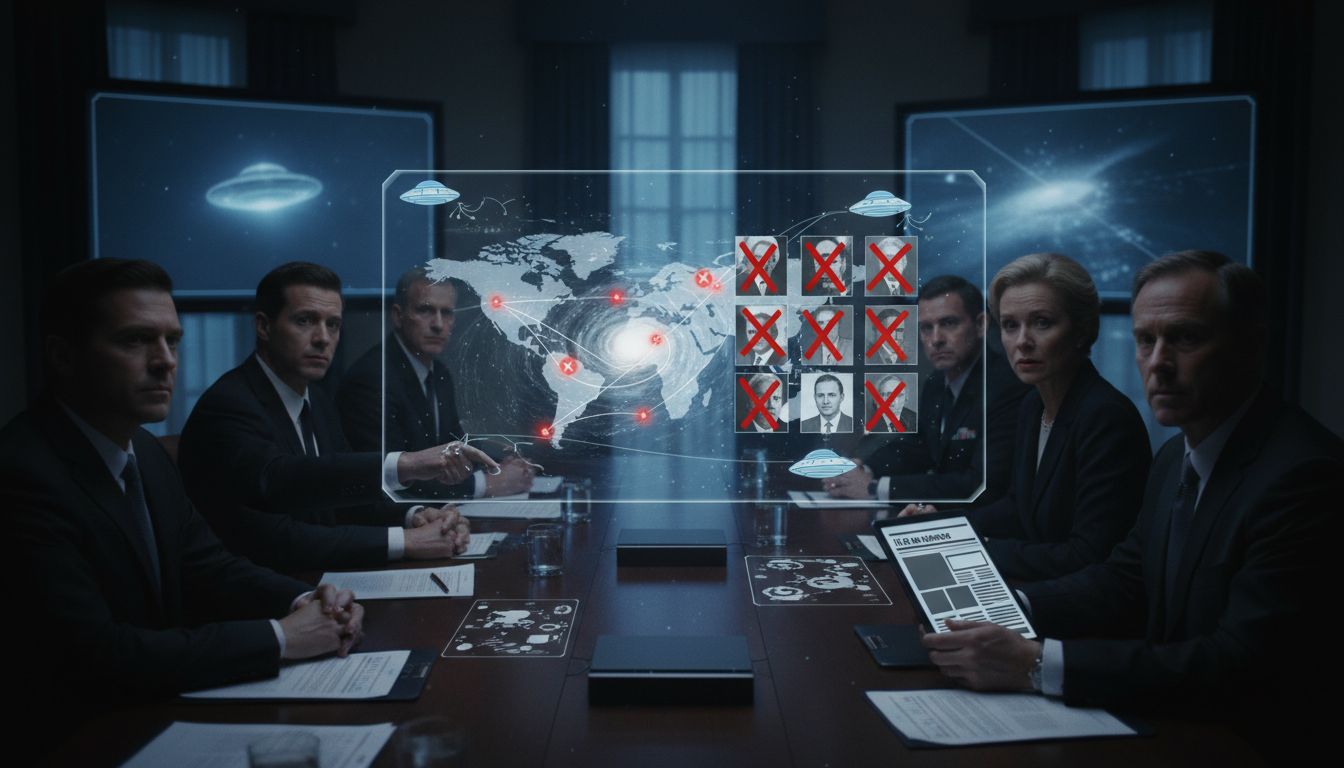
A fringe conspiracy theory that links recent unidentified aerial phenomena (UAP) sightings to the unexplained disappearances of several researchers has migrated from obscure internet forums to the corridors of the White House. The narrative, which first surfaced on a handful of social‑media groups in early 2026, alleges that “secret government projects” are abducting scientists who work on advanced aerospace and quantum‑physics research. According to The Guardian, senior officials are now publicly addressing the claim as pressure mounts for greater transparency in the administration’s ongoing UAP investigations.
From Online Rumors to Official Concern
The theory originated on a series of message boards that blend genuine curiosity about UAPs with speculative links to the missing scientists—Dr. Elena Ruiz, a leading expert on high‑energy plasma, and Dr. Michael Patel, a quantum‑materials researcher—both of whom were reported missing under “unclear circumstances” in 2025. Posts suggested that their disappearances coincided with a spike in sightings of “triangular lights” over the Southwest United States. While no evidence directly ties the two events, the story gained traction after a viral video compiled alleged “footage” of a craft hovering above a research facility in Colorado.
In response, the White House’s Office of Science and Technology Policy (OSTP) issued a brief statement on Tuesday, acknowledging that the administration is “aware of circulating rumors linking UAP sightings to the recent loss of scientific personnel.” The OSTP spokesperson, Dr. Karen Liu, emphasized that “any credible allegation involving the safety of American scientists will be investigated thoroughly, but we caution the public against drawing conclusions from unverified sources.”
Government Agencies Weigh In
The Department of Defense’s All‑Domain Anomaly Resolution Office (AARO), which succeeded the former UAP Task Force, reiterated its mandate to “collect, analyze, and report on anomalous aerial observations” while underscoring that its investigations are “science‑driven and free from speculative narratives.” AARO Director Lt. Gen. James “Jim” Harlan told reporters, “Our current focus is on the technical characteristics of the phenomena—speed, maneuverability, radar signatures—not on conjecture about abductions.”
Congressional oversight committees have also taken note. The Senate Armed Services Committee, chaired by Sen. Maria Torres (D‑CA), scheduled a closed‑door briefing on April 30 to examine the status of the missing scientists’ cases alongside the broader UAP dossier. Torres remarked, “Our constituents deserve clear answers, and we will ensure that any link—no matter how improbable—is explored with rigor and transparency.”
Public Pressure and Media Scrutiny
The surge in public interest reflects a broader trend of heightened demand for openness about UAPs, a topic that has moved from classified briefings to mainstream discourse since the 2023 Pentagon report. Advocacy groups such as the Citizens for Scientific Integrity (CSI) have organized petitions calling for a full declassification of all UAP‑related files, arguing that “the lack of information fuels misinformation.”
Social‑media analytics firm BuzzMetrics reported a 250 % increase in searches for “UAP scientist disappearances” over the past two weeks, indicating that the theory is resonating beyond niche circles. Nevertheless, experts caution against conflating unrelated incidents. Dr. Anita Rao, a professor of astrophysics at MIT, noted, “While the timing is unsettling, there is no corroborated data linking the two phenomena. Correlation does not equal causation, and responsible journalism must reflect that distinction.”
Next Steps and Outlook
The White House has pledged to coordinate with the Department of Energy, the National Science Foundation, and relevant law‑enforcement agencies to verify the circumstances surrounding Dr. Ruiz’s and Dr. Patel’s disappearances. A joint task force is expected to release a preliminary report within the next 60 days, which will address both the missing‑person investigations and any potential overlap with UAP activity.
In the meantime, officials urge the public to rely on verified information and to refrain from spreading unsubstantiated claims. As OSTP Director Dr. Liu concluded, “Our commitment is to protect the scientific community and to provide the American people with factual, evidence‑based updates. Sensationalism undermines both goals.”
The episode underscores the delicate balance policymakers must strike: addressing genuine safety concerns while preventing the amplification of unfounded conspiracy theories in an era where the line between curiosity and speculation is increasingly blurred.


