Overview
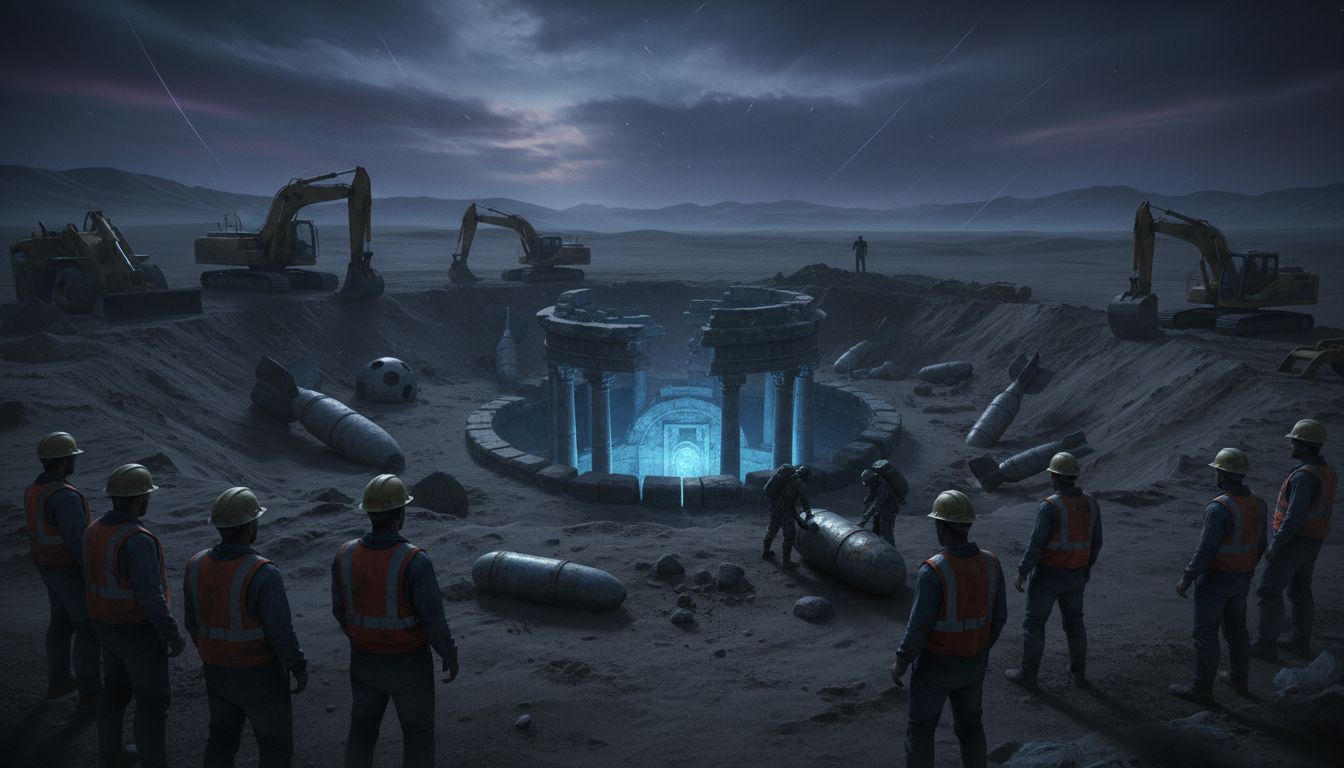
During routine clearance of unexploded ordnance at a former military depot on the outskirts of Venice, construction crews uncovered a previously unknown ancient sanctuary. The discovery, made on May 27, 2026, has been described by Italian heritage officials as “important” for its cultural and archaeological value. The site, which appears to include the foundations of a temple complex and a series of stone altars, is now the focus of an urgent multidisciplinary assessment that could reshape scholarly understanding of the region’s pre‑Roman history.
The Unexpected Find
The demolition team was working on a highway‑expansion project intended to improve traffic flow between the city of Venice and the mainland. While removing a cluster of World‑II era bombs, workers noticed a series of stone blocks arranged in a pattern that did not correspond with modern construction. “At first we thought it was a concrete footing, but the stonework was clearly older,” said Marco Rossi, foreman of the excavation crew. Further inspection revealed carved motifs and a layout consistent with ancient religious architecture, prompting the immediate suspension of work and the call for archaeological experts.
Archaeological Significance
Preliminary surveys, led by Dr. Lucia Bianchi of the University of Padua’s Department of Archaeology, suggest the sanctuary dates to the Iron Age, possibly between the 7th and 5th centuries BCE. “The alignment of the structures and the decorative reliefs are characteristic of the Venetic culture, which predates Roman domination in this area,” Dr. Bianchi explained. The site includes a central altar, a series of peripheral chambers, and fragments of what appear to be votive offerings. If confirmed, the sanctuary could provide rare insight into the religious practices and sociopolitical organization of the ancient peoples who inhabited the lagoon’s periphery before the rise of the Republic.
Official Response and Preservation Plans
The Italian Ministry of Culture was notified within hours of the discovery. Minister of Culture Elena Ferrara issued a statement emphasizing the need to “protect and study this irreplaceable heritage while balancing the infrastructural needs of the community.” The Ministry has activated a Special Protection Zone around the site, halting all construction activity until a full archaeological assessment is completed. UNESCO has also been briefed, given the potential for the sanctuary to qualify for inclusion on the World Heritage List as part of the broader “Cultural Landscape of the Venetian Lagoon.”
Local authorities have pledged financial resources for conservation, and the regional government has announced a collaborative effort with the University of Padua, the Superintendence for Archaeological Heritage of Veneto, and international experts in ancient Mediterranean religions. A provisional plan calls for a controlled excavation followed by the creation of an on‑site interpretive center that would allow public access while safeguarding the remains.
Next Steps and Community Impact
The next phase will involve detailed stratigraphic excavation, radiocarbon dating of organic residues, and 3D laser scanning of the structural remains. Findings are expected to be published in peer‑reviewed journals within the next twelve months. In the meantime, the discovery has sparked interest among scholars, tourists, and local residents alike. “It’s a reminder that beneath our modern infrastructure lie layers of human history waiting to be uncovered,” said Ferrara.
The highway project, originally slated for completion in late 2026, will be reassessed once the archaeological work concludes. Officials stress that the pause, while causing short‑term inconvenience, represents a responsible stewardship of cultural heritage—ensuring that the ancient sanctuary is preserved for future generations while still addressing the region’s transportation needs.