Overview
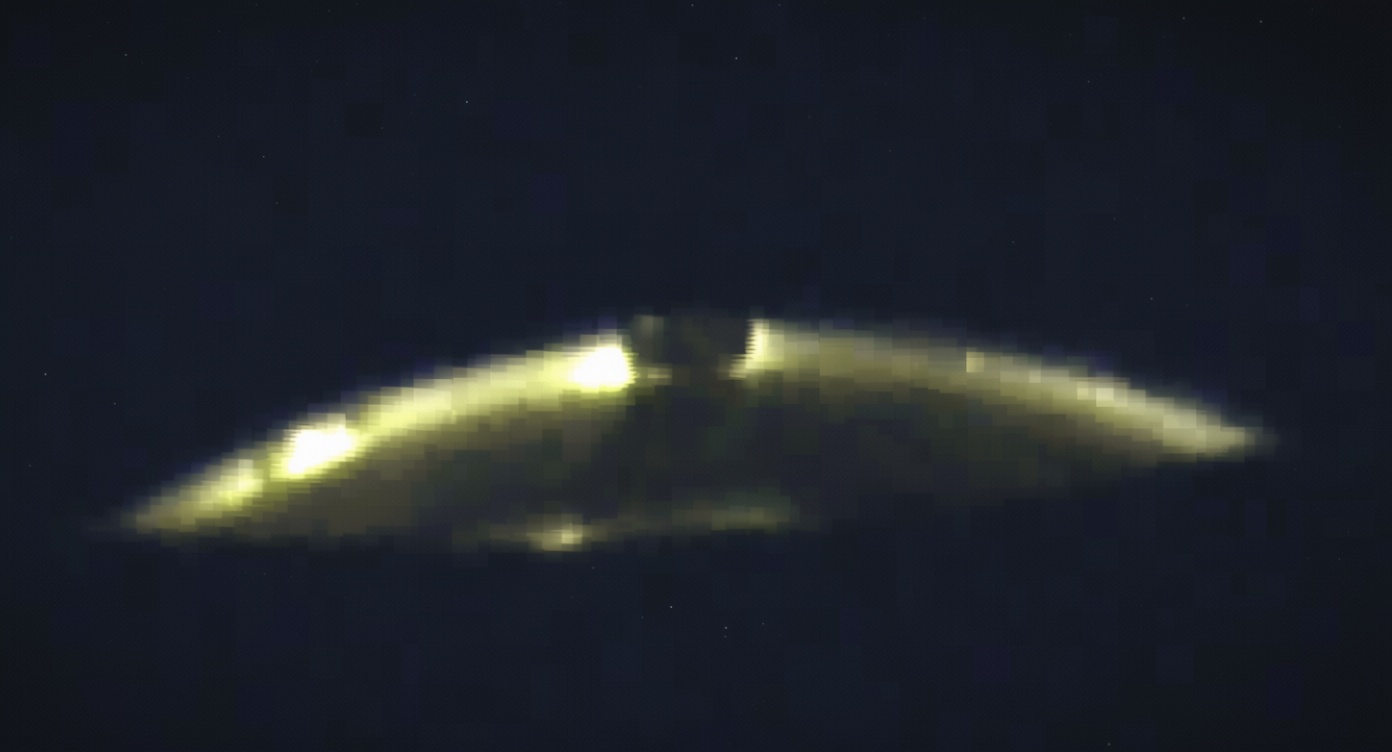
A renewed wave of interest in UAP transparency is putting pressure on U.S. agencies, with lawmakers, former defense officials, and independent researchers all citing records, imagery, and eyewitness accounts that they say deserve closer examination. At the center of the latest push is the alleged 1996 Varginha, Brazil incident, long described by some investigators as “Brazil’s Roswell,” alongside new efforts to review NASA archives and older photographic evidence that some believe may point to unexplained aerial or orbital objects. The discussion remains highly contested, but it reflects a broader shift in tone: the issue is increasingly being treated as a matter of public records, scientific review, and national-security relevance rather than fringe speculation.
Congressional Pressure on the CIA
One of the most concrete developments comes from Rep. Eric Burlison (R-Mo.), who has formally asked the CIA to release records tied to the Varginha case. In a July 7 letter, Burlison gave the agency 30 days to produce any files related to U.S. government involvement, material transfers, and coordination with Brazilian authorities between January 14 and January 28, 1996. The request follows a prior FOIA attempt in which the CIA reportedly declined to confirm or deny whether such records exist. The renewed scrutiny has been amplified by comments from former Brazilian Defense Minister Aldo Rebelo, who has said publicly that the incident was real, a statement that supporters view as a significant signal and skeptics view cautiously as part of an unresolved case.
NASA Archives, the Robertson Panel, and Old Photographic Anomalies
At the same time, former senior NASA official Mike Gold is helping lead a Disclosure Foundation committee aimed at reviewing decades of NASA imagery for anomalies. Gold and journalist Ross Coulthart discussed the legacy of the 1952 Robertson Panel, the CIA-linked review that helped shape a long period of disinformation, ridicule, and stigma around UFO reporting. The new committee plans to use artificial intelligence to scan lunar and orbital photographs for unusual features. That effort overlaps with work by researcher Dr. Beatriz Villarroel, whose team has reported bright, transient objects in photographic plates taken before Sputnik’s 1957 launch. While the interpretation of those findings is still disputed, the basic question they raise is straightforward: if some objects in orbit predate human spaceflight, what were they?
Lunar Claims, Nuclear Interest, and a Cut ISS Feed
Former AATIP director Lue Elizondo added another layer of controversy by saying he has direct or indirect knowledge of non-human intelligence on the Moon. In recent remarks, he pointed to NASA photographs he says appear to show triangular, illuminated vehicles and structures that do not fit known natural formations. Elizondo also repeated a recurring theme in UAP research: reported interest around nuclear facilities and weapons systems. He cited accounts involving test pilots shadowed by glowing red orbs and a helicopter that allegedly lost power as three luminous objects approached before power returned after they departed. Separately, Coulthart described witnessing an International Space Station feed at Marshall Space Flight Center that allegedly showed multiple egg-shaped objects before the transmission was interrupted and replaced with a “temporarily interrupted” message.
Why Some UAP May Not Show Up on Radar
The video also revisits a practical issue often missed in public debate: not every UFO or UAP will appear on radar. Radar performance can be affected by object size, altitude, speed, composition, angle of reflection, and the limits of a particular sensor system. Small, low-observable, or fast-moving objects can be difficult to track, especially if the event is brief or occurs outside the radar’s coverage pattern. That technical reality does not confirm extraordinary claims, but it does help explain why some witnesses report seeing something that instruments fail to capture.
Broader Context
Taken together, the latest disclosures, interviews, and archival reviews suggest that interest in UAP is moving onto several fronts at once: congressional record requests, historical reexamination, and renewed scientific analysis of old imagery. Whether the evidence ultimately supports extraordinary conclusions or points to more ordinary explanations, the current debate is being shaped by a more formal insistence on documentation, transparency, and repeatable review.