Overview
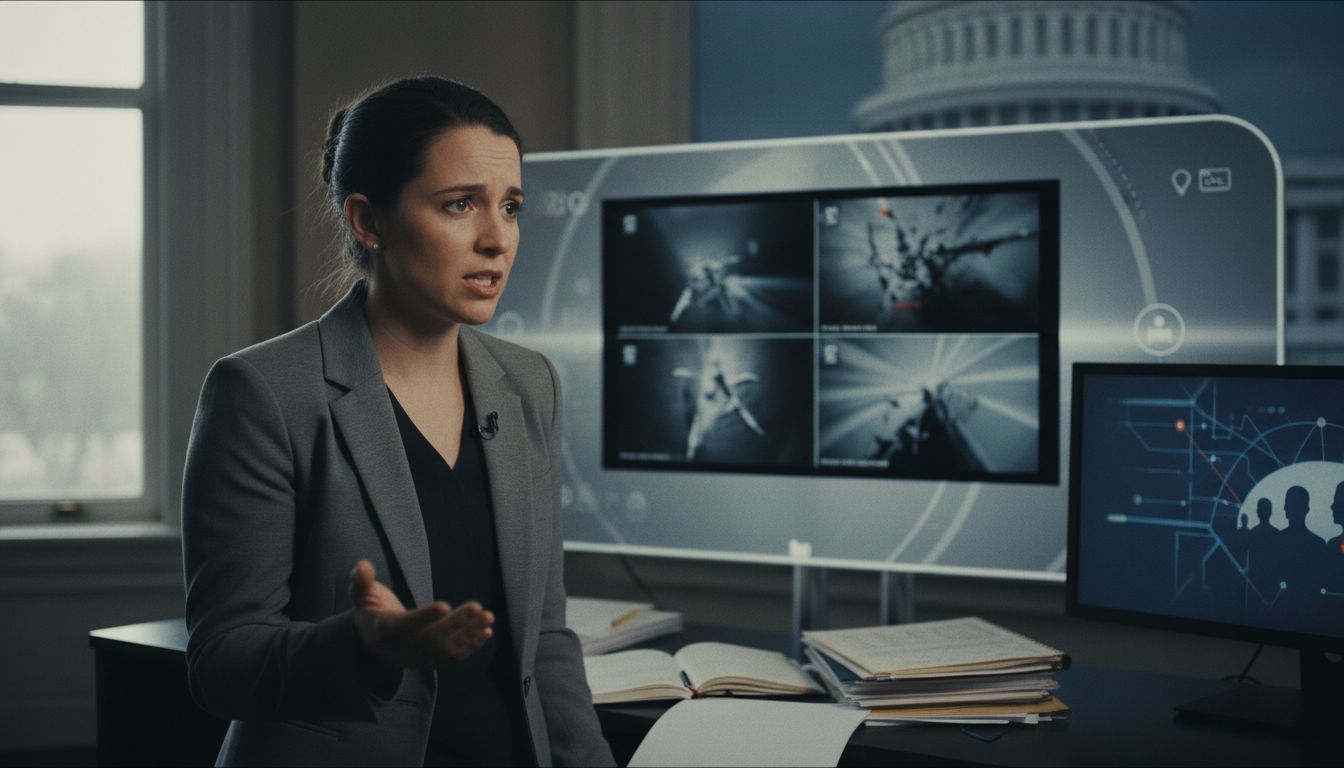
Frustration is mounting among UFO researchers and disclosure advocates over the Pentagon’s PURSUE site, which has been releasing videos and images of unidentified aerial phenomena without the accompanying analytical data that would allow independent experts to assess what the footage actually shows. In a recent broadcast, host Cristina Gomez framed the issue as part of a broader tension in Washington: the government is providing more material than in the past, but not enough context to make the releases scientifically or operationally useful.
Why Analysts Say the Releases Fall Short
Journalist Christopher Sharp of Liberation Times, appearing on One America News Network, argued that raw footage alone is not enough to establish whether an object is truly anomalous. According to Sharp, critical information such as radar returns, satellite tracking, speed, altitude, and point of origin is often missing from public disclosures. Without that data, he said, viewers are left to speculate whether an object is a drone, balloon, satellite, or something more unusual. The critique reflects a long-running complaint from the UFO research community: that the government is offering visibility without verification.
Claims of Lunar and Undersea Activity
The broadcast also revisited more speculative claims circulating in UFO circles, including assertions about possible non-human intelligence activity on the moon and in the oceans. Gomez referenced Defense Intelligence Agency documents in which analysts reportedly debated whether certain lunar locations were “dormant” or “active,” and she cited Apollo-era transcripts in which astronauts Buzz Aldrin and Alan Bean described unusual light phenomena. Sharp further claimed that former AATIP director Lue Elizondo believes in non-human intelligence on the moon, and suggested that there may be “competing groups” of such entities, with some linked to lunar activity and others to the oceans. Representative Tim Burchett (R-TN) was also mentioned for publicly entertaining the idea that sub-oceanic locations could be involved in resource pooling or concealment.
Washington’s Disclosure Debate Intensifies
Beyond the more extraordinary claims, the segment emphasized the growing political seriousness of the disclosure debate in Washington. Sharp suggested that former President Donald Trump could elevate the issue by reviewing classified material directly and delivering a formal “disclosure speech.” Meanwhile, Representatives Anna Paulina Luna and Eric Burlison continue to push for the UAP Disclosure Act, which would strengthen whistleblower protections and offer amnesty to individuals who may have withheld information under secrecy rules. As Vanity Fair writer Dan Adler has noted in related coverage, the personal and professional stigma attached to speaking out remains a major obstacle for current and former officials.
Legislative Pressure and the Limits of Public Evidence
The discussion also touched on Representative Chris Smith’s proposed NDAA amendment, which would require the Department of Defense Inspector General to report in detail on Unmanned Aircraft Systems activity near critical military sites and within the U.S. homeland. Taken together, the segment portrayed a Washington environment in which lawmakers and journalists are pressing for more transparency, even as the most dramatic claims remain unproven. The central takeaway, as Gomez presented it, is that the real fight is no longer just over whether UFOs exist, but over whether the public will ever receive the full analysis needed to understand them.