Overview
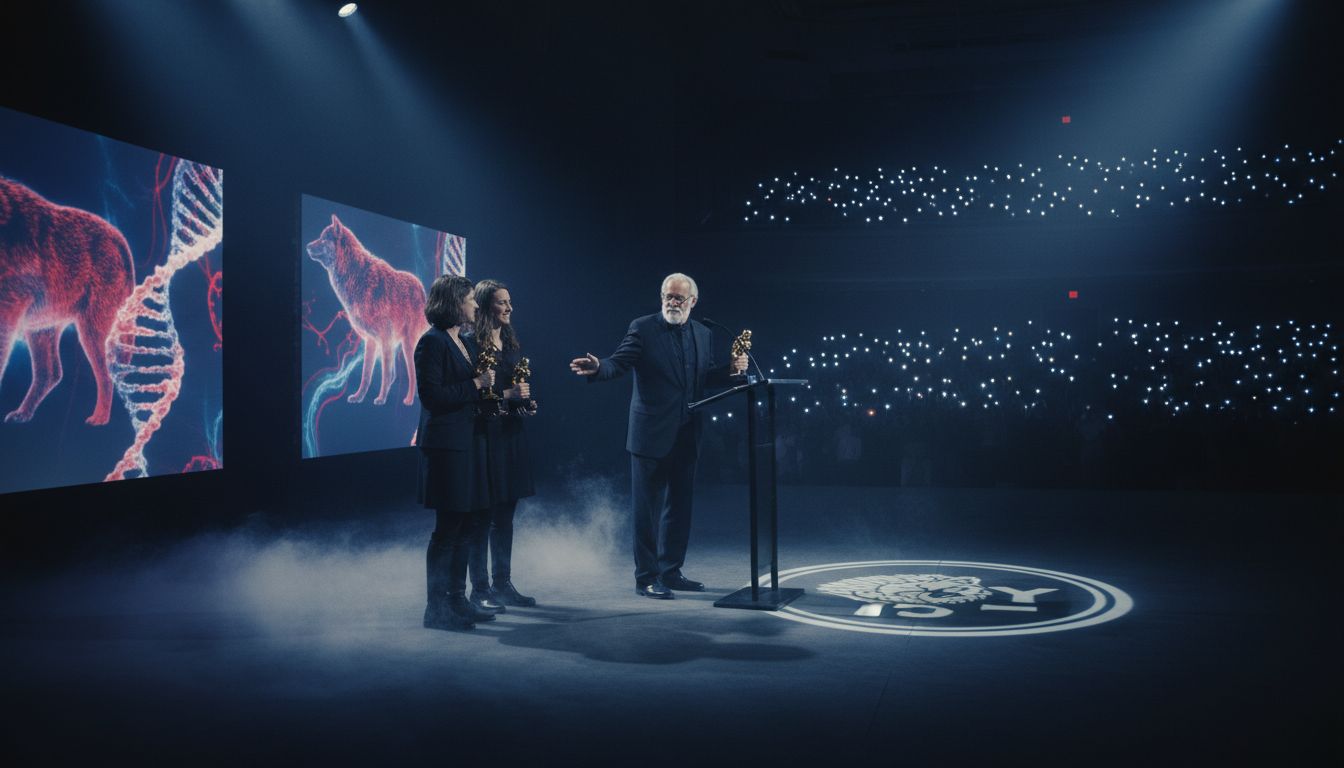
The International Cryptozoology Museum announced its 2025 “Golden Yetis” awards, honoring two scientists whose work with red‑wolf “ghost alleles” could reshape conservation strategies for the critically endangered canid. Director Loren Coleman presented the awards to Bridgett vonHoldt, Ph.D. of Princeton University and Kristin Brzeski, Ph.D. of Michigan Technological University, recognizing their collaborative research that maps residual red‑wolf DNA persisting in coyote populations along the Gulf Coast. The ceremony also featured a pick for the year’s most influential cryptozoology book, Bigfooters and Scientific Inquiry: On the Borderlands of Legitimate Science by Jamie Lewis and Andrew Bartlett.
Award Recipients
VonHoldt and Brzeski were selected for “finding” the “ghost red wolves”—genetic signatures of the extinct‑in‑the‑wild red wolf (Canis rufus) that survive in hybridized coyotes. Both hold doctoral degrees in evolutionary biology and conservation genetics, and their partnership blends academic rigor with community‑based science. In her remarks, Brzeski emphasized the pragmatic goal of the work:
“We need resilient wildlife to maintain species on the landscape. We might not be successful, but we’re going to try. It’s worth trying.”
VonHoldt echoed this optimism, noting that the rediscovered alleles “don’t seem to be lost any longer,” and that they may provide a genetic reservoir for future reintroduction programs.
Genetic Findings
Red‑wolf “ghost alleles” are remnants of historic interbreeding between red wolves and coyotes before the former’s extirpation in the 1980s. Recent genomic surveys have identified these alleles primarily in coyote populations of southwestern Louisiana and eastern Texas, especially around Galveston Island. The alleles retain traits such as longer limbs, broader heads, and a distinctive reddish coat, traits documented in a 2022 New York Times feature. While coyotes remain the dominant phenotype, the hidden DNA offers a potential source of genetic diversity that could be leveraged in captive‑breeding or selective‑breeding initiatives aimed at restoring a more authentic red‑wolf genome.
Collaborative Efforts
The research team has built a multi‑stakeholder network that includes citizen scientists, the Karankawa Tribe, biotech firm Colossal Biosciences, and the International Wolf Center. This coalition combines field sampling, community outreach, and advanced gene‑editing technologies to explore how the ghost alleles might be re‑introduced into a viable red‑wolf population along the Gulf Coast. By involving the Karankawa people—who possess deep ecological knowledge of the region—the project seeks culturally respectful pathways for wildlife management, while Colossal Biosciences contributes laboratory expertise in de‑extinction techniques. The International Wolf Center, meanwhile, offers a platform for public education and long‑term monitoring.
Book Highlight
In addition to the awards, Coleman named Bigfooters and Scientific Inquiry as the year’s standout cryptozoology publication. Co‑authored by Jamie Lewis and Andrew Bartlett, the book examines how fringe investigations intersect with mainstream scientific methodology, arguing that “borderlands” research can sharpen critical thinking across disciplines. Coleman praised the work for its balanced tone and rigorous scholarship, noting that it “sets a benchmark for future studies that aim to bridge curiosity with empirical standards.”
Significance
The Golden Yetis recognition underscores a growing acceptance of interdisciplinary, data‑driven approaches within cryptozoology—a field traditionally viewed through a lens of speculation. By spotlighting tangible genetic evidence and collaborative conservation models, the International Cryptozoology Museum signals that hidden‑animal research can contribute meaningfully to biodiversity restoration. As vonHoldt and Brzeski continue to map and potentially harness ghost alleles, the broader scientific community will watch closely to see whether these hidden genetic threads can indeed help re‑establish a resilient red‑wolf population in the wild.