Overview
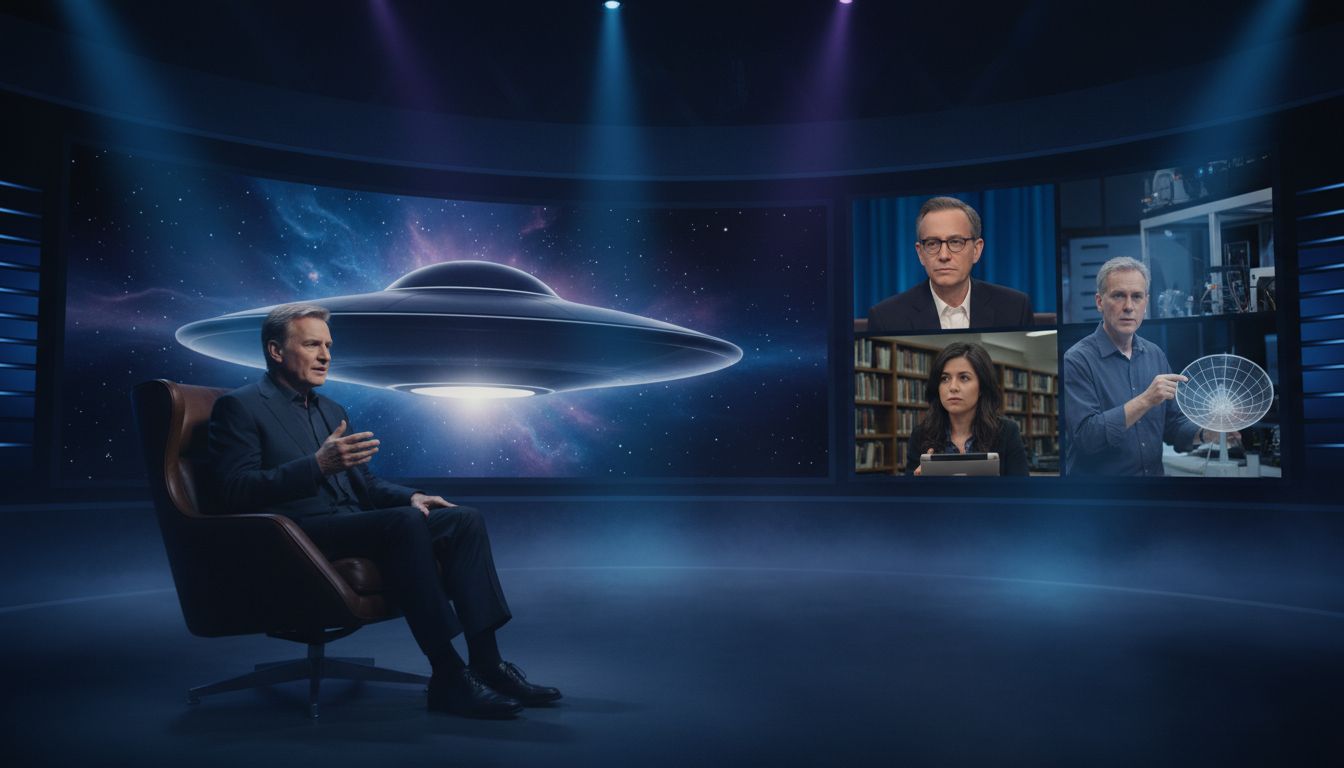
In a recent episode of History Channel’s documentary series “The Unbelievable,” actor and comedian Dan Aykroyd sat down to discuss his long‑standing fascination with unidentified aerial phenomena (UAP). The interview, aired in October 2025, arrived amid a surge of public and academic interest in UFOs, following the U.S. government’s 2023 and 2024 reports that acknowledged a “significant number” of unexplained sightings. Aykroyd’s remarks echo a broader cultural moment in which entertainment figures and scientists alike are pushing the conversation from fringe speculation toward mainstream dialogue.
Celebrity and Scientific Voices
Aykroyd is not the only high‑profile personality weighing in. Television host Bill Maher has repeatedly invited UFO researchers onto “Real Time,” while actress and neuroscientist Mayim Bialik highlighted the topic during a recent panel on science communication. Perhaps most consequential is the involvement of Harvard astronomer Avi Loeb, whose 2021 book Extraterrestrial sparked debate over the possibility that interstellar objects like ‘Oumuamua could be of artificial origin. In a joint statement released after Aykroyd’s interview, Loeb said, “When reputable voices from entertainment and academia speak openly about UAPs, it helps break the stigma that has kept serious inquiry out of the public sphere.” Maher added, “People deserve to know what’s out there, and we should be asking the right questions without ridicule.”
Media Coverage and Public Events
The renewed media focus has translated into a series of public forums. The Smithsonian’s National Air and Space Museum announced a UAP workshop for early 2026, featuring panels with former military pilots, radar engineers, and policy analysts. Meanwhile, the annual UFO Symposium in Los Angeles, scheduled for March 2026, will host a “Celebrity Roundtable” that includes Aykroyd, Maher, and Bialik, alongside scientists such as Loeb and former Pentagon officials. Organizers emphasize that the events aim to blend anecdotal testimony with rigorous data analysis, a shift from earlier gatherings that were often dismissed as “conspiracy‑theory meet‑ups.”
Cultural Implications
The convergence of pop culture and scholarly research reflects a changing perception of UAPs in the United States. A 2024 Pew Research Center poll showed that 56 % of Americans consider the existence of extraterrestrial life “likely,” up from 42 % a decade earlier. Analysts attribute this shift partly to the declassification of military footage and partly to the willingness of well‑known figures to discuss the subject without fear of professional backlash. Sociologist Dr. Elaine Murray of the University of Texas notes, “When celebrities like Aykroyd, whose persona is tied to the supernatural through films like Ghostbusters, speak earnestly about UFOs, it normalizes curiosity and reduces the social cost of asking tough questions.”
Looking Ahead
As congressional committees continue to request more transparency from intelligence agencies, the dialogue sparked by Aykroyd’s interview may influence policy. Lawmakers have cited the growing public interest as a catalyst for the UAP Transparency Act, pending Senate approval in early 2026. If enacted, the legislation would mandate regular reporting to Congress and the public on unexplained aerial observations. For now, Aykroyd’s participation underscores a pivotal moment: the line between entertainment and empirical investigation is blurring, and the collective quest to understand what lies beyond Earth’s atmosphere is gaining unprecedented legitimacy.


