Overview
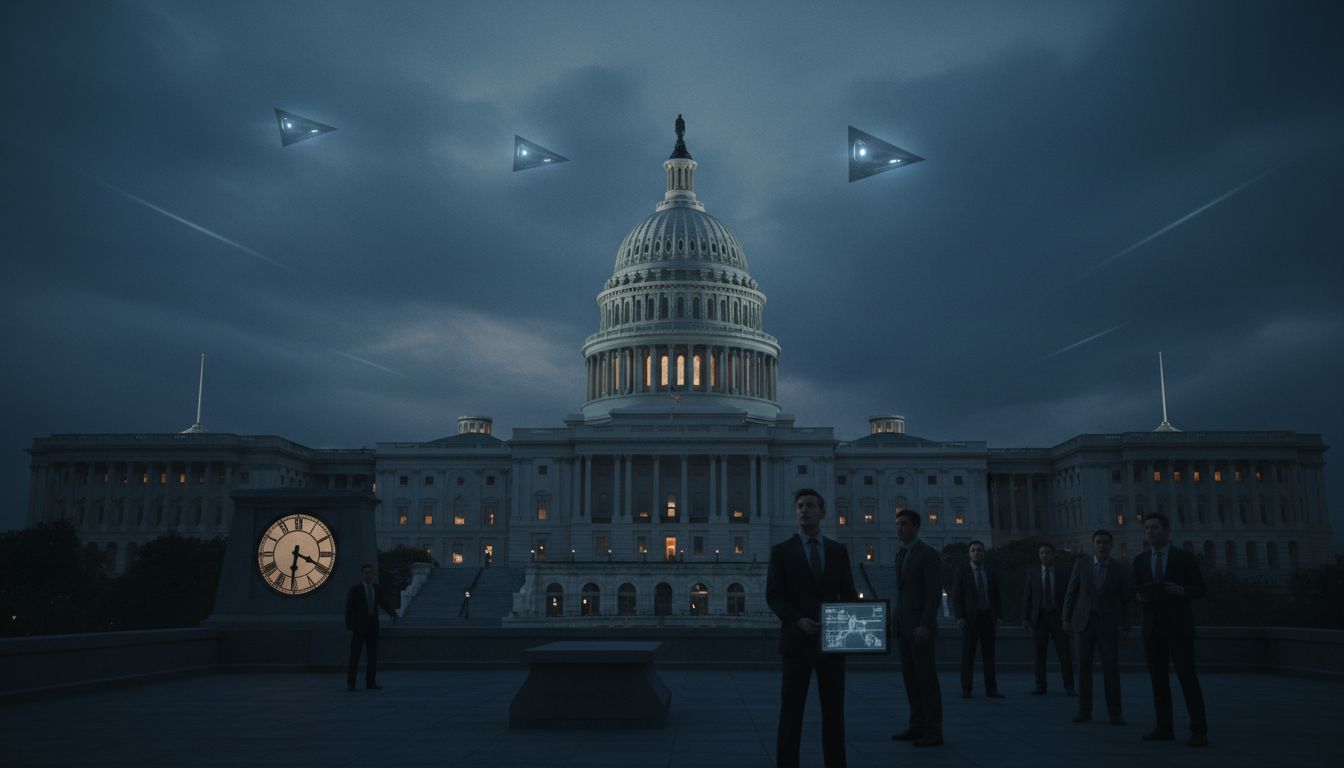
On April 1, 2026, the U.S. House Committee on Oversight and Reform and the Senate Select Committee on Intelligence announced a joint deadline for the Department of Defense (DoD) to release all unclassified footage of unidentified aerial phenomena (UAP) that have been collected over the past decade. The deadline – June 30, 2026 – follows a series of high‑profile congressional hearings in which lawmakers described UAPs as a “very real threat” to national security. The move signals an escalating bipartisan effort to bring transparency to a subject that has long been shrouded in secrecy.
Legislative Action
The deadline was set after a closed‑door briefing in early March, during which senior officials from the Pentagon’s All‑Domain Anomaly Resolution Office (AARO) presented a catalog of more than 30 videos, many of which have never been publicly disclosed. Committee Chair Rep. Tim Burchett (R‑TN) explained, “We have a responsibility to the American people and to our armed forces to know what is flying in our skies. Until now, the lack of full disclosure has hampered our ability to assess any potential risk.”
Senator Marco Rubio (R‑FL) echoed the sentiment, adding, “The intelligence community has identified credible gaps in our understanding of these objects. If they are advanced technologies from foreign adversaries—or something else entirely—our response must be swift and coordinated.” The joint resolution, co‑sponsored by Senators Jack Reed (D‑RI) and Tom Cotton (R‑AR), requires the DoD to submit a comprehensive inventory of all unclassified UAP recordings, associated sensor data, and analysis reports to the relevant congressional committees by the end of June.
Security Concerns
Lawmakers cited several incidents that have heightened alarm. In 2024, pilots from the Navy’s Fighter Squadron 31 reported a series of high‑speed, maneuverable objects over the Atlantic that evaded radar detection. In 2025, a ground‑based radar array in Colorado captured a cluster of infrared signatures moving against prevailing winds, prompting a classified AARO assessment that labeled the encounter “potentially hostile.”
While the Pentagon has repeatedly emphasized that most UAP sightings are likely attributable to natural or man‑made sources, the “very real threat” language reflects worries that some phenomena could represent advanced surveillance platforms from rival nations such as China or Russia. Defense Secretary Lloyd Austin warned in a recent statement that “any technology that can operate beyond our current detection and defense capabilities must be taken seriously, regardless of its origin.”
Response from Defense Agencies
The DoD’s AARO, established in 2022 to centralize UAP reporting, has already begun declassifying select footage, including the well‑known “Gimbal” and “GoFast” videos captured by Navy pilots in 2015. AARO director Dr. Sean Kirkpatrick told the committees, “Our priority is to provide actionable intelligence. We are working to redact any sensitive details while ensuring that the core visual evidence is available for congressional oversight.”
In addition to the video inventory, the deadline mandates the release of metadata—altitude, speed, sensor type, and environmental conditions—so that independent analysts can evaluate the data. The DoD has pledged to cooperate with the Office of the Director of National Intelligence (ODNI) to cross‑reference the footage with satellite and SIGINT records, a step that could help determine whether any observed behavior aligns with known foreign platforms.
Next Steps and Implications
If the DoD meets the June 30 deadline, Congress plans to hold a follow‑up hearing in August to assess the findings and consider legislative measures, such as expanding AARO’s budget and authorizing a permanent inter‑agency UAP task force. Failure to comply could trigger a Gag Order‑style subpoena, a tool previously used in classified oversight matters.
The deadline also raises expectations among the scientific community. Researchers at the National Aeronautics and Space Administration (NASA) have called for a “rigorous, peer‑reviewed analysis” of the released videos, emphasizing the need for transparency to avoid speculation.
As the June deadline approaches, the convergence of congressional pressure, defense agency cooperation, and public interest suggests that the United States is moving toward a more systematic understanding of unidentified aerial phenomena—whether they turn out to be foreign technology, atmospheric anomalies, or something yet unknown. The outcome will shape not only national security policy but also the broader discourse on humanity’s place in the sky.


