Overview
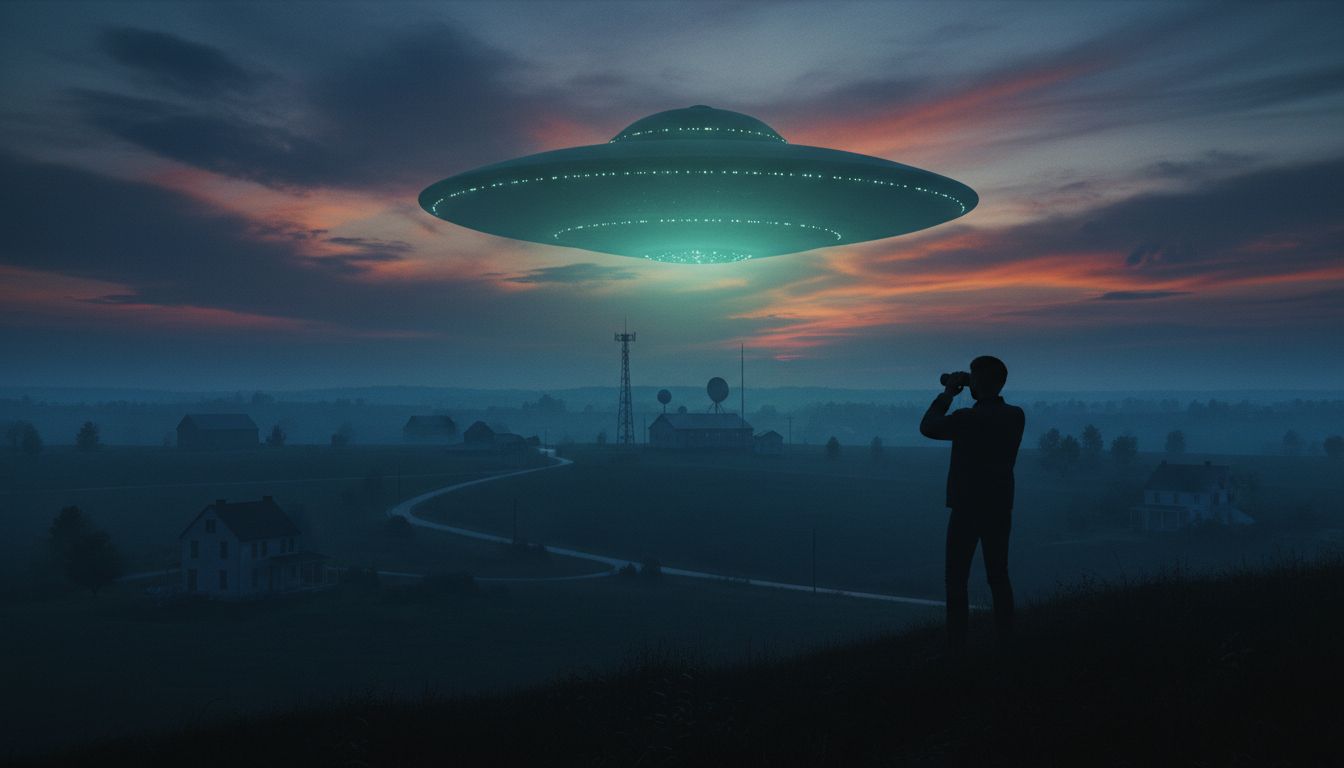
A new report released on March 23, 2026 identifies Delaware as the nation’s top state for UFO spotting. The ranking, produced by online‑gaming site casino.ca, updates an earlier “flying saucer” list published in October 2025 and coincides with the observance of Alien Abduction Day. The findings were highlighted on WVOC’s Coast to Coast AM with George Noory, where the host and callers discussed the implications of the data for both enthusiasts and researchers of unidentified aerial phenomena (UAP).
Methodology
The casino.ca study compiled every “sighting entry” submitted to the National UFO Reporting Center (NUFORC) through March 11, 2026. Entries were normalized by state population, land area, and the number of active reporting stations to produce a “likelihood index” that reflects the per‑capita chance of observing an unexplained aerial event. The analysis also incorporated a limited public survey conducted in early March, which asked respondents whether they had personally witnessed or heard about a UFO in the past year. By weighting official reports and anecdotal responses equally, the researchers aimed to reduce bias inherent in either source alone.
Key Findings
Delaware emerged with a likelihood score of 0.87 sightings per 10,000 residents, edging out traditionally high‑ranking states such as Washington, Arizona, and Florida. The report notes that the state’s modest size, relatively low light‑pollution zones in its coastal wetlands, and a dense network of amateur astronomers contribute to the high detection rate. In contrast, larger states with extensive urban sprawl showed lower per‑capita figures despite reporting a greater absolute number of sightings. The study also observed a modest uptick in reports during the spring months, aligning with increased nocturnal activity among migratory bird populations that can sometimes be mistaken for UAP.
Expert Commentary
During the Coast to Coast AM segment, host George Noory quoted the study’s lead analyst, Dr. Mara Lichtenberg, who emphasized that “the data does not prove the existence of extraterrestrial craft; it simply shows where people are most likely to file a report.” Noory added that “Delaware’s ranking reminds us that UFO research is as much about human perception and reporting infrastructure as it is about the phenomena themselves.” UFO researchers from the Mutual UFO Network (MUFON) echoed this caution, noting that atmospheric conditions and radar coverage can influence both the frequency and credibility of sightings.
Implications and Next Steps
The Delaware ranking may prompt local authorities and scientific institutions to examine the state’s reporting mechanisms more closely. Some legislators have already called for a review of the state's UFO data collection protocols, arguing that systematic analysis could improve aviation safety and public transparency. Meanwhile, casino.ca announced plans to release a quarterly update to track how the rankings evolve as more data is gathered. As the conversation moves from sensational headlines to measured analysis, the Delaware result underscores the growing demand for rigorous, peer‑reviewed research into unidentified aerial phenomena across the United States.