Overview
A recently de‑classified Freedom of Information Act (FOIA) packet released by the Department of Defense (DoD) reveals that the agency has been systematically gathering public‑domain media narratives about unidentified aerial phenomena (UAPs). The compilation, dated March 2018, notably excludes any internal analytical discussions or classified assessments. The release coincides with a fresh interview of former UK Ministry of Defence (MoD) UFO investigator Nick Pope, who reiterated that interest in potential extraterrestrial contact remains “alive” within certain government circles, while also pointing out that formal UFO reports from Northern Ireland have stayed remarkably low. In parallel, commentators have speculated that President Donald Trump may be preparing to disclose previously classified UAP imagery, a move that could link U.S., UK, and even Vatican‑related UFO dialogues.
DoD’s Media‑Focused UAP Dossier
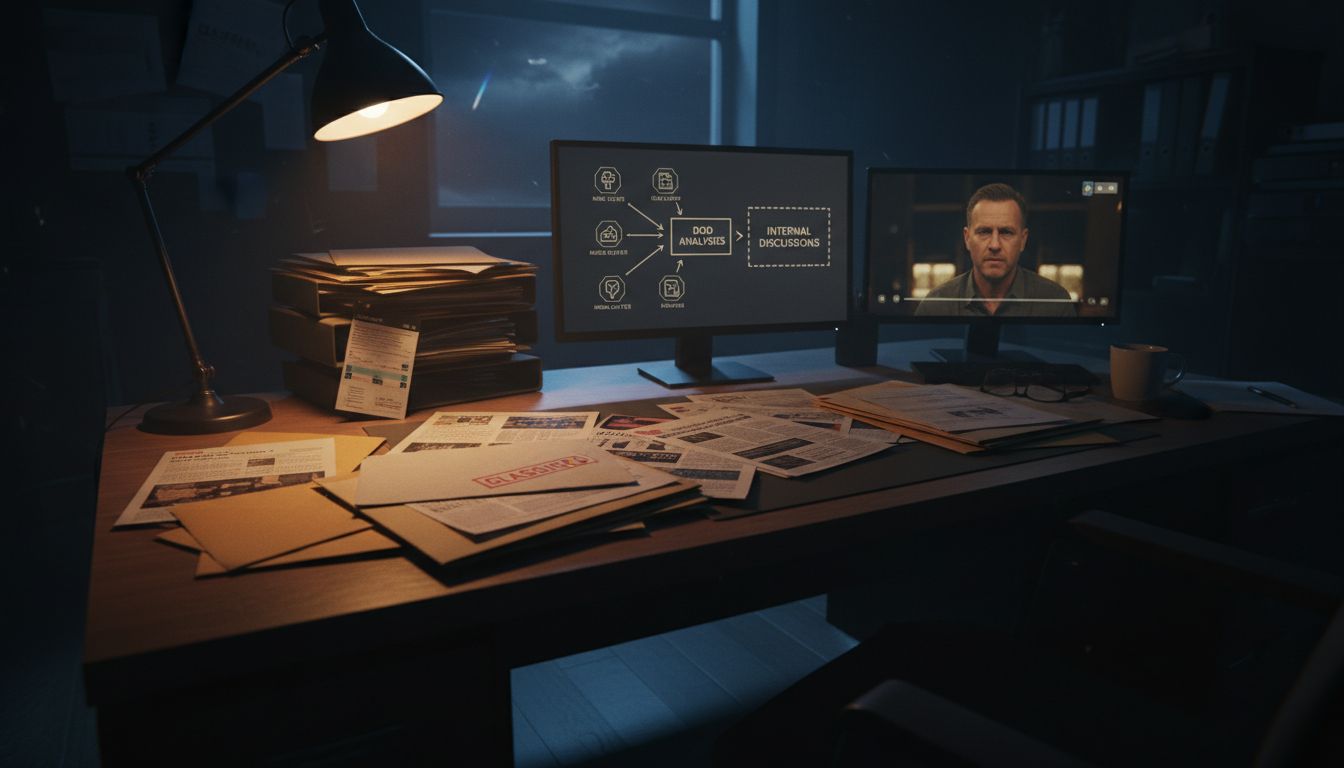
The FOIA documents show a DoD‑produced briefing that aggregates newspaper articles, television transcripts, and online posts concerning UAP sightings from 2004‑2017. Analysts within the Pentagon appear to have used the collection as a baseline for public perception rather than as an evidentiary repository. The dossier’s introduction states that “external narratives provide insight into how UAP topics are framed in the public sphere and may influence policy communication strategies.” No excerpts from classified sensor data, pilot debriefs, or inter‑agency assessments were included.
Defense officials, speaking on condition of anonymity, confirmed that the omission was intentional: the agency maintains separate, highly restricted databases for operational data, while the public‑facing compilation serves a strategic communication purpose. “We wanted to understand the media ecosystem surrounding UAPs, not to replace our internal threat‑analysis processes,” one official said.
Nick Pope’s Perspective from the United Kingdom
In a recent interview conducted by a European defense journal, Nick Pope—who served as the MoD’s “UFO desk” officer from 2005‑2006—emphasized that the UK government continues to monitor anomalous aerial reports, albeit at a modest scale. Pope noted that the Northern Ireland region logged fewer than ten formal sightings in the past decade, a figure he described as “consistent with the overall downward trend in civilian reports across the British Isles.”
He also addressed the broader question of extraterrestrial contact: “There is no consensus that any of the observed phenomena are of alien origin, but the possibility cannot be dismissed out of hand. Scientific rigor demands that we keep an open channel for data, however sparse.” Pope’s remarks underscore a cautious yet persistent institutional interest, mirroring the DoD’s own, albeit differently framed, attention to the subject.
Political Speculation: Trump and Potential Disclosure
The timing of the DoD release and Pope’s interview has fueled speculation that the U.S. administration may be preparing a high‑profile disclosure. Several political analysts cite remarks made by President Trump in late 2025, in which he hinted that “the American people deserve to see what we have been keeping secret about UFOs.” While no official schedule has been announced, insiders suggest that a declassification of select radar and infrared recordings could be slated for a congressional hearing in the coming months.
If such imagery were released, it would intersect with ongoing dialogues in the Vatican’s Pontifical Council for Culture, which has hosted symposiums on the theological implications of extraterrestrial life. The convergence of U.S., UK, and Vatican discussions hints at a multinational reassessment of how anomalous aerial phenomena are treated in policy, science, and public discourse.
Broader Implications and Next Steps
The DoD’s focus on external media narratives signals an acknowledgment that public perception plays a role in shaping governmental response to UAPs. Coupled with Pope’s acknowledgment of continued, albeit limited, reporting in the UK, the picture emerging is one of cautious surveillance rather than sensational alarm.
Analysts recommend that future transparency efforts balance national security concerns with the public’s right to information. As the potential Trump‑era disclosure looms, scholars anticipate a surge in academic research, congressional oversight, and perhaps renewed inter‑governmental cooperation—including with entities like the Vatican—that could redefine the framework for studying unexplained aerial events.
For now, the released documents provide a snapshot of how two of the world’s most influential defense establishments are cataloguing the conversation, setting the stage for whatever official revelations may follow.