Overview
In a video interview with EL PAÍS, Diana Walsh Pasulka – a professor of religious studies at the University of North Carolina Wilmington – drew a striking parallel between today’s fascination with UFOs (or UAP, “Unidentified Anomalous Phenomena”) and the early Christian community’s formation. Citing her forthcoming Spanish edition of American Cosmic, now titled Los creyentes. Un ensayo sobre ovnis, tecnología desconocida y el inesperado origen de una nueva religión, Pasulka argues that belief in extraterrestrial craft fulfills many of the same social and spiritual functions that early Christian testimony once did. Her assessment comes as universities and think‑tanks increasingly treat the UFO question as a legitimate subject for scholarly inquiry rather than a fringe curiosity.
Academic Roots
Pasulka’s interest in the phenomenon emerged indirectly. “I never wanted or desired to study the subject of UFOs,” she told the newspaper, emphasizing that her career has always been anchored in the systematic study of religion, not in advocacy for any particular faith. Her 2014 monograph Heaven Can Wait examined “ascent narratives” – stories of souls rising to heaven or traveling to other realms – and traced how such motifs appear across cultures. While researching archival material on purgatory, she encountered centuries‑old sky‑watching accounts that described mysterious lights, “perhaps shooting stars, but also things they couldn’t explain.” These historical testimonies, she noted, were often interpreted through existing religious frameworks, such as angels or Marian apparitions.
UFO Belief as a New Religious Movement
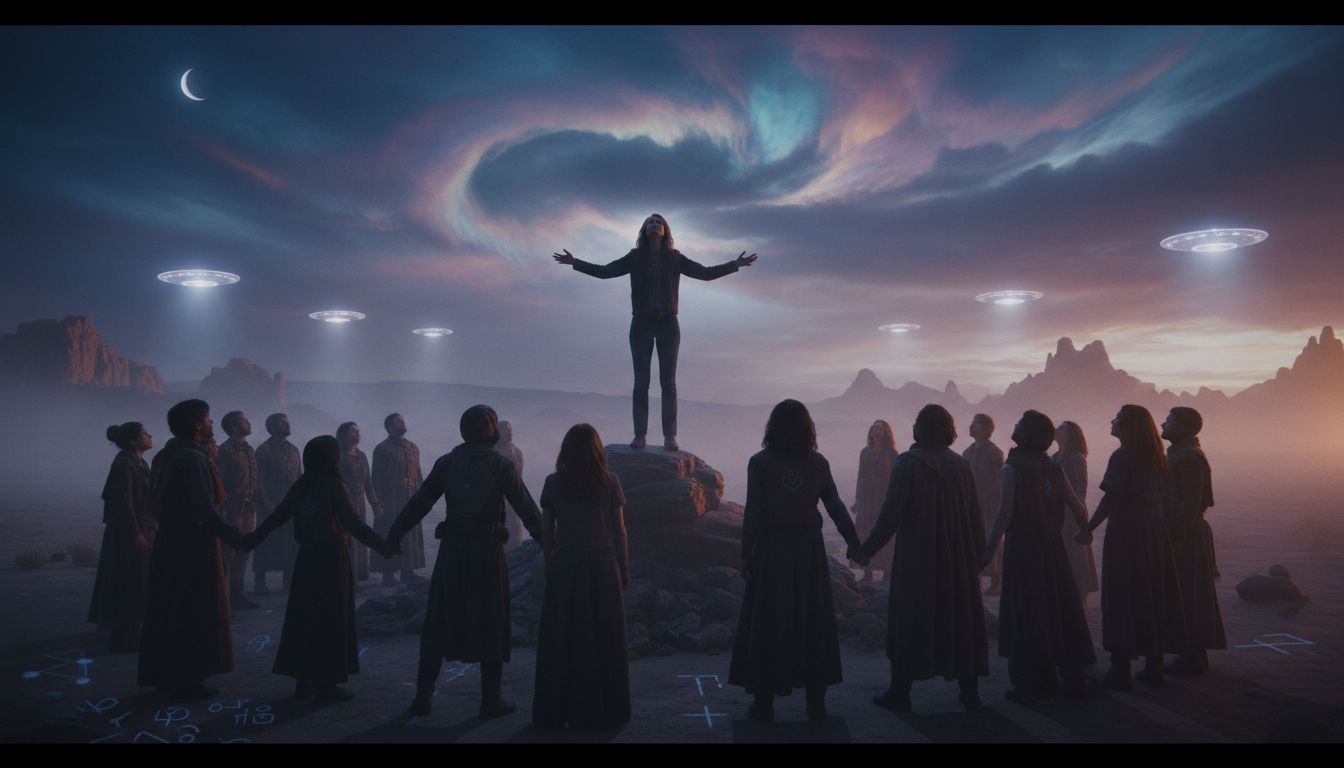
The professor’s latest work expands this line of inquiry to the modern era. She observes that contemporary UFO believers share several hallmarks of nascent religious groups: a core narrative of revelation, personal testimonies that function as “spiritual experiences,” and a sense of collective identity that distinguishes insiders from skeptics. “When engineers, aerospace contractors, and even members of the U.S. Space Force reach out to me, they are looking for a language that can make sense of what they see,” Pasulka explained, noting that many of these correspondents treat their encounters as quasi‑mystical events rather than purely technical anomalies.
Her analysis does not claim that UFO sightings are inherently supernatural, but rather that the meaning‑making process surrounding them mirrors the way early Christians interpreted visions, miracles, and the resurrection of Christ. In both cases, believers construct a worldview that integrates the extraordinary into a broader cosmology, providing purpose, community, and a framework for interpreting ambiguous experiences.
Comparative Dynamics with Early Christianity
Early Christianity grew in part through the circulation of personal testimonies – the letters of Paul, the accounts of the apostles, and reports of miraculous healings. Pasulka points out that these narratives were “testimony‑driven” and relied heavily on the credibility of witnesses, much like the modern UFO community’s reliance on pilot logs, radar data, and eyewitness videos. Both movements also faced external skepticism: the early Church contended with Roman authorities and competing cults, while UFO believers confront scientific dismissal and media sensationalism.
Pasulka underscores that the similarity lies not in the factual truth of the claims, but in the social mechanisms that sustain belief. “Religion is a motivator of people’s behavior and actions,” she said, adding that the majority of the world’s population identifies with some form of religiosity, which makes the study of emerging belief systems essential for understanding broader cultural trends.
Implications for Scholarship and Public Discourse
The growing academic attention to UFOs signals a shift from marginalization toward interdisciplinary study, encompassing anthropology, sociology, and theology. Universities are now establishing research centers, and governmental bodies such as the U.S. Office of the Director of National Intelligence have begun to release declassified reports on UAPs. Pasulka’s work, now reaching Spanish‑speaking audiences, contributes a nuanced perspective that treats UFO belief as a cultural and spiritual phenomenon rather than a purely conspiratorial or scientific mystery.
As the conversation moves beyond sensational headlines, scholars like Pasulka caution against both uncritical acceptance and outright dismissal. “We need to ask why people believe, how those beliefs shape communities, and what that tells us about the human search for meaning,” she concluded. Whether UFOs will ever be definitively explained, the emerging scholarship suggests that the stories we tell about the unknown continue to play a pivotal role in shaping modern religious landscapes.


