Overview
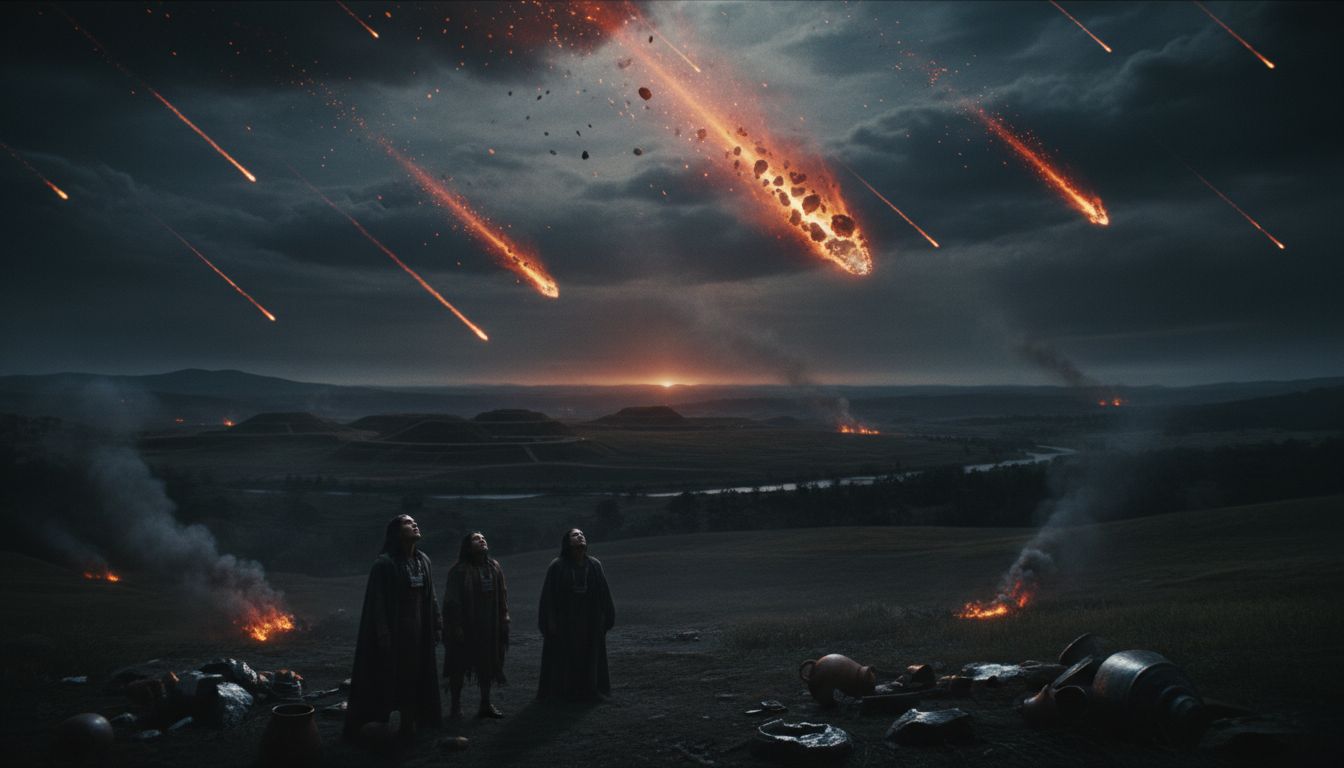
A new study from the University of California‑Santa Barbara adds weight to the long‑standing Younger Dryas impact hypothesis, proposing that a fragmented comet exploded in Earth’s atmosphere roughly 13,000 years ago. The researchers identified shocked quartz—a mineral altered by extreme heat and pressure—at three iconic Clovis sites: Murray Springs (Arizona), Blackwater Draw (New Mexico) and Arlington Canyon (California’s Channel Islands). The findings, published in PLOS One, suggest that the airburst may have ignited widespread wildfires, injected soot into the stratosphere, and precipitated a rapid climate reversal that coincided with the disappearance of the Clovis culture and the extinction of North America’s megafauna, including mammoths and mastodons.
New Evidence from the Archaeological Record
The team, led by emeritus Earth Science professor James Kennett, examined sediment layers associated with the terminal Pleistocene cultural horizon at each site. “These three sites were classic sites in the discovery and the documentation of the megafaunal extinctions in North America and the disappearance of the Clovis culture,” Kennett said. In every sample, microscopic grains of quartz displayed planar deformation features—microscopic lamellae that form only under pressures exceeding several gigapascals, a signature typical of meteorite impacts or high‑velocity airbursts. The researchers ruled out volcanic origins because the regional geology lacks recent eruptions, and they dismissed human activity as a source of the shock because the quartz was embedded in pre‑cultural sediment layers.
Climate Shock and the Younger Dryas
The comet airburst would have released energy comparable to a multi‑megaton nuclear detonation, vaporizing ice and dust and lofting it into the upper atmosphere. Climate models indicate that such an injection could have reduced solar insolation by up to 15 percent for several years, triggering a sudden plunge into near‑glacial conditions known as the Younger Dryas. This abrupt cooling interrupted the post‑glacial warming trend and lasted roughly a millennium, a period marked by a rapid return to ice‑age temperatures across the Northern Hemisphere. The cooling would have shortened the growing season, altered precipitation patterns, and stressed ecosystems already weakened by the end of the last ice age.
Implications for Megafauna and Indigenous Cultures
The timing of the hypothesized impact aligns closely with the rapid decline of mammoth and mastodon populations, as well as the abrupt disappearance of Clovis projectile points from the archaeological record. Some researchers argue that the combined effects of habitat loss, fire‑driven vegetation change, and a colder climate created a “perfect storm” that the large herbivores could not survive. The same environmental shock may have also contributed to the later collapse of the Hopewell culture—a complex society that flourished in the Ohio River Valley around 1,500 years ago—by disrupting agricultural productivity and trade networks. While the direct link between the comet event and Hopewell decline remains speculative, the study underscores how a single extraterrestrial event could have cascading effects on both fauna and human societies.
Ongoing Debate and Future Research
The Younger Dryas impact hypothesis remains controversial. Critics point to the uneven geographic distribution of impact markers and argue that other mechanisms—such as meltwater pulses from retreating glaciers—could explain the climate shift. Nonetheless, Kennett’s team plans to expand the search for shocked minerals at additional sites, employ high‑resolution dating techniques, and refine atmospheric modeling to quantify the scale of the hypothesized airburst. “We are not claiming a single cause for the megafaunal extinctions,” Kennett cautioned, “but the evidence for a high‑energy event is compelling and warrants further investigation.” As new data emerge, the scientific community will continue to weigh extraterrestrial versus terrestrial drivers in one of the most dramatic environmental turnovers of the Holocene.


